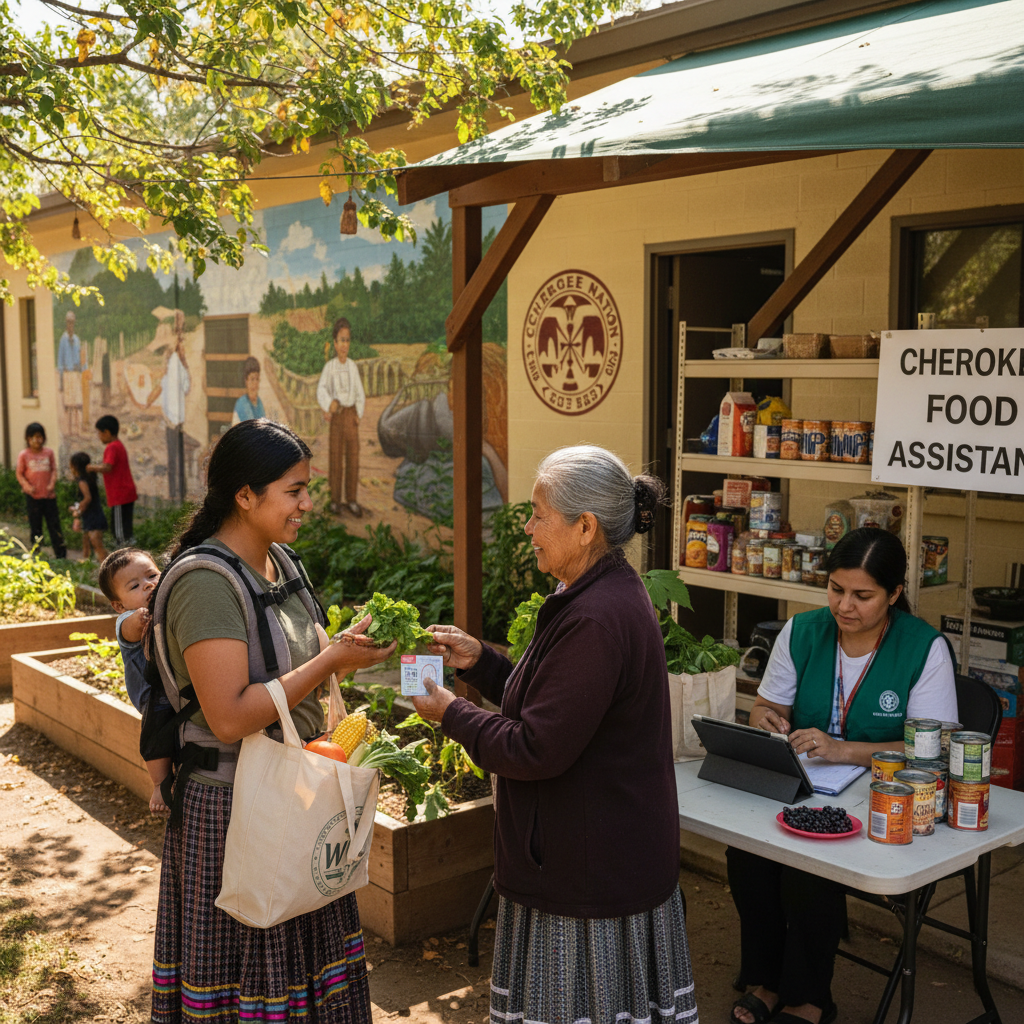
Cherokee Nation WIC and SNAP: Food Assistance Programs for Tribal Citizens
Food is sovereignty. It is as simple and as complicated as that. For the Cherokee people, the ability to nourish our families isn’t just a matter of checking boxes on a bureaucratic form; it is a direct exercise of our rights as a self-governing people. When we talk about Cherokee Nation WIC and SNAP, we are talking about more than just ‘government handouts.’ We are talking about a Tribal Nation taking responsibility for its own, correcting the historical failures of federal oversight, and ensuring that the next generation grows up strong and healthy.
However, navigating the intersection of tribal services and federal programs can feel like walking through a thicket without a map. There are jurisdictional boundaries to consider, differences between the three federally recognized Cherokee tribes, and the ever-present choice between ‘commodities’ and EBT cards. At Osiyo.net, we believe in giving you the straight facts with no fluff. Whether you are a citizen of the Cherokee Nation, the United Keetoowah Band (UKB), or the Eastern Band of Cherokee Indians (EBCI), understanding your options is the first step toward security.
Key Takeaways
- The Cherokee Nation operates its own WIC program, which is often more accessible and culturally tailored than state-run versions.
- Citizens must often choose between SNAP (state-administered) and FDPIR (Tribal-administered commodities); you cannot receive both in the same month.
- Eligibility for tribal food programs usually depends on both tribal citizenship and residence within the tribe’s jurisdictional area.
- Each of the three federally recognized Cherokee tribes has distinct protocols for social services.
- Osiyo.net is an independent platform and not a tribal government entity.
The Sovereignty of the Plate: Why Tribal Programs Matter
For over a century, the federal government used food as a tool of control. The history of ‘rations’ is a dark one, filled with stories of moldy flour and salt pork used to keep tribes dependent on the reservation system. Today, tribal-led food programs represent a massive shift in power. When the Cherokee Nation or the EBCI manages a WIC or food distribution program, they aren’t just distributing calories; they are integrating nutrition education that respects indigenous diets and values.
It is important to remember that ‘Cherokee’ is not a monolith. While the three federally recognized tribes share a common history, their contemporary governments operate independently. The Cherokee Nation (headquartered in Tahlequah, OK), the United Keetoowah Band of Cherokee Indians (also in Oklahoma), and the Eastern Band of Cherokee Indians (headquartered in Cherokee, NC) each have their own departments to handle family nutrition.
Cherokee Nation WIC: Women, Infants, and Children
The Women, Infants, and Children (WIC) program is a federally funded but tribally administered powerhouse. For the Cherokee Nation, this program serves thousands of families annually, providing specifically targeted nutritional support for pregnant women, new mothers, and children under the age of five.
Who is Eligible?
To qualify for Cherokee Nation WIC, you generally need to meet several criteria. Unlike some programs that are open to any resident, tribal WIC programs often prioritize those with a Certificate of Degree of Indian Blood (CDIB) or proof of citizenship in a federally recognized tribe. However, many tribal WIC programs also serve non-native women who are carrying a native child or living in a native household within the jurisdictional area.
- Category: Pregnant, breastfeeding, or postpartum women; infants; and children up to age five.
- Residency: You must live within the Cherokee Nation’s 14-county jurisdictional area in Northeastern Oklahoma.
- Income: Household income must fall below 185% of the federal poverty guidelines.
- Nutrition Risk: A health professional must determine there is a ‘nutritional risk’ (which is a broad category covering everything from anemia to simply having an inadequate diet).
What Does WIC Provide?
It’s not just about the voucher for milk and eggs. The Cherokee Nation WIC program provides:
- Supplemental nutritious foods (fruits, vegetables, whole grains).
- Breastfeeding support and supplies.
- Nutrition education and counseling.
- Referrals to other health and social services.
SNAP vs. FDPIR: The Big Choice
This is where most people get tripped up. There are two primary ways to get monthly food assistance, and in the eyes of the government, they are mutually exclusive. You have to pick one: SNAP (Supplemental Nutrition Assistance Program) or FDPIR (Food Distribution Program on Indian Reservations).
SNAP (The ‘Food Stamp’ Card)
SNAP is what most people know as EBT. In Oklahoma and North Carolina, this is administered by the state (DHS or DHHS). It gives you a monthly balance on a debit card that you can use at almost any grocery store. The advantage is flexibility; the disadvantage is that it is a state-run bureaucracy that often lacks the personal touch or cultural understanding of a tribal office.
FDPIR (The ‘Commodities’ Program)
FDPIR is the modern evolution of ‘commodities.’ Administered by the tribes, this program provides a package of USDA-purchased foods. Gone are the days of mystery meat in silver cans. Today’s FDPIR includes fresh produce, frozen meats, and even traditional foods like bison or wild rice in some regions.
| Feature | SNAP (State) | FDPIR (Tribal Commodities) |
|---|---|---|
| Format | Electronic Debit Card (EBT) | Physical Food Package (Store-style pickup) |
| Where to Shop | Most retail grocery stores | Tribal distribution centers |
| Eligibility | Income-based (State guidelines) | Income-based (Tribal/Federal guidelines) |
| Traditional Foods | Rarely available | Increasingly included (Bison, etc.) |
| Interaction | State caseworkers | Tribal staff |
‘The choice between SNAP and FDPIR is more than financial; it’s about how you want to interact with the systems of support. Many elders prefer the tribal distribution centers because they are community hubs, while younger families often prefer the convenience of SNAP cards at the local supermarket.’
Programs for the Eastern Band and UKB
While the Cherokee Nation (CN) is the largest, the other two tribes have robust systems as well. The Eastern Band of Cherokee Indians (EBCI) operates its own Public Health and Human Services (PHHS) division. Because the Qualla Boundary is a unique land trust in North Carolina, their delivery of SNAP and WIC is highly integrated into the local tribal infrastructure. You can find more about their specific services at ebci.com.
The United Keetoowah Band (UKB) also provides social services and often collaborates on food security initiatives. However, because of the overlapping geography with the Cherokee Nation in Oklahoma, it is vital to check which tribe’s office currently manages your specific case files. Information for the UKB can be found at ukb-nsn.gov.
How to Apply: A Step-by-Step Guide
If you are ready to start the process, don’t wait. The bureaucratic wheels turn slow, and hunger doesn’t. Here is the general flow for getting started:
- Gather Your Documents: You will need your citizenship card or CDIB, proof of residency (utility bill), and proof of income (pay stubs) for everyone in the household.
- Identify Your Office: If you are in the 14 counties of the Cherokee Nation, find the nearest WIC or Food Distribution office. The Cherokee Nation website has an interactive map.
- Schedule an Appointment: Most tribal offices prefer appointments for intake interviews, though some offer walk-in days.
- Choose Your Program: Be prepared to state whether you want to apply for the Tribal FDPIR or the State SNAP. Remember, you cannot have both.
- Attend the Interview: This is where they verify your info. If applying for WIC, this often includes a brief health screening.
Common Misconceptions
‘I have to be a Cherokee Nation citizen to get help.’
Not necessarily. While many programs are for citizens, WIC is often available to any income-eligible person living in the jurisdictional area who is a member of any federally recognized tribe, or in some cases, non-natives with native children.
‘The food in commodities is unhealthy.’
This is a holdover from the 1980s. Modern tribal food distribution programs emphasize ‘Farm to Family’ initiatives, including fresh fruits, vegetables, and lean meats. The Cherokee Nation has been a leader in improving the nutritional quality of these packages.
‘Applying for food assistance will hurt my tribal standing.’
Absolutely not. These programs are part of the tribe’s commitment to its citizens. There is no shame in using the resources your ancestors fought to maintain. It is an investment in the future of the Nation.
FAQ
Can I get WIC if I am already on SNAP?
Yes. You can receive WIC and either SNAP or FDPIR at the same time. WIC is considered a supplemental program, whereas SNAP and FDPIR are primary food assistance programs.
What happens if I move out of the 14-county area?
If you move out of the Cherokee Nation’s jurisdictional area, you will likely need to transfer your case to the state-run WIC or SNAP program in your new location. Tribal-specific distribution (FDPIR) is usually tied to living on or near tribal lands.
Are there special programs for elders?
Yes. Many tribes, including the Cherokee Nation, offer ‘Senior Farmers’ Market Nutrition Programs’ and specific elder nutrition centers that provide hot meals. Check the opportunities section of our site for more on elder care.
Does the UKB have its own WIC program?
Currently, the Cherokee Nation administers the primary tribal WIC program for the area, but UKB citizens are eligible to apply through the CN offices or state offices depending on their residence.
Next Steps
- Visit the official Cherokee Nation website to find the nearest WIC clinic.
- Check your current citizenship status to ensure your paperwork is in order before applying.
- If you are unsure about which program fits your lifestyle, visit a Tribal Food Distribution center to see the types of food available in the current packages.
- Explore other educational resources on our site to learn about health and wellness within Tribal Nations.
Last reviewed: June 2026
Osiyo.net is an independently operated information platform. Always verify enrollment information directly with the specific Tribal Nation.