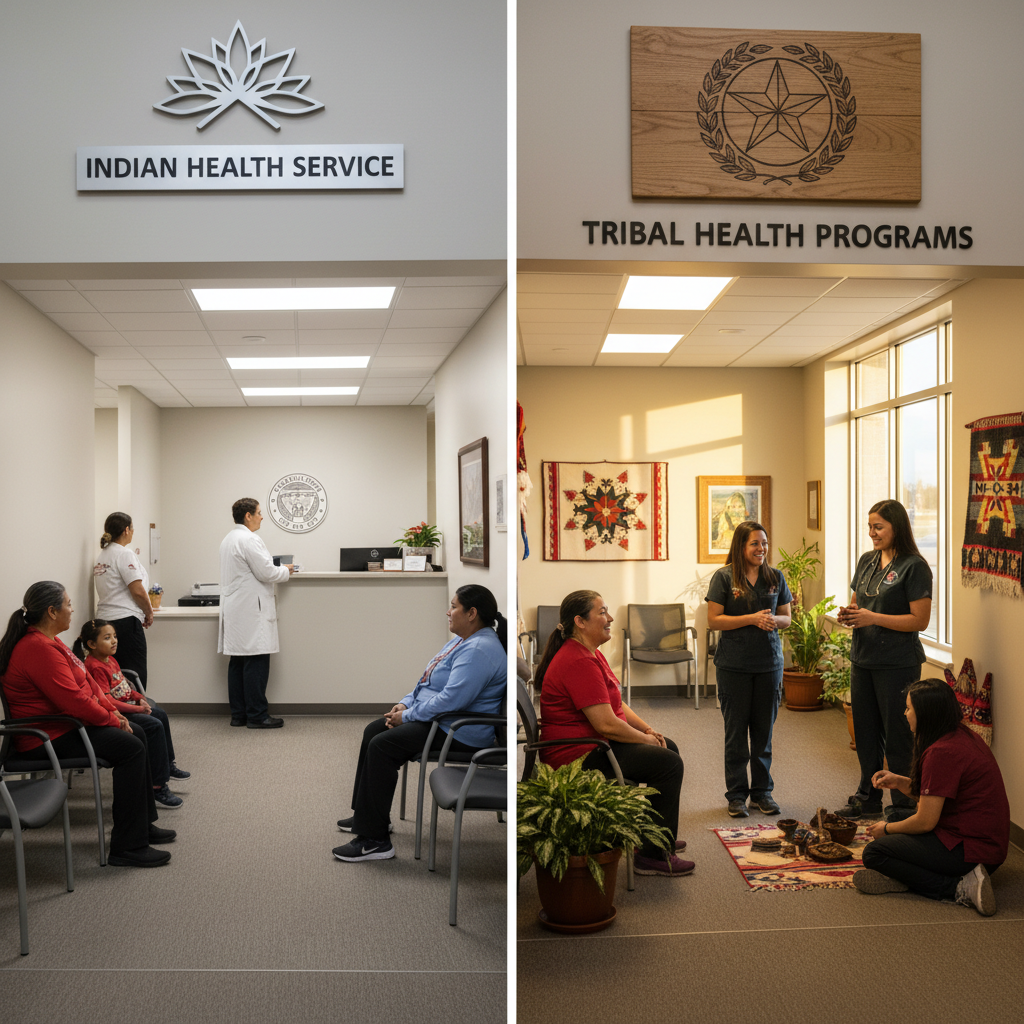
Indian Health Service vs. Tribal Health Programs: What’s the Difference?
Let’s get one thing straight from the jump: the healthcare provided to Indigenous people in the United States isn’t a “gift.” It isn’t a “handout,” and it certainly isn’t a “perk” of tribal citizenship. It is a pre-paid debt. When the United States government signed treaties with Tribal Nations, they exchanged vast swaths of land and resources for, among other things, the promise of healthcare. Today, that promise is fulfilled through two primary avenues: the Indian Health Service (IHS) and Tribal Health Programs. While they might look similar from the outside, the difference between a federally managed clinic and a tribally-operated health system is the difference between surviving and thriving. At Osiyo.net, we believe in looking at the history behind the policy. If you are just beginning your journey to understand your heritage, you might want to start here before diving into the complexities of federal healthcare administration.
The Trust Responsibility: A Debt Unpaid
To understand the difference between IHS and Tribal Health, you have to understand the “Trust Responsibility.” This is a legal obligation under which the United States has charged itself with moral obligations of the highest responsibility and trust toward Indian Tribes. Historically, the U.S. has been… let’s say “less than consistent” in meeting these obligations. For decades, healthcare for Native people was handled by the War Department, and later the Bureau of Indian Affairs (BIA). It wasn’t until 1955 that the Indian Health Service was created within the Department of Health and Human Services (HHS). For a long time, the IHS was the only game in town—a federal bureaucracy attempting to manage health from a cubicle in Maryland. But then came the 1970s, an era of activism and a demand for sovereignty that changed everything.
What is the Indian Health Service (IHS)?
The Indian Health Service (IHS) is a federal agency. When you walk into a “Direct Service” IHS facility, the doctors are federal employees, the funding is allocated by Congress, and the policies are dictated by federal regulations. While the IHS is staffed by many dedicated professionals—many of whom are Indigenous themselves—it is inherently limited by the whims of the federal budget. Unlike Medicare or Social Security, IHS funding is discretionary. This means if Congress decides to tighten the belt, Native healthcare is often the first thing on the chopping block. This chronic underfunding has led to the infamous “life or limb” rule in many IHS areas, where referred care is only covered if you are in danger of losing a body part or your life.
Key Features of Direct IHS Care:
- Management: Federal government (HHS).
- Staffing: Federal Civil Service or Commissioned Corps employees.
- Funding: Discretionary federal appropriations.
- Decision Making: Top-down from federal headquarters to regional areas.
What are Tribal Health Programs? (The 638 Shift)
In 1975, the game changed with the passage of the Indian Self-Determination and Education Assistance Act (Public Law 93-638). This law allows tribes to say to the federal government: “We can do this better than you.” Under a “638 contract” or a self-governance compact, a Tribal Nation takes over the administration of programs that the IHS would otherwise run. They take the federal money that would have been spent on their behalf and manage it themselves. This isn’t just a change in management; it’s an exercise of sovereignty. Tribal Health Programs allow nations to tailor healthcare to their specific cultural needs, community priorities, and geographic challenges. You can read more about how tribal leadership navigates these sovereign rights in our dedicated section.
Key Features of Tribal Health:
- Management: Tribal governments or tribal health boards.
- Staffing: Tribal employees (often with more competitive local hiring).
- Funding: Federal contract funds plus third-party billing (private insurance, Medicaid).
- Decision Making: Localized, community-driven, and responsive to tribal citizens.
Comparing the Two Systems
| Feature | Indian Health Service (Direct) | Tribal Health Programs (638/Compact) |
|---|---|---|
| Authority | Federal Law/HHS | Tribal Sovereignty/ISDEAA |
| Accountability | To Congress/Executive Branch | To Tribal Citizens/Tribal Council |
| Cultural Relevance | Generalized/Institutional | Deeply integrated with local traditions |
| Innovation | Slow, bureaucratic hurdles | Agile, ability to pilot new programs |
| Revenue | Primarily Federal Budget | Federal funds + aggressive insurance billing |
The Three Cherokee Nations and Healthcare
The distinction between IHS and Tribal Health is nowhere more evident than within the three federally recognized Cherokee tribes. Each has taken a slightly different path toward healthcare sovereignty. For a broader look at the differences between these nations, visit our tribal resource page.
1. Cherokee Nation (CN)
The Cherokee Nation, headquartered in Tahlequah, Oklahoma, operates the largest tribally managed health system in the United States. They don’t just have clinics; they have a massive, state-of-the-art outpatient facility and even their own medical school in partnership with Oklahoma State University. The Cherokee Nation has fully embraced self-governance, compacting with the federal government to run their entire health network. This allows them to reinvest profits from third-party billing back into the community, expanding services like behavioral health and cancer care far beyond what the federal government would have provided.
2. Eastern Band of Cherokee Indians (EBCI)
In North Carolina, the EBCI operates the Cherokee Indian Hospital Authority (CIHA). Like the Cherokee Nation, the EBCI has taken control of its healthcare destiny. Their facility in Cherokee, NC, is a model of “Integrated Care,” combining modern medicine with Cherokee culture and language. By moving away from direct IHS management, the EBCI has been able to build facilities that feel like community hubs rather than sterile government institutions. For those exploring their connection to the Eastern Band, understanding Cherokee citizenship is a vital first step.
3. United Keetoowah Band of Cherokee Indians (UKB)
The United Keetoowah Band has a unique history and legal landscape. While they may not operate a massive hospital system like the Cherokee Nation, their citizens often access care through a mix of IHS facilities and tribal partnerships. The UKB continues to advocate for its right to provide direct services to its members, emphasizing that sovereignty isn’t about size—it’s about the right to self-govern. You can learn more about the Keetoowah perspective in our community stories section.
“Sovereignty is not something given by the federal government; it is inherent. When we take over our own healthcare, we are simply reclaiming what was always ours to manage.” – Anonymous Tribal Health Administrator
Common Misconceptions and the “Edgy” Truth
Let’s debunk some myths that persist in both the settler and Indigenous communities. First, the idea that IHS is “health insurance.” It isn’t. It is a health delivery system. If you go to a private hospital without a referral, the IHS isn’t going to just pay the bill like Blue Cross Blue Shield would. Second, the misconception that Tribal Health is “inferior.” In reality, many 638-operated facilities outperform federal sites because they are accountable to the people sitting in the waiting room—their own cousins, elders, and neighbors—not a bureaucrat in D.C. Finally, the hard truth: healthcare is often used as a tool of colonization. By controlling the health of a population, you control the population. Moving to Tribal Health is a decolonial act.
Key Takeaways
- IHS is Federal: It’s a government agency subject to federal budgets and rules.
- Tribal Health is Sovereign: It’s managed by the tribes themselves under PL 93-638.
- Compacting vs. Contracting: Large tribes like the Cherokee Nation “compact” for full control; others may “contract” for specific programs.
- Third-Party Billing: Tribal programs are often better at billing insurance, which keeps more money in the community.
- It’s a Right: Regardless of who manages it, healthcare is a treaty-obligated right for tribal citizens.
Frequently Asked Questions
Do I need a ‘CDIB’ to go to a tribal clinic?
Generally, you must show proof of enrollment in a federally recognized tribe or a Certificate of Degree of Indian Blood (CDIB). However, each facility has its own policies regarding descendants or members of other tribes. We have a guide on the Indian Card if you need to learn more about these documents.
Can I go to any tribal health clinic if I’m a Cherokee citizen?
If you are a citizen of the Cherokee Nation, you have access to CN facilities. If you are away from home, you can usually receive care at any IHS or other 638 facility, but you might be limited to “direct care” only (services provided inside the building) rather than “purchased/referred care” (services outside the facility).
Is Tribal Health better than IHS?
Most experts and tribal citizens agree that Tribal Health is superior because it is more responsive to the community. It allows for shorter wait times, better technology, and the integration of traditional healing practices that the federal government often ignores.
Next Steps
- Check Your Enrollment: If you aren’t yet enrolled, research the specific requirements for the Cherokee Nation, the EBCI, or the UKB.
- Find Your Facility: Use the IHS Facility Locator to find the nearest clinic, but check if it’s 638-operated for a different experience.
- Update Your Insurance: If you have private insurance or Medicaid, make sure your tribal clinic has it on file. This helps the tribe capture more funding for the whole community.
- Learn More: Dive into the history of final rolls to understand how tribal healthcare eligibility is determined today.
Last reviewed: June 2026
Osiyo.net is an independently operated information platform. Always verify enrollment information directly with the specific Tribal Nation.