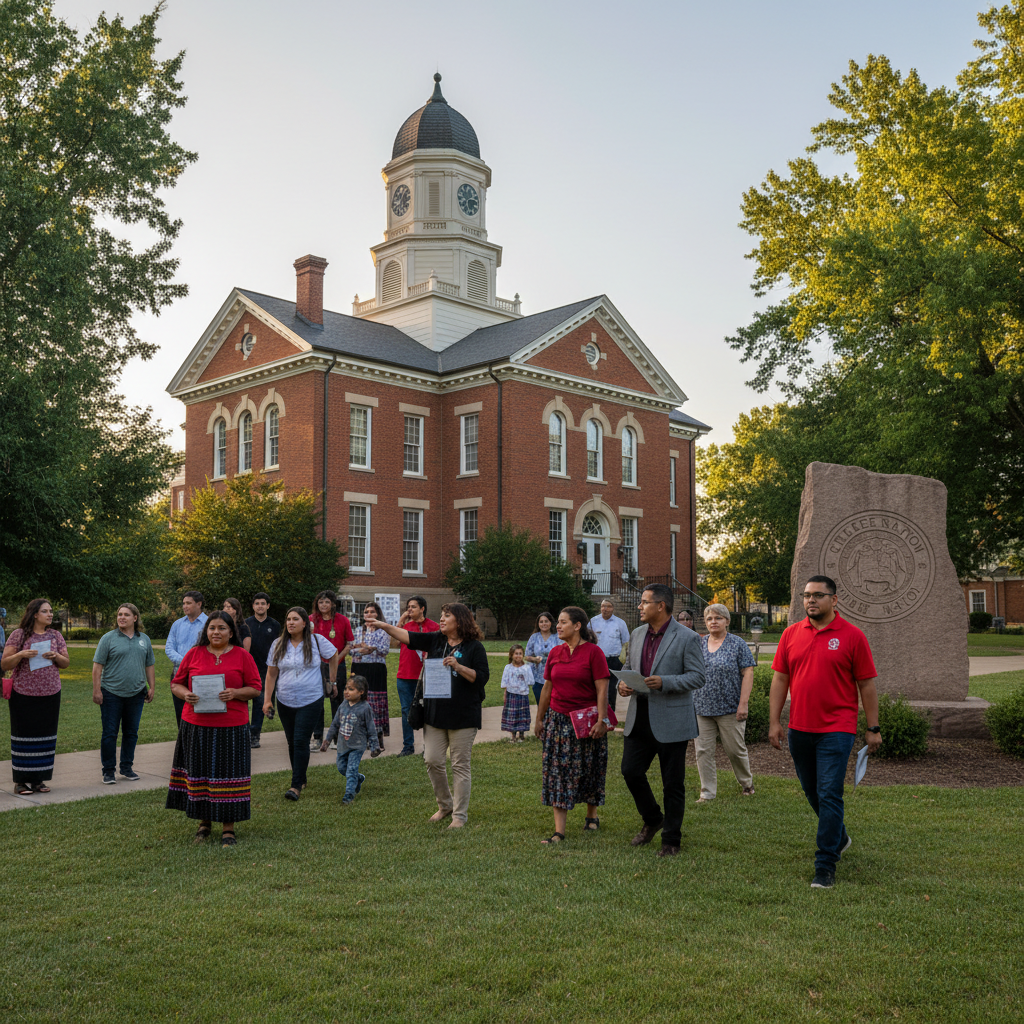
Tahlequah, Oklahoma: The Living Capital of the Cherokee Nation
Forget what you think you know about small-town Oklahoma. Tahlequah isn’t just a dot on the map between the Ozarks and the prairie; it is the beating heart of a sovereign nation. For those seeking to understand the resilience, governance, and culture of the Cherokee people, Tahlequah serves as more than a destination—it is a testament to survival. Whether you are a tribal citizen visiting the seat of your government or a traveler looking for history that doesn’t come from a whitewashed textbook, this guide covers the essentials of the Cherokee capital.
Key Takeaways
- Tahlequah is the capital of both the Cherokee Nation and the United Keetoowah Band of Cherokee Indians.
- It was established as the capital in 1839 following the forced removal known as the Trail of Tears.
- The city is home to Northeastern State University, which evolved from the original Cherokee Female Seminary.
- Cultural tourism thrives here through museums, traditional sites, and the scenic Illinois River.
- Understanding sovereignty is key to respecting the local landscape and legal jurisdiction.
A History Written in Stone and Sovereignty
Tahlequah didn’t happen by accident. It was a choice. After the devastating forced removal from their homelands in the Southeast, the Cherokee people reconvened in 1839. They didn’t just build shelters; they built a government. When you walk through the Town Square, you are walking on the grounds where the 1839 Act of Union was signed, merging the ‘Old Settlers’ (those who moved west before the Trail) and the newcomers into one body politic.
"Tahlequah represents the endurance of the Cherokee spirit. It is where we rebuilt our courts, our schools, and our future after the world tried to take them away."
The name ‘Tahlequah’ is derived from the Cherokee word Dah-li-gwa, which refers to ‘two are enough’ or ‘just two,’ though legends vary. Regardless of the etymology, the city remains the epicenter of Cherokee life in the West. It is important to distinguish that while Tahlequah is the capital for two federally recognized tribes, the Eastern Band of Cherokee Indians remains headquartered in North Carolina on the Qualla Boundary.
The Three Tribes: Who Is Who in Tahlequah?
Visitors often get confused about the ‘three tribes’ of the Cherokee. Here in Tahlequah, the jurisdictional and cultural lines can be complex. You can learn more about the broader context of federally recognized tribes on our platform, but here is a quick breakdown for the capital city:
| Tribal Nation | Headquarters | Focus/Identity |
|---|---|---|
| Cherokee Nation (CN) | W.W. Keeler Complex, Tahlequah | Largest federally recognized tribe; direct descendant of the historic Cherokee Nation. |
| United Keetoowah Band (UKB) | Tahlequah, OK | Emphasizes Keetoowah identity and traditionalist roots; separate federal recognition. |
| Eastern Band (EBCI) | Cherokee, NC | Descendants of those who remained in the east; independent sovereign nation. |
While the Cherokee Nation is the largest employer and political force in the region, the United Keetoowah Band maintains its own government, services, and cultural sites within the same geographical area. This dual-presence is a unique aspect of Tahlequah’s identity.
Must-Visit Cultural and Historic Sites
The Cherokee National Capitol
Located in the center of town, this building served as the seat of the Cherokee government from 1869 to 1907. It witnessed the dissolution of tribal government during the allotment era and its subsequent rebirth. Today, it houses the Supreme Court of the Cherokee Nation. It is a brick-and-mortar reminder that tribal leadership is an unbroken chain of authority.
The Cherokee National Prison Museum
Forget the romanticized outlaws of the Old West. This museum tells the story of Cherokee law and order. Built in 1875 to house the ‘most dangerous’ criminals in Indian Territory, it now showcases the development of the Cherokee judicial system. It’s a gritty, honest look at the challenges of maintaining sovereignty in a lawless borderland.
Northeastern State University (NSU)
NSU isn’t just a college; it’s a legacy. The iconic Seminary Hall, with its red brick and white columns, was originally the Cherokee Female Seminary. At the time of its construction, it was one of the most advanced educational institutions for women west of the Mississippi. To understand Cherokee education, you have to start here, where the tribe invested in its youth long before Oklahoma was even a state.
The Modern Pulse: Nature and Community
Tahlequah isn’t all history books and courtrooms. The local culture is deeply tied to the land. The Illinois River is a major draw for ‘float trips,’ but for the Cherokee, the water is more than recreation. It’s a source of life and a place for traditional practices.
- The Illinois River: Popular for kayaking and canoeing. Respect the land; this is tribal jurisdiction.
- Lake Tenkiller: Located just south of town, offering some of the clearest water in Oklahoma.
- Spider Gallery: A great place to find authentic Cherokee art, from basketry to beadwork.
When you visit, you might hear the Cherokee language spoken in the grocery store or see street signs in the Cherokee syllabary. This isn’t for show. It is a lived reality. If you are interested in the personal accounts of those living here today, check out our section on Cherokee stories.
Misconceptions and Sovereignty
One of the biggest ‘edgy’ truths about Tahlequah is that it is not a ‘reservation’ in the way many people think, yet the Supreme Court’s McGirt and Hooper decisions have reaffirmed that the Cherokee Nation’s reservation was never disestablished. This means the tribe has significant legal authority over the land. When you are in Tahlequah, you are in the Cherokee Nation. This impacts everything from taxes to police jurisdiction.
Another misconception? That everyone in Tahlequah is ‘part’ Cherokee. While the tribal influence is everywhere, the community is diverse. However, the political and social weight of the tribe is the foundation upon which the city sits. For those looking to understand their own connection to this history, we recommend starting with a search of the final rolls to understand historical census data, though official citizenship is a separate, formal process.
Next Steps for Your Visit
- Start at the Welcome Center: Grab a map and some coffee. The Cherokee Nation Welcome Center on Hwy 62 is the best first stop.
- Visit the Heritage Center: Located in nearby Park Hill, this site includes the Diligwa living history village.
- Check the Calendar: Try to visit during the Cherokee National Holiday (Labor Day weekend) for the full experience of the capital in bloom.
- Support Local: Eat at local diners and buy art directly from tribal citizens.
Frequently Asked Questions
Is Tahlequah the only Cherokee capital?
It is the capital of the Cherokee Nation and the United Keetoowah Band. The Eastern Band of Cherokee Indians is headquartered in Cherokee, North Carolina. Historically, New Echota (in Georgia) was the capital before removal.
Do I need a special permit to visit Tahlequah?
No. Tahlequah is a public city within the state of Oklahoma and the Cherokee Nation reservation. Visitors are welcome, though you should respect private tribal property and government buildings.
Where can I learn about Cherokee citizenship while in town?
While Osiyo.net provides general info, you must go to the W.W. Keeler Complex (the ‘Tribal Complex’) to speak with the registration department. You can read about the general requirements for Cherokee citizenship here first to save time.
What is the best time of year to visit?
Spring and Fall offer the best weather for outdoor historical tours and river activities. The Cherokee National Holiday in late August/early September is the largest annual gathering, featuring a parade, powwow, and state-of-the-nation address.
Last reviewed: June 2026
Osiyo.net is an independently operated information platform. Always verify enrollment information directly with the specific Tribal Nation.