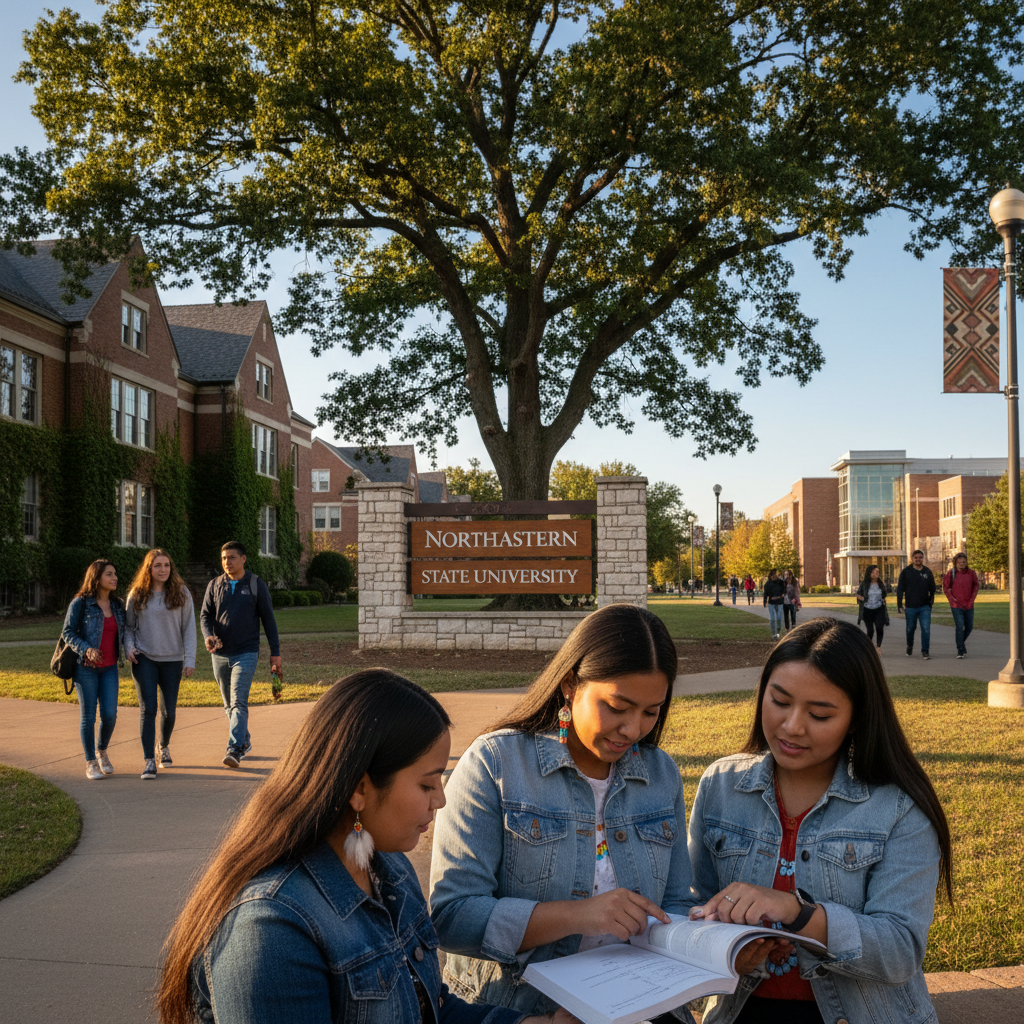
Northeastern State University and Cherokee Nation: The Powerhouse of Higher Education in Tahlequah
If you think Tahlequah, Oklahoma, is just another sleepy college town, you haven’t been paying attention. This is the heart of the Cherokee Nation, and Northeastern State University (NSU) isn’t just an institution that happens to be here—it is an institution that exists because the Cherokee people demanded it. Long before Oklahoma was a state, the Cherokee Nation was building the foundation for what would become one of the most unique educational partnerships in the United States.
At Osiyo.net, we don’t just regurgitate brochures. We look at the history, the sovereignty, and the reality of life in the capital of the Cherokee Nation. Whether you are a prospective student, a citizen looking for education resources, or just someone trying to understand how a university and a sovereign nation coexist, this is your deep dive into the academic soul of Tahlequah.
Disclaimer: Osiyo.net is an independently operated information platform. We are not an official tribal government site. Always verify enrollment and scholarship eligibility directly with the specific Tribal Nation.
Key Takeaways
- NSU grew directly out of the Cherokee Female Seminary, established in 1851.
- The partnership between the Cherokee Nation and NSU includes dedicated scholarships, healthcare facilities, and language preservation.
- Tahlequah serves as the capital for both the Cherokee Nation and the United Keetoowah Band of Cherokee Indians (UKB).
- NSU offers the only degree in Cherokee Language Education in the world.
The Edgy History: From Displaced to Educated
Let’s clear the air: the history of education in Indian Country is often a dark one, filled with forced boarding schools designed to “kill the Indian and save the man.” But the Cherokee story in Tahlequah is different. This wasn’t something forced upon the people; it was something built by them. After the devastation of the Trail of Tears, the Cherokee Nation prioritized two things: their government and their schools.
In 1851, the Cherokee Female Seminary opened its doors. It was the first institution of higher learning for women west of the Mississippi River. Think about that for a second. While the rest of the American frontier was still figuring out basic survival, the Cherokee Nation was teaching its women Virgil, Latin, and higher mathematics. When the seminary building burned down in 1887, it was rebuilt at the site where NSU stands today. In 1909, the State of Oklahoma bought the building to create a normal school, but the Cherokee DNA never left the bricks.
The Three Tribes Context
While we talk about the “Cherokee Nation” in the context of Tahlequah, it’s vital to remember that there are three distinct, sovereign, federally recognized Cherokee tribes. Understanding the difference is key to navigating tribal resources.
- Cherokee Nation (CN): Headquartered in Tahlequah, OK. They are the primary partner for most NSU initiatives.
- United Keetoowah Band of Cherokee Indians (UKB): Also headquartered in Tahlequah. They have a distinct history and membership criteria.
- Eastern Band of Cherokee Indians (EBCI): Headquartered in Cherokee, North Carolina. They are the descendants of those who remained in the homelands.
Sovereignty in the Classroom: The NSU-Cherokee Nation Partnership
Today, the relationship between NSU and the Cherokee Nation isn’t just symbolic; it’s structural. You can’t walk across campus without seeing the impact of the Nation’s sovereignty and economic power. This isn’t just “diversity and inclusion” window dressing—it’s a functioning alliance.
Financial Support and Scholarships
For many Cherokee citizens, NSU is the top choice because of the robust financial infrastructure. The Cherokee Nation provides millions in scholarship funds annually to its citizens attending NSU. This is a exercise of sovereignty—investing in the human capital of the Nation. If you are looking to start your journey, check out our guide on how to begin your academic search.
The Jack Dancy Senior Health Center
This is where things get interesting. On the NSU campus, you’ll find health facilities that are a result of a partnership between the university and the Cherokee Nation Health Services. This provides nursing and optometry students with hands-on experience while serving the tribal community. It’s a win-win that most state schools could only dream of.
Academic Programs That Actually Matter
If you’re going to study in the capital of a sovereign nation, you shouldn’t just be taking General Ed. NSU offers programs that are specifically designed to preserve and advance Cherokee culture and governance.
- Cherokee Language Education: NSU offers a degree specifically for those who want to teach the Cherokee language. In an era where Indigenous languages are at risk, this is a frontline defense.
- American Indian Studies: This isn’t just history from a colonial perspective. It’s a deep dive into law, policy, and the reality of the CDIB and tribal citizenship.
- Indigenous Leadership: Training the next generation of tribal administrators and leaders to navigate the complex world of federal-tribal relations.
Comparing NSU to Standard State Universities
| Feature | Standard State University | NSU (Tahlequah) |
|---|---|---|
| History | Usually founded by state legislature. | Founded as Cherokee Female Seminary (1851). |
| Language Programs | Spanish, French, German. | World-renowned Cherokee Language program. |
| Tribal Governance | Limited to a student club. | Integrated through CN/UKB partnerships. |
| Student Demographic | General population. | One of the highest Native populations in the U.S. |
Navigating the “Tahlequah Experience”
Tahlequah is more than just a place to study; it’s a place to live the culture. From the Cherokee National Research Center to the annual Cherokee National Holiday, students are immersed in a living, breathing culture. However, don’t fall for the “Disneyfied” version of history. The reality of life here involves understanding the ongoing struggle for sovereignty and the complex relationship between the tribes and the state of Oklahoma.
For those interested in the deep history of the area, exploring the Dawes Rolls and genealogical records at the local archives is a common rite of passage. It connects the academic present to the ancestral past.
FAQ
Is NSU a tribal college?
Technically, no. NSU is a member of the Regional University System of Oklahoma. However, it is an “authorized” institution for many tribal programs and has a historic foundation as a Cherokee institution. For information on actual tribal colleges, visit the Bureau of Indian Affairs website.
Do all Cherokee citizens get free tuition at NSU?
No. While the Cherokee Nation offers significant scholarship opportunities, tuition is not automatically “free.” Students must apply for tribal scholarships and meet specific criteria. Visit cherokee.org for official scholarship details.
What is the difference between the Cherokee Nation and the UKB?
They are two separate, federally recognized tribes with their own governments, membership rules, and histories. Both are headquartered in Tahlequah and have students attending NSU. You can learn more about the UKB at ukb-nsn.gov.
Can non-Native students take Cherokee language classes?
Yes. The programs are open to all students, though they are specifically designed to support the preservation of the language within the Cherokee community.
Next Steps
- Visit the Campus: Schedule a tour of NSU and make sure to stop by the Cherokee National Capitol building downtown.
- Check Eligibility: If you believe you have Cherokee ancestry, start your research with our citizenship guide.
- Apply for Funding: Reach out to the Cherokee Nation Education Services or the UKB Education Department early.
- Read the Stories: Check out our community stories to hear from current students and alumni.
Last reviewed: June 2026
Osiyo.net is an independently operated information platform. Always verify enrollment information directly with the specific Tribal Nation.