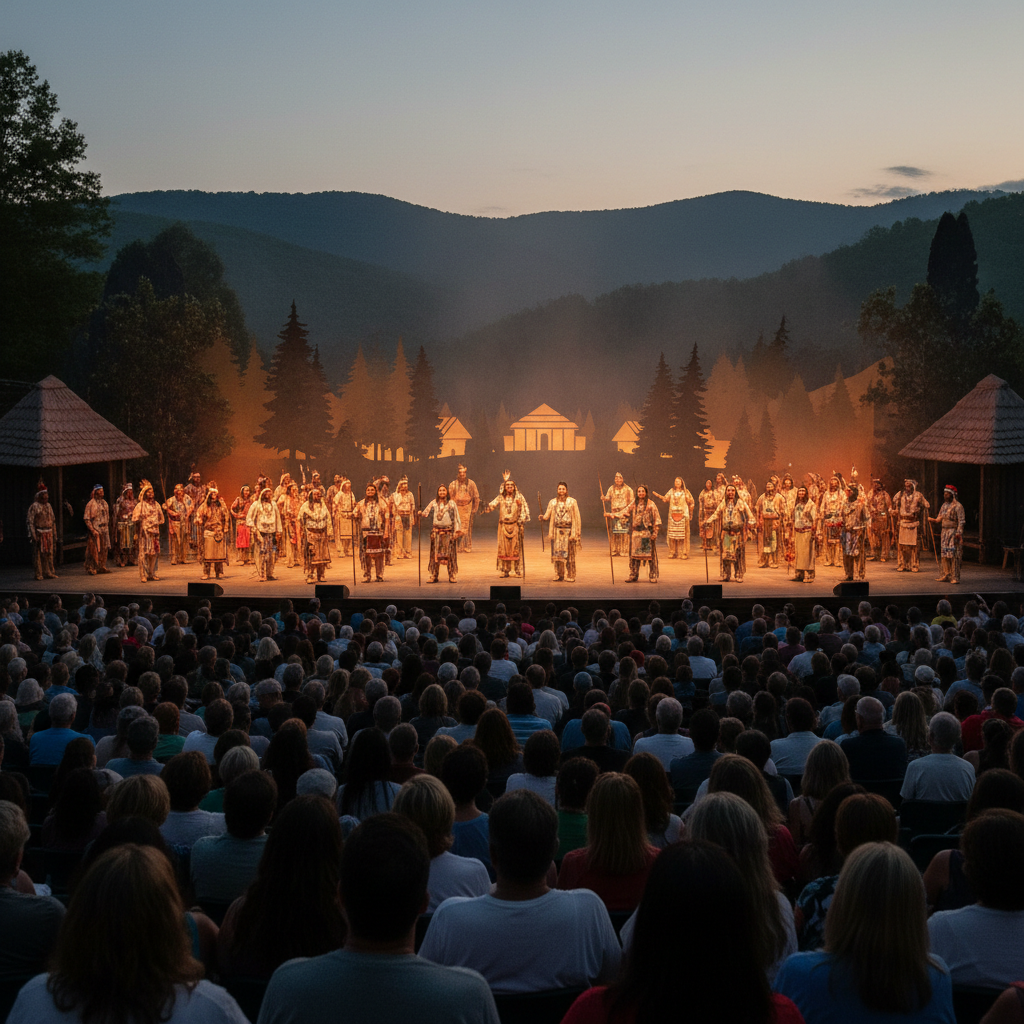
Unto These Hills: The Story Behind Cherokee NC’s Legendary Outdoor Drama
Since 1950, as the sun dips below the peaks of the Great Smoky Mountains, a silence falls over the Mountainside Theatre in Cherokee, North Carolina. Then, the drums begin. For over seven decades, Unto These Hills has served as a cultural cornerstone for the Eastern Band of Cherokee Indians (EBCI) and a mandatory stop for anyone seeking to understand the grit, tragedy, and ultimate triumph of the Cherokee people. But don’t mistake this for a mere tourist trap or a sanitized Hollywood production. This is a story of survival written in the blood of the ancestors who refused to leave their homeland.
Key Takeaways
- Historical Context: The drama depicts the Cherokee experience from 1780 through the Removal era.
- Tribal Focus: It specifically tells the story of the ancestors of the Eastern Band of Cherokee Indians.
- Evolution: The script has evolved from its 1950 origins to better reflect authentic Cherokee perspectives.
- Sovereignty: The production is a significant economic and cultural engine for the Qualla Boundary.
- Logistics: Performed annually during the summer months at the Mountainside Theatre.
More Than Just a Show: The Roots of the Legend
To understand Unto These Hills, you have to understand the geography of survival. While the majority of the Cherokee people were forced west to Indian Territory (modern-day Oklahoma) during the Trail of Tears, a small group remained in the mountains of North Carolina. These people would become the Eastern Band of Cherokee Indians. This isn’t just a “history lesson”; it is a living testament to the ancestors who hid in the caves and high ridges of the Smokies to avoid the stockades.
The drama was originally commissioned in the late 1940s as a way to boost tourism and provide jobs for tribal members. However, it quickly became something much deeper. It became a vessel for collective memory. At Osiyo.net, we believe in telling these stories with the nuance they deserve—acknowledging both the pain of the past and the resilience of the present.
The Qualla Boundary Context
Unlike many reservations in the West, the Qualla Boundary is not a reservation in the legal sense of land “reserved” by the federal government from a larger tract. Instead, it is a land trust, much of it purchased back by the Cherokee people themselves in the 19th century. This unique status is central to the narrative of the play, which highlights the legal and physical struggles to keep a foothold in the ancestral homelands. You can learn more about the complexities of tribal land and history in our tribes overview.
The Legend of Tsali: Sacrifice and Survival
The emotional core of Unto These Hills often centers on the figure of Tsali. According to historical accounts (and the dramatic interpretations within the play), Tsali was a Cherokee man who resisted the forced removal. After a confrontation with soldiers, Tsali and his family fled into the mountains. To allow the rest of the hidden Cherokee to stay in the mountains, Tsali eventually surrendered himself to be executed by the U.S. military.
“Tsali’s sacrifice is the reason we are still here in these mountains. It is a story of an individual giving everything so that the nation might live.” — Common tribal sentiment regarding the narrative.
While historians debate the exact details of the surrender and the deals made with the federal government, the spirit of Tsali’s story is the heartbeat of the Eastern Band. It serves as a stark reminder that Cherokee sovereignty wasn’t a gift—it was bought with incredible personal cost.
Evolution of the Script: From 1950 to Today
Let’s get edgy for a moment: the original 1950 script, written by Kermit Hunter, was a product of its time. While it brought the Cherokee story to a massive audience, it often leaned into the “noble savage” tropes and the “white savior” narrative common in mid-century American media. For decades, many felt the voice of the Cherokee people was being filtered through a non-Native lens.
The 2006 Revision: Reclaiming the Narrative
In 2006, the Cherokee Historical Association took a bold step. They commissioned Hanay Geiogamah, a renowned playwright and member of the Kiowa/Delaware Tribes, to rewrite the script. The goal was simple but profound: make it more authentic. The revised version de-emphasized the role of white characters and brought Cherokee culture, spirituality, and internal tribal dynamics to the forefront.
The change wasn’t without controversy. Some long-time fans missed the old spectacle, but for the Eastern Band, it was an act of cultural reclamation. It moved the drama from being a story about the Cherokee to a story told by the Cherokee. This shift mirrors the broader movement of tribal leadership reclaiming historical narratives across Indian Country.
The Three Cherokee Nations: A Critical Distinction
It is common for visitors to the drama to assume all Cherokee history is the same. It isn’t. While all three federally recognized tribes share a common ancestry and language roots, their histories diverged sharply during the Removal era. Unto These Hills is primarily the origin story of the EBCI.
| Tribe | Location | Primary Historical Origin |
|---|---|---|
| Eastern Band of Cherokee Indians (EBCI) | North Carolina | Descendants of those who remained in the East or returned. |
| Cherokee Nation (CN) | Oklahoma | Descendants of those who traveled the Trail of Tears. |
| United Keetoowah Band (UKB) | Oklahoma | Descendants of the “Old Settlers” who moved West prior to the Trail of Tears. |
Understanding these distinctions is vital for anyone exploring Cherokee citizenship or cultural identity. Each nation is a separate, sovereign entity with its own government, laws, and enrollment criteria.
Planning Your Visit: What to Expect
If you’re heading to the Mountainside Theatre, you aren’t just going to a play; you’re entering a sacred space. The theater is an open-air amphitheater carved into the side of the mountain. Here are a few tips for the modern traveler:
- Weather: It’s the Smokies. It rains. The show usually goes on unless there is dangerous lightning. Bring a poncho.
- The Preshow: Often features traditional Cherokee music and dance. Don’t skip it; it’s as vital as the play itself.
- Authenticity: Look for the hand-made crafts in the gift shop. These are often produced by local EBCI artists and support the local economy.
- Accessibility: The theater has made strides in accessibility, but it is on a mountainside. Plan for some walking or use the provided shuttles.
For more travel tips within the Qualla Boundary, check out our Cherokee travel guide.
FAQ
Is the story in ‘Unto These Hills’ historically accurate?
It is a work of historical fiction based on real events. While the major milestones—the Treaty of New Echota, the Trail of Tears, and Tsali’s sacrifice—are historically factual, the dialogue and specific character arcs are dramatized for the stage. The 2006 revision significantly improved the cultural accuracy of the production.
Who performs in the show?
The cast is a mix of professional actors, local EBCI tribal members, and students. The involvement of tribal members in the production, from acting to technical roles, is a point of pride for the community and ensures a level of cultural continuity.
Where can I find more information about the official EBCI government?
For official tribal matters, always visit ebci.gov. For information on the other Cherokee nations, you can visit cherokee.org (Cherokee Nation) or ukb-nsn.gov (United Keetoowah Band).
Next Steps
If you’re moved by the story of Unto These Hills, don’t let your journey end when the lights go up. Here is how you can dig deeper into the world of Cherokee history and culture:
- Visit the Museum: The Museum of the Cherokee People is located just down the road from the theater and provides a deep dive into the archaeological and historical record.
- Explore the Arts: Visit the Qualla Arts and Crafts Mutual to see the world-class basketry and carving that has sustained the EBCI for generations.
- Read the Records: If you are researching your own connection to this history, start with our guide on searching the final rolls.
- Stay Informed: Follow the current events of the modern Cherokee people to see how the legacy of the ancestors continues in today’s political and cultural landscape.
Unto These Hills isn’t just a play about the past. It’s a declaration that the Cherokee people are still here, still sovereign, and still telling their own stories on their own terms.
Last reviewed: June 2026
Osiyo.net is an independently operated information platform. Always verify enrollment information directly with the specific Tribal Nation.