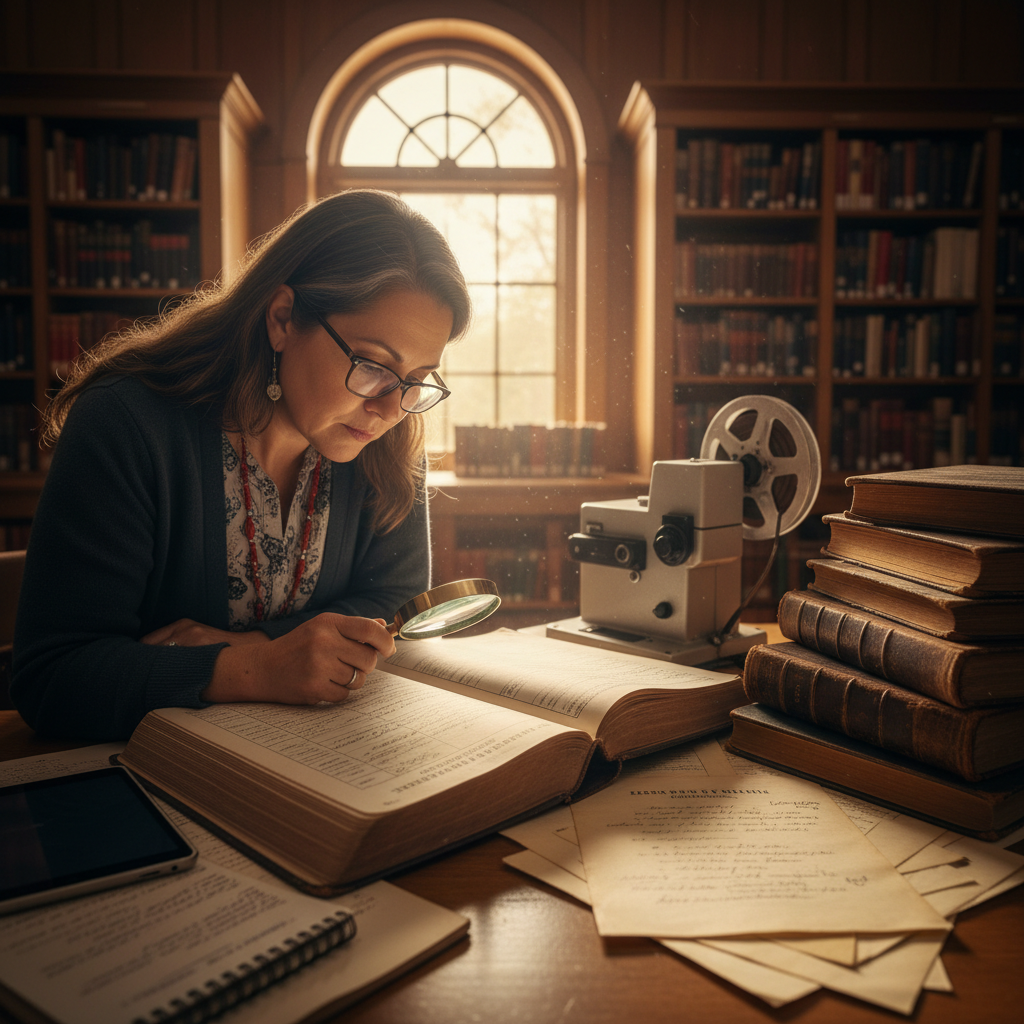
Finding Your People: A Guide to the Baker Roll for Eastern Band Cherokee Ancestry
Let’s cut through the noise. If you have been told your great-grandmother was a “Cherokee Princess” from North Carolina, you are likely looking at a complex genealogical puzzle. In the world of Cherokee heritage, names on a list aren’t just names—they are the legal and cultural bedrock of identity. When it comes to the Eastern Band of Cherokee Indians (EBCI), the gatekeeper of history is the 1924 Baker Roll.
At Osiyo.net, we aren’t here to play gatekeeper ourselves, but we are here to ensure you don’t waste time chasing ghosts. History is messy, and the federal government’s obsession with documenting Indigenous people was often invasive and flawed. However, those records—specifically the Baker Roll—are now the primary tools for anyone looking to connect with their Eastern Cherokee roots. This guide will walk you through the history, the search process, and the nuances of the Baker Roll without the sugar-coating.
Key Takeaways
- The Baker Roll is the base roll for the Eastern Band of Cherokee Indians (EBCI) located in North Carolina.
- It is distinct from the Dawes Roll, which applies to the Cherokee Nation and United Keetoowah Band in Oklahoma.
- The roll was finalized in 1924 (revised through 1929) and contains names, ages, blood quantum, and relationship data.
- Finding an ancestor on this roll is a historical discovery, not an automatic path to enrollment.
- Always verify data with official tribal sources like ebci.com.
The Three Nations: Knowing Who is Who
Before you dive into the archives, you need to understand which Cherokee tribe you are actually researching. There is no singular \”Cherokee Tribe.\” There are three federally recognized Cherokee nations, each with its own history and its own rolls. You can learn more about these distinctions in our guide to the Three Cherokee Nations.
| Tribe | Location | Primary Historical Roll |
|---|---|---|
| Eastern Band of Cherokee Indians (EBCI) | North Carolina (Qualla Boundary) | Baker Roll (1924) |
| Cherokee Nation (CNO) | Oklahoma (Tahlequah) | Dawes Roll (1898-1914) |
| United Keetoowah Band (UKB) | Oklahoma (Tahlequah) | Dawes Roll / UKB Base Rolls |
If your ancestors remained in the mountains of North Carolina while others were forced west on the Trail of Tears, the Baker Roll is your primary target. If they went to Indian Territory (Oklahoma), you need to be looking at the Final Rolls of the Five Civilized Tribes, commonly known as the Dawes Roll.
What Exactly is the Baker Roll?
Named after Fred A. Baker, the roll was the result of the Act of June 4, 1924. Its purpose was to create a final list of members of the Eastern Band of Cherokee Indians for the purpose of allotting communal lands into individual parcels—a process the tribe ultimately resisted, preserving their communal land base (the Qualla Boundary).
\”The Baker Roll is more than a census; it was a snapshot of a resilient people who navigated the pressures of the federal government while maintaining their foothold in their ancestral homelands.\”
The roll includes those who were living in North Carolina and were deemed members of the Eastern Band at the time. It provides critical data points: Baker Number, Name, Age in 1924, Sex, Degree of Cherokee Blood (Blood Quantum), and Relationship to the head of the household.
Step-by-Step: How to Search the Baker Roll
Ready to start the hunt? If you’re a beginner, check out our getting started guide. Otherwise, follow these steps to locate an ancestor on the Baker Roll.
1. Gather Your Vital Records
You cannot jump straight to 1924. You must work backward. Start with your own birth certificate, then your parents’, then your grandparents’. You are looking for ancestors who would have been alive and living in Western North Carolina (specifically counties like Swain, Jackson, Graham, and Cherokee) between 1924 and 1929.
2. Access the Roll Online
The Baker Roll is digitized and available through several repositories. You don’t necessarily need to travel to the National Archives in DC to find it. Useful resources include:
- National Archives (NARA): The official keeper of the records. Search for “Baker Roll of Eastern Cherokee, 1924.”
- AccessGenealogy: Offers a free, searchable index of the Baker Roll.
- Fold3 and Ancestry: These paid services often have high-quality scans of the original handwritten and typed documents.
3. Use Variations of Names
Phonetic spelling was common. A name might be recorded as “Tsali” in one place and “Charley” in another. Be prepared to search for nicknames and maiden names. The roll often lists both an “English Name” and an “Indian Name” column, though by 1924, most were using English names for official purposes.
4. Analyze the Results
Once you find a potential match, look at the blood quantum and the family grouping. Does the age align with what you know from the 1920 or 1930 US Federal Census? If the Baker Roll lists an ancestor with a 1/2 blood quantum, it suggests their parents were also deeply rooted in the community. You can cross-reference this with the Guion Miller Roll (1906-1910), which often provides more narrative detail on family lineages.
The “Blood Quantum” Edge
Here is where things get controversial. The Baker Roll is the document where “blood quantum” was formalized for the EBCI. Many modern researchers find the concept of measuring “Indian-ness” via fractions to be a colonial construct designed to eventually “breed out” Indigenous identity. However, for the EBCI, these numbers are the legal standard for citizenship today. When you look at the Baker Roll, understand that those fractions were determined by federal agents and tribal testimony nearly a century ago—they are often precise, but they are also a product of their time.
Baker Roll vs. Other Eastern Cherokee Rolls
The Baker Roll didn’t appear out of thin air. It was preceded by several other censuses of the Eastern Band. If your ancestor isn’t on the Baker Roll, they might appear on these:
- Mullay Roll (1848): The first census of the Cherokees who remained in NC after the removal.
- Siler Roll (1851): Created to determine eligibility for a per capita payment.
- Chapman Roll (1852): A follow-up to the Siler Roll.
- Hester Roll (1884): A very detailed census that includes names, ages, and relationships.
If an ancestor is on the Hester Roll but not the Baker Roll, it could mean they moved away from the Qualla Boundary, passed away, or were simply missed by the enumerators. However, for modern EBCI enrollment, the Baker Roll is the “Base Roll” that matters most.
Common Pitfalls in Baker Roll Research
Don’t fall into these common traps:
- Confusing the Tribes: Just because someone was Cherokee in North Carolina doesn’t mean they stayed. Many moved to Oklahoma later and appear on the Dawes Roll. Check both.
- Assuming Enrollment: Finding an ancestor on the Baker Roll is an incredible piece of family history, but it does not equate to a CDIB or Tribal Membership. Each tribe has strict, sovereign laws regarding citizenship.
- Ignoring the Rejections: The Baker Roll also has a list of “Rejected” applicants. If your ancestor was rejected, the file will often explain why—perhaps they couldn’t prove their descent or they were already affiliated with another tribe.
Next Steps for Your Research
- Visit the EBCI Tribal Enrollment Office website at ebci.com/enrollment for official information on their current requirements.
- Check out our section on Cherokee Education to learn more about the history taught on the Qualla Boundary.
- Explore Cherokee Stories to understand the cultural context of the families listed on these rolls.
- Consult the Bureau of Indian Affairs (BIA) for general information on tracing American Indian ancestry.
Frequently Asked Questions
Is the Baker Roll the same as the Dawes Roll?
No. The Baker Roll (1924) is for the Eastern Band of Cherokee Indians in North Carolina. The Dawes Roll (1898-1914) is for the Cherokee Nation and United Keetoowah Band in Oklahoma.
What if my ancestor is on the Baker Roll but I don’t have enough blood quantum?
Enrollment requirements are set by the sovereign EBCI government. Currently, they require a 1/16th blood quantum derived from an ancestor on the Baker Roll. Even if you don’t qualify for enrollment, finding your ancestor is a valid and powerful way to honor your heritage and family history.
Where can I view the original Baker Roll documents?
The original documents are held by the National Archives (NARA). Digital versions are available on sites like Ancestry.com, Fold3, and through various genealogical libraries in North Carolina.
What does the ‘Index Number’ mean on the roll?
The index number is the unique identifier assigned to an individual on that specific roll. It is used to track the individual through the various pages of the census and is essential for ordering copies of original records from the BIA or NARA.
Last reviewed: June 2026
Osiyo.net is an independently operated information platform. Always verify enrollment information directly with the specific Tribal Nation.