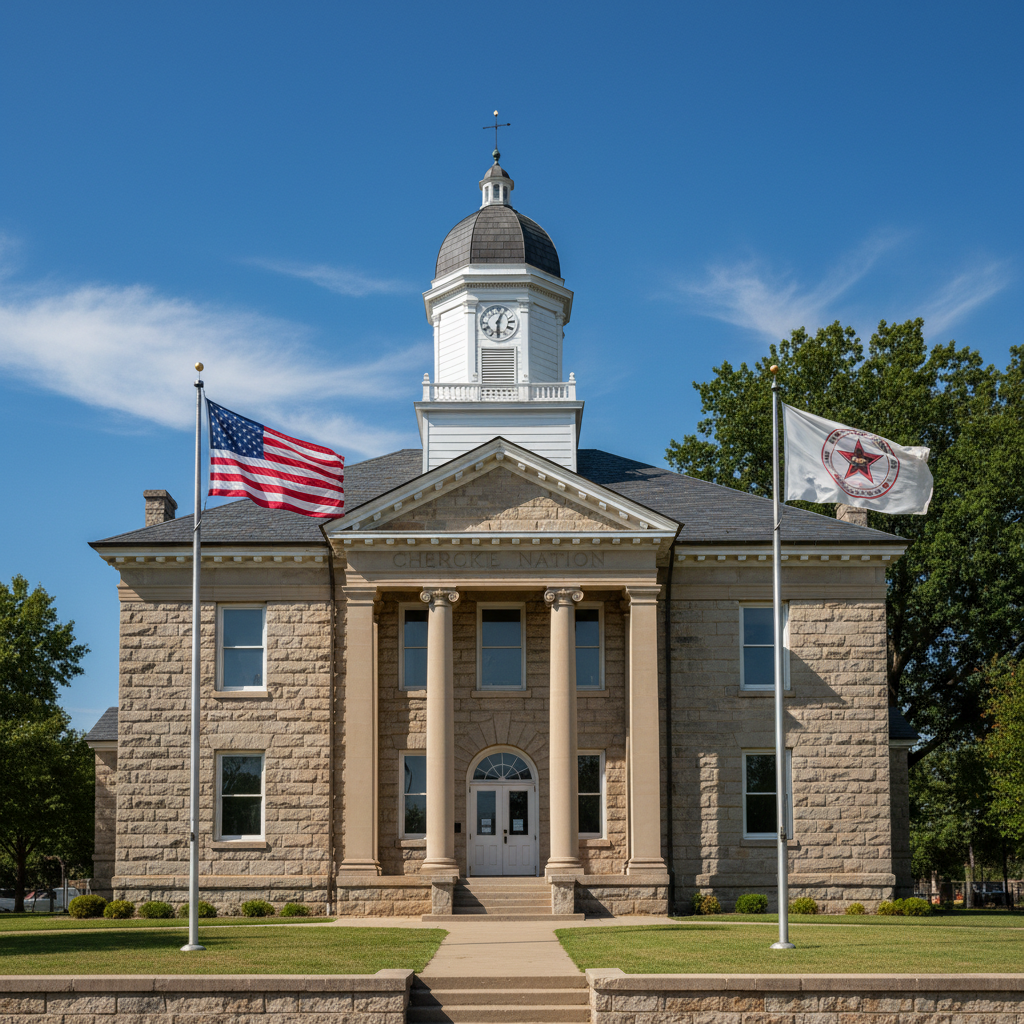
Understanding Tribal Sovereignty for Cherokee Citizens
Osiyo! If you are exploring your roots or are already a citizen of one of the three federally recognized Cherokee tribes, you’ve likely heard the term tribal sovereignty. But what does it actually mean for you, your family, and your community? At Osiyo.net, we believe understanding the legal and cultural backbone of our nations is just as important as finding your ancestors on a roll. It’s the difference between being a member of a club and being a citizen of a nation. Before we dive in, let’s get the legalities out of the way: Osiyo.net is an independent information platform. We are not an official website of any Tribal Nation or government agency. We don’t determine eligibility—only the Tribal Nations themselves can do that.
Key Takeaways: What You Need to Know
- Inherent Power: Tribal sovereignty is not a gift from the U.S. government; it is an inherent right that predates the United States.
- Sovereign Rule: Each Tribal Nation is a sovereign government that sets its own enrollment rules. There is no “one-size-fits-all” for Cherokee citizenship.
- Three Distinct Nations: There are three federally recognized Cherokee tribes, each with its own government, laws, and sovereignty: the Cherokee Nation, the Eastern Band of Cherokee Indians, and the United Keetoowah Band of Cherokee Indians.
- Government-to-Government: Tribal Nations interact with the U.S. federal government on a peer-to-level basis, governed by treaties and federal law.
The Foundation: What is Tribal Sovereignty?
In the simplest terms, tribal sovereignty is the right of Indigenous people to govern themselves. Imagine your house. You decide who comes in, what the rules are for the dinner table, and how you manage your budget. Tribal sovereignty is that, but on a national scale. It includes the power to form a government, determine citizenship, administer justice, and manage tribal lands and resources.
For tribal sovereignty for Cherokee citizens, this isn’t just a legal theory—it’s a lived reality. It affects everything from the license plate on your car to the court system that handles civil disputes. It is the reason the Cherokee people have survived centuries of attempted forced assimilation and removal. Our sovereignty is the shield that protects our culture, our language, and our future.
“The Cherokee Nation is a distinct community, occupying its own territory, with boundaries accurately described, in which the laws of Georgia can have no force.” — Chief Justice John Marshall, Worcester v. Georgia (1832).
While that 1832 quote sounds great, we know history wasn’t that simple. The U.S. government spent the next century trying to ignore that very ruling. But the core principle remains: we are nations, not just ethnic groups or social clubs.
The Three Federally Recognized Cherokee Tribes
It is a common mistake for folks to think there is only one “Cherokee tribe.” In reality, there are three distinct, sovereign Cherokee nations recognized by the U.S. federal government. Each has its own constitution and its own criteria for who belongs. If you’re researching your heritage, you must understand which nation your ancestors belonged to.
1. Cherokee Nation (Oklahoma)
Based in Tahlequah, Oklahoma, the Cherokee Nation is the largest of the three. Their sovereignty is rooted in their 1975 Constitution (and subsequent amendments). Citizenship is based on lineal descent from ancestors listed on the Dawes Rolls (Final Rolls of the Five Civilized Tribes). They do not use a blood quantum requirement. You can learn more about their specific requirements on our Cherokee citizenship page.
2. Eastern Band of Cherokee Indians (North Carolina)
The EBCI are the descendants of those who remained in the homelands in the East (primarily Western North Carolina) during the Trail of Tears. Their sovereignty is unique, and they operate under a different set of federal recognitions and their own tribal code. Unlike the Cherokee Nation, the EBCI currently requires a blood quantum of 1/16th for enrollment, based on the Baker Roll of 1924. This is a perfect example of how sovereignty allows each nation to set its own rules.
3. United Keetoowah Band of Cherokee Indians (Oklahoma)
Also based in Tahlequah, the UKB consists of descendants of the “Old Settlers”—Cherokees who moved west before the forced removal—and those who maintained a distinct traditional and political identity. They have their own government, separate from the Cherokee Nation. Their enrollment criteria are often based on a combination of blood quantum and descent. Check out our guide on the three federally recognized Cherokee tribes for a deeper dive.
A Comparison of Sovereign Enrollment Rules
| Tribal Nation | Enrollment Basis | Key Historical Record | Location |
|---|---|---|---|
| Cherokee Nation | Lineal Descent | Dawes Rolls | Tahlequah, OK |
| Eastern Band of Cherokee Indians | Blood Quantum (1/16) | 1924 Baker Roll | Cherokee, NC |
| United Keetoowah Band | Blood Quantum (1/4) | 1949 UKB Base Roll | Tahlequah, OK |
Note: These rules are subject to change by the respective sovereign tribal councils. Always check the official tribal websites for the most current information.
The “Edgy” Truth: Sovereignty vs. Colonialism
Let’s be real for a second. The history of tribal sovereignty in the United States is a history of broken promises. The U.S. government has spent centuries trying to “define” sovereignty in ways that benefit the federal government. You’ll hear terms like “domestic dependent nations.” This was a phrase coined by the Supreme Court to basically say, “You’re a nation, but you’re under our protection (and control).”
We have to challenge the idea that the U.S. “gave” us our rights. They didn’t. They recognized them (often poorly) in treaties. A treaty is a contract between two sovereign nations. If the U.S. didn’t view us as sovereign, they wouldn’t have bothered with treaties. The fact that the U.S. government has frequently violated these treaties doesn’t make the tribes less sovereign; it makes the U.S. government a contract-breaker.
Furthermore, we need to address the “blood quantum” politics. For many, blood quantum is seen as a colonial tool designed to eventually “breed out” Indigenous identity so the government can stop fulfilling treaty obligations. This is why many nations, like the Cherokee Nation, have moved toward lineal descent. Sovereignty means the tribe—and only the tribe—gets to decide how they define their people.
Sovereignty in the Modern Era: McGirt and Beyond
Sovereignty isn’t just about history books; it’s about today’s headlines. You might have heard about the McGirt v. Oklahoma Supreme Court decision in 2020. This was a massive win for tribal sovereignty. The court ruled that much of eastern Oklahoma remains an Indian reservation for the purposes of federal criminal law. Why? Because Congress never officially “disestablished” the reservation. This decision reaffirmed that the promises made in treaties still matter, even 150 years later.
Because of sovereignty, Tribal Nations can:
– Operate their own police forces and court systems.
– Provide healthcare through the Indian Health Service (IHS) and tribal-run clinics.
– Manage their own environmental regulations.
– Issue their own tribal citizenship cards (often called “Indian Cards” or blue cards).
The Difference Between CDIB and Tribal Citizenship
One of the most confusing parts of this journey for many is the difference between a CDIB (Certificate of Degree of Indian Blood) and tribal citizenship. This is where sovereignty and federal record-keeping collide.
A CDIB is a document issued by the Bureau of Indian Affairs (BIA). it certifies that you possess a specific degree of Native American blood based on federal records. However, having a CDIB does not mean you are a citizen of a tribe.
Tribal Citizenship is granted by the nation itself. You can have a CDIB but not meet a specific tribe’s enrollment criteria. Conversely, some tribes issue their own combined citizenship/blood cards. Understanding this distinction is vital. We break this down further in our post on CDIB vs. Tribal Citizenship.
How to Respectfully Research Your Ancestry
If you are looking for your ancestors to see if you might be eligible for citizenship, remember that you are looking for more than just a name on a list. You are looking for your connection to a sovereign nation.
Start by talking to your elders and asking specific questions about family history. Look for records in the Final Rolls or the National Archives. But keep this in mind: some ancestors chose not to enroll during the Dawes era because they didn’t trust the government, or they were rightfully afraid of what the list would be used for. While this is a common story, most tribes require a direct link to those official historical rolls for enrollment today because those rolls are the legal foundation of their modern sovereignty.
FAQ: Common Questions About Tribal Sovereignty
Does tribal sovereignty mean tribes are independent countries?
Tribal Nations are “nations within a nation.” They possess inherent sovereignty, but they are also part of the U.S. political system. This means they have a government-to-government relationship with the United States, but they are not “foreign” countries in the way France or Japan are.
Can I have dual citizenship with the U.S. and a Tribal Nation?
Yes. Tribal citizens are citizens of their specific Tribal Nation AND citizens of the United States. This is a unique political status that is often misunderstood as a “racial” classification, but it is actually a political one.
Why are there different rules for different Cherokee tribes?
Because each tribe is sovereign! Just like France and Germany have different rules for who can become a citizen, the Cherokee Nation and the Eastern Band of Cherokee Indians have the right to set their own standards based on their unique history and legal structures.
Does a DNA test prove tribal citizenship?
No. A DNA test can show genetic ancestry, but it cannot establish political citizenship in a Tribal Nation. Sovereignty means the tribe determines who belongs based on their own laws and historical records, not a lab result. See our guide on DNA tests and tribal citizenship for more.
Next Steps: Where to Go From Here
- Identify the Nation: Based on your family history, determine which of the three Cherokee tribes your ancestors likely belonged to.
- Official Outreach: Visit the official government website of that nation (e.g., Cherokee.org, ebci.com, or ukb-nsn.gov).
- Document Your Lineage: Gather birth and death certificates that link you directly to an ancestor on the required historical rolls.
- Read the Law: Familiarize yourself with the tribal citizenship rules for that specific nation.
- Engage with Community: Sovereignty is not just a legal status; it is a community responsibility. Learn about the current issues facing the tribe you are connected to.
Sovereignty is the heartbeat of the Cherokee people. It is the reason we are still here, and it is the reason we will continue to thrive. Whether you are a lifelong citizen or just starting to uncover your heritage, understanding this concept is your first step toward true connection.
Last reviewed: June 2026
Osiyo.net is an independently operated information platform. It is not an official website of any Tribal Nation, the Bureau of Indian Affairs, or any government agency. Always verify enrollment information directly with the specific Tribal Nation.