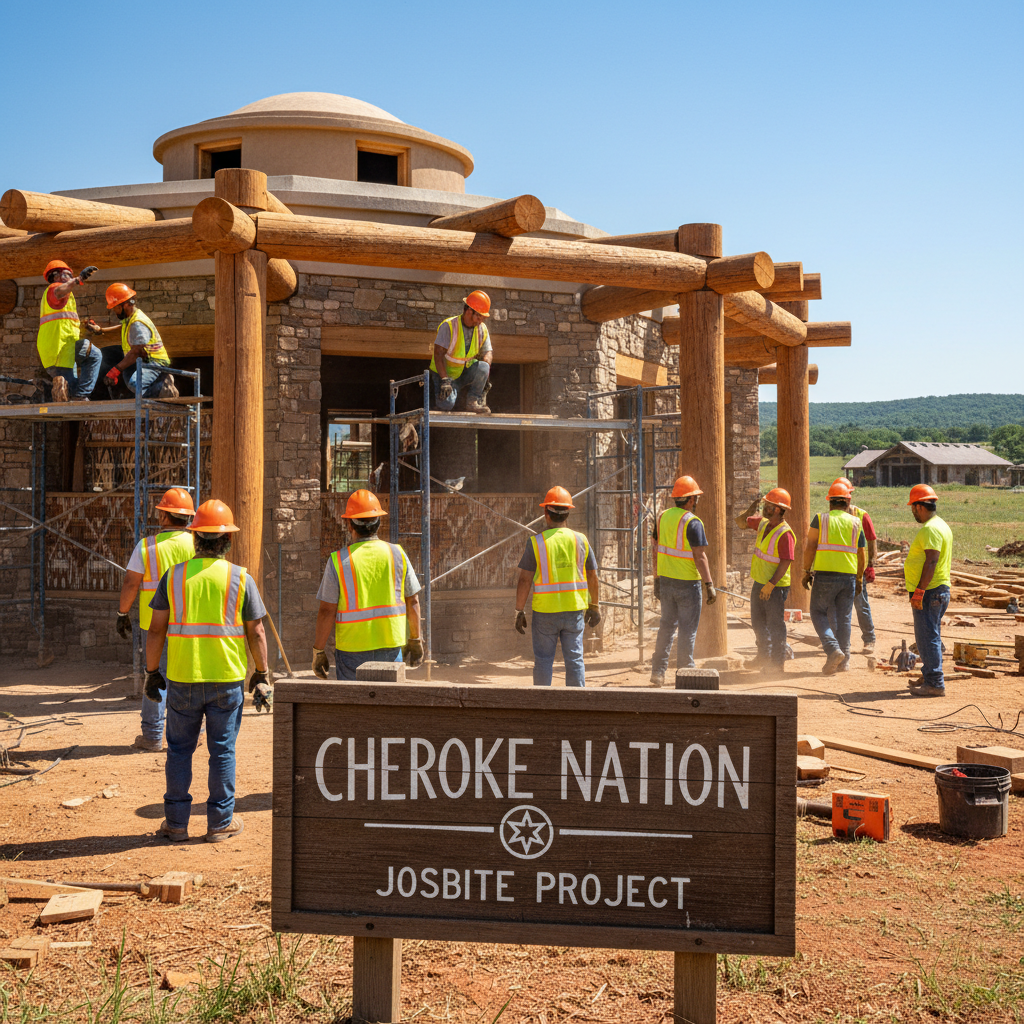
TERO: The Tribal Employment Rights Office Explained
You have probably seen the acronym TERO on a job board, a construction site sign, or a tribal government website. If you are a tribal citizen looking for work or a business owner aiming to land a contract on tribal land, understanding the Tribal Employment Rights Office is not just a good idea—it is essential. But let’s get one thing straight before we dive in: Osiyo.net is an independently operated information platform. We are not an official website of any Tribal Nation or government agency. Every Tribal Nation is a sovereign government that sets its own rules. While we provide the roadmap, you must contact the specific Tribal Nation for their official regulations.
Key Takeaways on TERO
- Sovereignty in Action: TERO is a tool used by Tribal Nations to exercise their sovereign right to regulate employment and contracting on their lands.
- Preference, Not Just Promotion: TERO ordinances usually require “Indian Preference” in hiring, training, and contracting.
- Local Laws Apply: When you are on tribal land, federal and state laws are not the only ones that matter; the Tribal Nation’s TERO ordinance is the law of the land.
- Business Certification: Native-owned businesses can often become “TERO Certified,” giving them a competitive edge for contracts on tribal property.
- Nation-Specific: Rules vary significantly between the three federally recognized Cherokee tribes and other nations.
What is a Tribal Employment Rights Office?
At its core, a Tribal Employment Rights Office (TERO) is a regulatory agency established by a Tribal Nation. Its mission is to ensure that tribal citizens and other Native Americans receive their fair share of employment, training, and business opportunities on or near the tribe’s jurisdiction. Think of it as a gatekeeper that ensures the economic benefits of projects on tribal land actually stay within the community.
For centuries, outside companies have come onto tribal lands, extracted resources, built infrastructure, and then left with the profits, often hiring zero local tribal citizens in the process. TERO is the response to that historical injustice. It is an assertion of economic sovereignty. By passing a TERO ordinance, a Tribal Nation mandates that any employer doing business within their boundaries must prioritize the local workforce.
The Legal Backbone: Title VII and Sovereignty
You might wonder, “Wait, isn’t ‘Indian Preference’ a form of discrimination?” In the eyes of U.S. federal law, the answer is no. Under Title VII of the Civil Rights Act of 1964, there is a specific exemption that allows for Indian Preference in employment on or near reservations. Furthermore, the Supreme Court case Morton v. Mancari established that Indian Preference is a political preference based on the unique legal status of Tribal Nations, not a racial one. This is about citizenship and sovereignty, not skin color.
How TERO Works: The Ordinance
Every Tribal Nation that has a TERO program operates under a TERO Ordinance. This is a law passed by the tribal council. While they vary, most ordinances include the following requirements for employers:
- Hiring Goals: Employers must hire a certain percentage of Native Americans for their projects.
- Contracting Preference: Prime contractors must give preference to TERO-certified sub-contractors.
- TERO Fees: Most tribes charge a fee (usually 1% to 3% of the total contract) to fund the TERO office’s operations, training programs, and enforcement.
- Job Bank Utilization: Employers are often required to pull from the TERO office’s job bank before looking elsewhere for labor.
“TERO isn’t about giving anyone a ‘handout.’ It’s about ensuring that the people whose land is being used for profit are not excluded from the prosperity that land generates.”
The Three Cherokee Tribes and TERO
If you are researching Cherokee-specific employment rights, you must know which nation you are dealing with. Each has its own approach to workforce development and TERO enforcement.
Cherokee Nation (Oklahoma)
The Cherokee Nation has one of the most robust TERO departments in the country. They maintain a comprehensive list of certified Indian-owned businesses and a massive skills bank for citizens. Their TERO program is designed to support not just the individual worker but also the Cherokee-owned small business ecosystem. You can learn more about their specific requirements on the official Cherokee Nation TERO website.
Eastern Band of Cherokee Indians (North Carolina)
The EBCI TERO office operates within the Qualla Boundary. Their focus is heavily on ensuring that construction and service contracts within the boundary prioritize EBCI members. Because of their unique geography and economic drivers (like tourism and gaming), their TERO compliance is strictly enforced for any contractor entering the boundary.
United Keetoowah Band of Cherokee Indians (Oklahoma)
The UKB also exercises its sovereign rights through employment and training initiatives. While their TERO footprint may differ in scale from the Cherokee Nation, they remain committed to the principle that UKB members should have the first shot at jobs generated by tribal activity. Always check for the most current UKB TERO guidelines directly with the tribe.
TERO for Business Owners: Getting Certified
If you own a business that is at least 51% owned by a citizen of a federally recognized tribe, you need to look into TERO certification. This is a game-changer for tribal contracting. Once certified, your business is placed on a preferred vendor list.
| Benefit | What It Means for Your Business |
|---|---|
| Priority Bidding | Your bid may be selected even if it is slightly higher than a non-certified competitor. |
| Access to TERO Jobs | You get notified of upcoming tribal projects before the general public. |
| Networking | Direct access to tribal procurement officers and large prime contractors. |
| Workforce Support | The TERO office helps you find qualified Native American employees. |
Keep in mind that certification isn’t a one-and-done deal. You will likely need to provide proof of tribal citizenship, business licenses, and financial records. Refer to our guide on native business capability statements to prepare your business for this process.
Common Misconceptions About TERO
Let’s clear the air on a few things that people often get wrong about the Tribal Employment Rights Office.
“It’s only for tribal members.”
Actually, most TERO ordinances provide a tiered preference. Usually, it starts with members of that specific tribe, then members of other federally recognized tribes, and then non-Indians. It doesn’t mean only tribal members can work; it means they get the first opportunity.
“TERO fees are just a tax.”
While it might feel like a tax to a contractor, those fees are reinvested directly into the community. They fund vocational training, GED programs, and equipment for tribal members who are entering the workforce. It is a reinvestment in the local human capital.
“TERO makes projects more expensive.”
This is a tired trope used to undermine tribal sovereignty. In reality, hiring local workers reduces turnover and transportation costs. Moreover, TERO ensures a stable, local workforce that is invested in the success of the project because it’s happening in their own backyard.
Frequently Asked Questions
How do I find TERO jobs?
The best way to find tribal TERO jobs is to visit the TERO office of the specific Tribal Nation where you want to work. Many tribes have online job banks, but some still require an in-person visit to sign the skills registry.
Do I need an “Indian Card” for TERO preference?
You generally need a CDIB or a Tribal Membership card from a federally recognized tribe to qualify for preference. Each tribe has its own documentation requirements, so check their specific ordinance.
Can non-Native businesses work with TERO?
Yes. Non-Native businesses work on tribal lands all the time. However, they must comply with the TERO ordinance, which includes hiring goals, paying TERO fees, and often working with the TERO office to find qualified Native American employees.
Is TERO the same for every tribe?
No. While many follow the model provided by the Council for Tribal Employment Rights (CTER), every nation is sovereign and may have unique rules regarding fees, preference tiers, and enforcement penalties.
Next Steps: How to Use TERO to Your Advantage
If you are ready to engage with a TERO office, here is your action plan:
- For Job Seekers: Identify the Tribal Nation’s territory you are in. Find their TERO office and register for their skills bank. Make sure your enrollment documents are in order.
- For Business Owners: Review the TERO certification requirements for the nations you wish to do business with. Prepare your capability statement and ensure your ownership documentation is bulletproof.
- For Everyone: Respect the sovereignty. TERO is a law, not a suggestion. Treat the TERO officers with the same professional courtesy you would any other government regulator.
Navigating the world of tribal employment can be complex, but it is also one of the most direct ways to engage with the modern economic life of Tribal Nations. Whether you are Cherokee, a member of another nation, or a non-tribal business partner, understanding TERO is your first step toward a successful partnership on tribal land.
Last reviewed: June 2026
Osiyo.net is an independently operated information platform. It is not an official website of any Tribal Nation, the Bureau of Indian Affairs, or any government agency. Always verify enrollment and employment information directly with the specific Tribal Nation.