The Three Sisters: Cherokee Agricultural Traditions
Osiyo! Welcome to Osiyo.net. If you are looking for a deep dive into The Three Sisters: Cherokee Agricultural Traditions, you have come to the right place. Before we dig into the soil, let’s get the record straight: Osiyo.net is an independently operated information platform. We are not an official arm of the Cherokee Nation, the Eastern Band of Cherokee Indians, or the United Keetoowah Band of Cherokee Indians. We love our Tribal Nations, but we don’t speak for them. Always check with official tribal governments for enrollment or policy specifics. Now, let’s talk about the original powerhouse of sustainable farming.
The Symbiotic Science of the Three Sisters
Long before modern agriculture started dumping synthetic fertilizers onto monocrops, Cherokee ancestors and other Indigenous peoples developed a sophisticated intercropping system known as the Three Sisters: Corn, Beans, and Squash. This isn’t just a cute story; it’s a masterclass in traditional ecological knowledge (TEK). Each plant in this trinity serves a biological purpose that helps the others thrive, creating a self-sustaining ecosystem that protected the soil and fed the people for millennia.
Corn: The Sturdy Leader
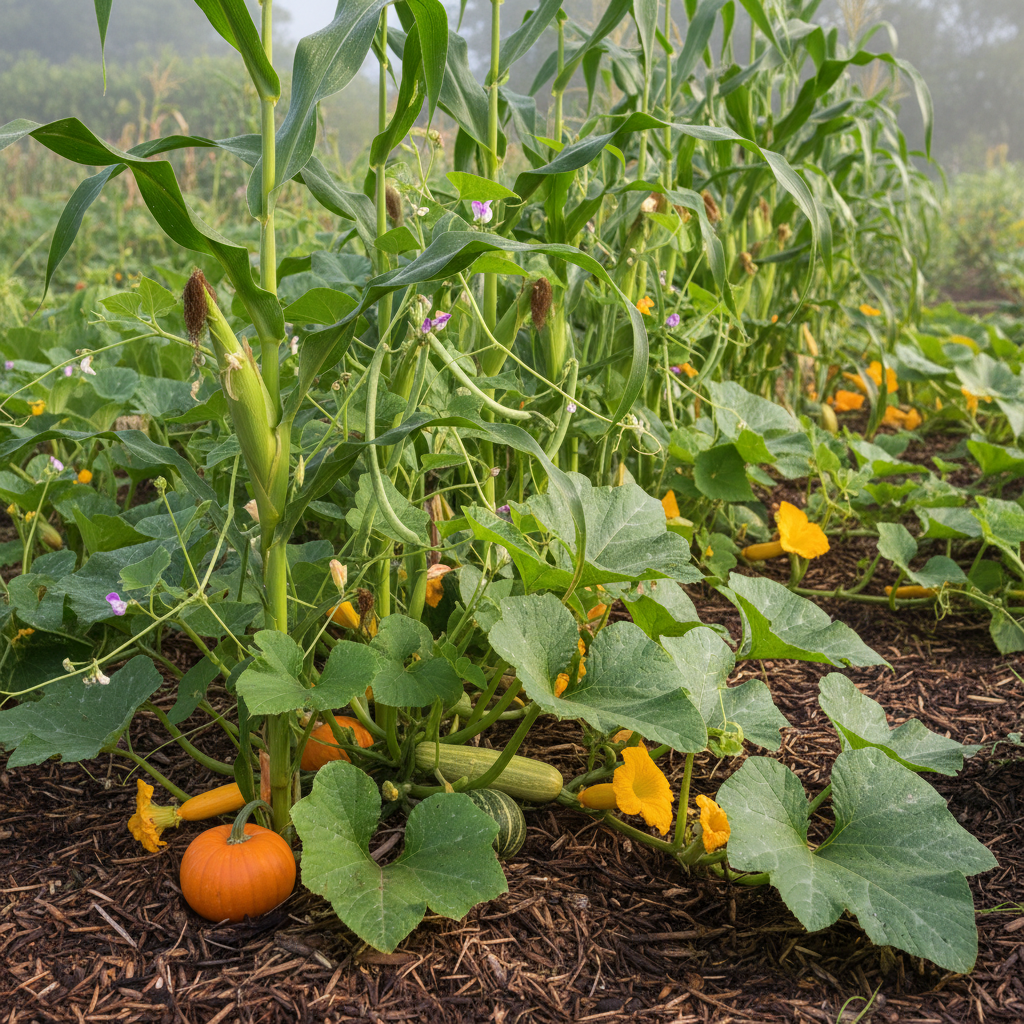
Corn (Selu in Cherokee) is the backbone of the system. In a Three Sisters garden, corn is planted first. It grows tall and strong, providing a living trellis for the beans to climb. Without the corn, the beans would mat on the ground, making them prone to rot and harder to harvest. Cherokee White Eagle corn and Flour corn varieties are historically significant, often used in ceremonies and for traditional foods like hominy and Gadu (bread).
Beans: The Life-Giver
Beans are the silent workers of the trio. While the corn provides the structure, the beans provide the fuel. Legumes have a unique relationship with soil bacteria that allows them to take nitrogen from the air and “fix” it into the soil. Corn is a notorious nitrogen hog—it sucks the nutrients out of the earth rapidly. The beans put that nitrogen back, ensuring the soil isn’t depleted after a single season. Popular varieties include the Cherokee Trail of Tears bean, a pole bean with a history as heavy as its name suggests.
Squash: The Protector
Squash (or pumpkins) represents the ground cover. With their massive, prickly leaves, squash plants spread across the mound, acting as a “living mulch.” They shade the soil, which prevents moisture from evaporating in the heat of a Southern or Oklahoma summer. Furthermore, the large leaves crowd out weeds that would otherwise compete with the corn and beans. The prickly stems also act as a natural deterrent for pests like raccoons or deer who don’t like the feel of the spikes on their paws.
The Cultural Heart: Selu and the Origin of Corn
In Cherokee culture, agriculture isn’t just about calories; it’s about relationship and reciprocity. To understand The Three Sisters: Cherokee Agricultural Traditions, you have to understand the story of Selu, the Corn Mother. In Cherokee oral traditions, Selu sacrificed herself so that her children—and all Cherokee people—would have food. Her blood and her body became the first corn and beans.
“When we plant these seeds, we aren’t just putting food in the ground. We are honoring a sacrifice and maintaining a contract with the earth that is thousands of years old.”
This spiritual connection is why many Cherokee families still maintain heirloom seeds. These aren’t just plants; they are living relatives. When the Cherokee people were forcibly removed from their homelands during the Trail of Tears, many women sewed these seeds into the hems of their dresses. They knew that if they survived the journey, they would need these “sisters” to rebuild their lives in a strange new land. You can learn more about this resilience in our guide to the three federally recognized Cherokee tribes.
Food Sovereignty and Tribal Nations
Today, the concept of the Three Sisters is at the forefront of the Food Sovereignty movement. Sovereignty isn’t just a legal term used in courtrooms; it’s the ability of a Tribal Nation to feed its own people without relying on outside systems. The three federally recognized Cherokee tribes approach this in different ways:
- Cherokee Nation (Oklahoma): Operates an extensive Seed Bank program that distributes heirloom seeds to citizens to encourage traditional gardening.
- Eastern Band of Cherokee Indians (North Carolina): Focuses on preserving the unique mountain varieties of corn and beans that have adapted to the Appalachian climate for centuries.
- United Keetoowah Band of Cherokee Indians (Oklahoma): Emphasizes the preservation of traditional Keetoowah ways, including the agricultural practices that survived the relocation to Indian Territory.
Each of these nations is a sovereign government. They set their own rules for everything from tribal citizenship to how they manage their agricultural departments. If you are interested in their specific seed programs, you should find the official tribal nation website for the most accurate information.
A Nutritional Powerhouse
The genius of the Three Sisters isn’t limited to the garden; it extends to the dinner plate. When eaten together, corn, beans, and squash provide a nutritionally complete meal. Corn provides carbohydrates and certain amino acids, beans provide protein and the remaining essential amino acids (like lysine and tryptophan) that corn lacks, and squash provides vitamins, minerals, and healthy fats from the seeds.
| Crop | Ecological Role | Nutritional Benefit |
|---|---|---|
| Corn | Support structure (trellis) | Complex Carbs, Fiber |
| Beans | Nitrogen fixation (fertilizer) | Protein, Essential Amino Acids |
| Squash | Mulch and weed control | Vitamin A, Healthy Fats (Seeds) |
The Edge: Agriculture as Resistance
Let’s get real for a second. For centuries, the U.S. government tried to use agriculture as a tool of “civilization.” The goal was to turn Cherokee men into individualistic, European-style farmers and move Cherokee women out of the fields and into the home. They wanted to break the communal land systems that the Three Sisters thrived in. By forcing private land allotments (like those seen in the Dawes Rolls era), the federal government hoped to destroy the social fabric of the Tribal Nations.
But here’s the thing: it didn’t work. While the landscape of farming changed, the Three Sisters remained. Choosing to plant a traditional garden today isn’t just a hobby; it’s a quiet act of rebellion against a history that tried to erase Indigenous knowledge. It’s a way of saying that the old ways still work better than the new ones.
How to Plant a Cherokee Three Sisters Garden
If you’re ready to start your own garden, keep in mind that this is a sacred practice. If you are a visitor to these traditions, do so with respect. We highly recommend reading our guide on visiting tribal communities respectfully if you plan to seek seeds or advice from elders.
- Preparation: In late spring, clear a sunny patch and create low mounds of soil about 3-4 feet apart.
- Plant the Corn: Plant 3-4 corn seeds in the center of the mound. Wait until the corn is about 6 inches high before moving to the next step.
- Plant the Beans: Once the corn has a head start, plant 2-3 beans around the base of each corn stalk. The beans will quickly find the stalk and start climbing.
- Plant the Squash: Plant 2 squash seeds on the edge of the mound. As they grow, guide the vines to circle around the mounds to cover the ground.
Key Takeaways
- Symbiosis: The Three Sisters (corn, beans, squash) work together to provide support, nutrients, and protection.
- Resilience: These seeds were carried through the Trail of Tears and represent Cherokee survival.
- Nutrition: Together, these three crops provide a complete protein and a balanced diet.
- Sovereignty: Traditional agriculture is a key component of modern food sovereignty for Tribal Nations.
- Respect: Always source seeds ethically and respect the sovereign rules of each Cherokee nation.
Frequently Asked Questions
What are the Three Sisters in Cherokee culture?
The Three Sisters are corn (Selu), beans (Tuya), and squash (Agadedi). They are the three main agricultural crops of various Indigenous groups, including the Cherokee, planted together in a symbiotic system.
Why are they called the Three Sisters?
They are called sisters because they grow best when they are together, supporting each other like a family. This reflects the Cherokee worldview of interconnectedness and communal living.
Do I need a lot of space for a Three Sisters garden?
Not necessarily. You can grow a mini-version in a large raised bed, but the traditional mound system works best in a space where the squash vines have room to sprawl between the corn stalks.
Can I get traditional seeds from Osiyo.net?
No. Osiyo.net is an information site. To obtain authentic heirloom seeds, you should contact the agricultural departments of the three federally recognized Cherokee tribes or reputable Indigenous seed sovereignty organizations.
Next Steps: Where to Go From Here
If you’re inspired to learn more about Cherokee culture and traditions, your journey is just beginning. Here are a few ways to dive deeper:
- Research the spiritual significance of Selu in our section on Cherokee faith and spirituality.
- Look into the history of land allotment and how it changed Cherokee farming in our guide to the Final Rolls.
- Visit the Cherokee Nation, Eastern Band of Cherokee Indians, or United Keetoowah Band official websites to learn about their modern environmental and agricultural programs.
- Check the Bureau of Indian Affairs website for resources on federal Indian law and land management.
Remember, identity and culture are lived experiences. Whether you are a tribal citizen or a curious neighbor, treating these traditions with the respect they deserve is the first step toward true understanding.
Last reviewed: June 2026
Osiyo.net is an independently operated information platform. It is not an official website of any Tribal Nation, the Bureau of Indian Affairs, or any government agency. Always verify enrollment information directly with the specific Tribal Nation.