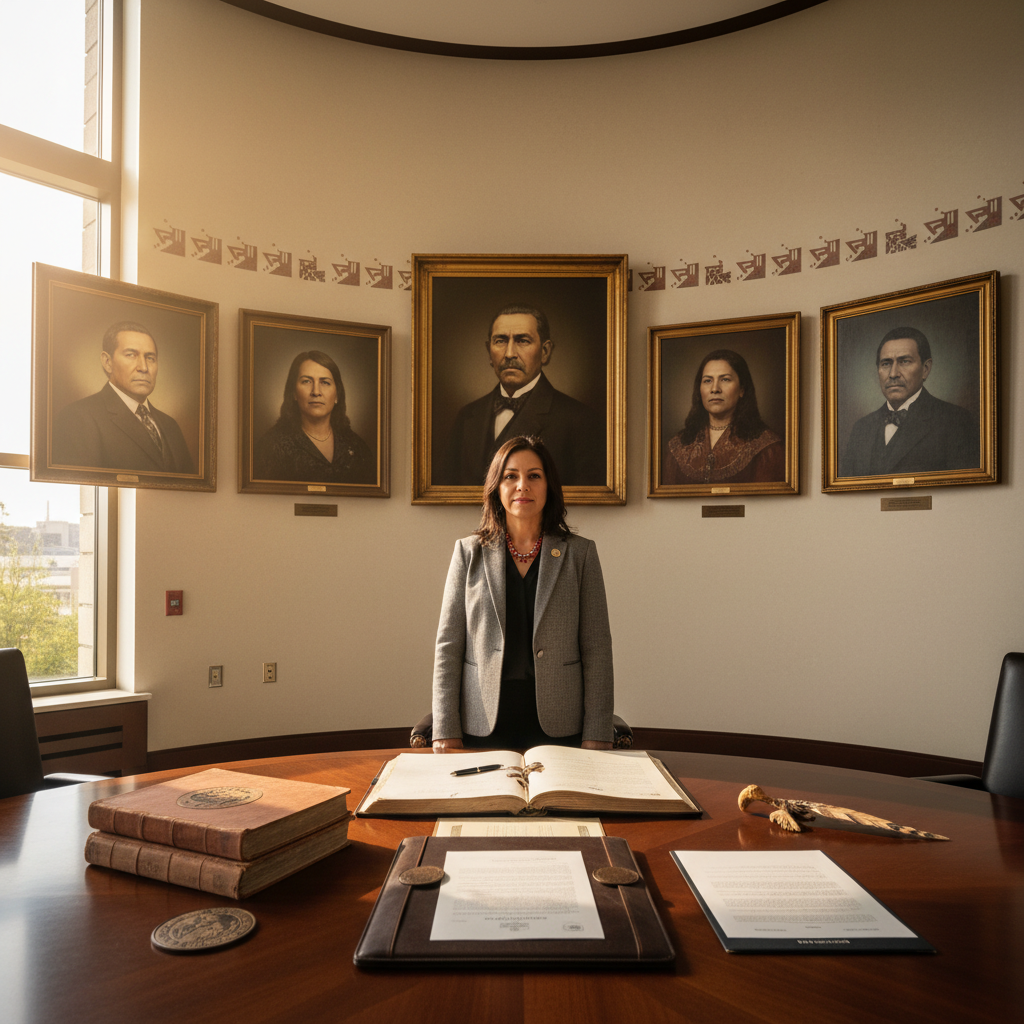
Cherokee Nation Principal Chiefs: A Complete Guide to Elected Leadership
Think the office of the Principal Chief is just about parades and ribbon cuttings? Think again. The Principal Chief of the Cherokee Nation is the Chief Executive Officer of a multi-billion dollar sovereign government, overseeing a complex bureaucracy, a massive healthcare system, and the legal interests of over 450,000 citizens. It is a role defined by blood-stained history, resilient law-making, and an ongoing fight for sovereignty that the U.S. federal government tried—and failed—to extinguish.
Before we dive into the lineage of leadership, let’s get the record straight: Osiyo.net is an independently operated information platform. We are not an official tribal government site. If you are looking for specific enrollment forms or official government decrees, you should head directly to the official portals of the Cherokee Nation, the United Keetoowah Band of Cherokee Indians (UKB), or the Eastern Band of Cherokee Indians (EBCI).
The Evolution of the Office: From Consensus to Constitution
In the early days, Cherokee leadership was decentralized, governed by a system of towns and clans. However, as the pressure of European encroachment increased, the Cherokee people adapted. By the early 19th century, they had transformed their government into a tripartite system—executive, legislative, and judicial—modeled partly on the U.S. system but rooted in Cherokee values.
The 1827 Constitution
The 1827 Constitution formally established the office of the Principal Chief. This wasn’t just a mimicry of American politics; it was a strategic move to demonstrate to the world that the Cherokee Nation was a civilized, sovereign state that could not be legally dissolved or ignored. The Chief became the face of a nation fighting for its right to exist in its ancestral homelands.
The Three Federally Recognized Tribes
When discussing “Cherokee Chiefs,” it is vital to distinguish between the three distinct, federally recognized sovereign entities. While they share a common ancestry and language, their modern leadership structures are separate.
- Cherokee Nation (CN): Based in Tahlequah, Oklahoma. This is the largest of the three tribes and the focus of this guide’s chronological leadership list.
- United Keetoowah Band of Cherokee Indians in Oklahoma (UKB): Also based in Tahlequah, the UKB maintains a separate government and has its own Chief and Council. Learn more about the different tribes here.
- Eastern Band of Cherokee Indians (EBCI): Based in Cherokee, North Carolina, the EBCI consists of descendants of those who remained in the original homelands. They operate under their own independent constitution and elect their own Principal Chief.
The Era of John Ross: Defiance and Removal
No name looms larger in the history of Cherokee leadership than John Ross (Guwisguwi). Serving as Principal Chief from 1828 to 1866, Ross led the nation during its darkest hour: the Trail of Tears. Ross was a wealthy, highly educated man who used every legal and diplomatic tool available to fight removal.
“Our hearts are sickened, our utterance is paralyzed, when we reflect on the condition in which we are placed…” — John Ross, regarding the Treaty of New Echota.
Despite his efforts, the illegal Treaty of New Echota (signed by a minority faction known as the Treaty Party) led to the forced relocation of the Cherokee people to Indian Territory. Ross survived the journey and successfully reconstituted the government in what is now Oklahoma, proving that the Nation lived in its people and its laws, not just its land.
The “Dark Years”: 1906–1971
In the late 19th and early 20th centuries, the U.S. government ramped up its efforts to dismantle tribal governments. The Curtis Act of 1898 and the Five Tribes Act of 1906 were designed to strip the Cherokee Nation of its authority and divide communal lands into individual allotments. For decades, the U.S. President essentially hand-picked the Principal Chief—often referred to as “Chief for a Day”—strictly for the purpose of signing land deeds and liquidating tribal assets.
This era was a blatant violation of Cherokee sovereignty. It wasn’t until the 1970s that the right to elect leadership was restored to the Cherokee people by the U.S. Congress. If you are researching ancestors from this era, checking the final rolls search is a critical step in understanding the transition from communal to individual land ownership.
Modern Elected Leadership: 1971 to Present
The restoration of the right to vote for the Principal Chief marked the beginning of the modern era of the Cherokee Nation. This period has seen explosive economic growth, the revitalization of the Cherokee language, and the strengthening of tribal courts.
W.W. Keeler (1971–1975)
W.W. Keeler, an executive at Phillips Petroleum, was the first elected Principal Chief in the modern era. He played a pivotal role in organizing the modern administrative structure of the tribe.
Wilma Mankiller (1985–1995)
Perhaps the most famous modern Chief, Wilma Mankiller was the first woman to lead the Cherokee Nation. Her focus on community development and “gadugi” (working together) transformed the tribe’s healthcare and infrastructure. Her tenure remains a blueprint for leadership that prioritizes grassroots empowerment.
The Current Landscape: Chuck Hoskin Jr. (2019–Present)
The current Principal Chief, Chuck Hoskin Jr., has presided over a period of significant legal shifts, most notably the McGirt v. Oklahoma decision, which reaffirmed the existence of the Cherokee Nation’s reservation. His administration has focused heavily on the Cherokee Language Preservation Act and expanding mental health services.
Comparison of Modern Principal Chiefs
| Chief | Years in Office | Major Focus/Legacy |
|---|---|---|
| W.W. Keeler | 1971–1975 | First elected modern chief; Administrative foundation. |
| Ross Swimmer | 1975–1985 | Economic development; Tribal business enterprises. |
| Wilma Mankiller | 1985–1995 | First female chief; Community health and infrastructure. |
| Joe Byrd | 1995–1999 | Focus on traditionalism; Constitutional crisis era. |
| Chad Smith | 1999–2011 | Citizenship expansion; Language revitalization. |
| Bill John Baker | 2011–2019 | Healthcare expansion; Casino revenue growth. |
| Chuck Hoskin Jr. | 2019–Present | Post-McGirt sovereignty; Language Act; Wellness. |
The Role of the Deputy Principal Chief
While the Principal Chief is the face of the nation, the Deputy Principal Chief serves a vital role, often acting as the president of the Tribal Council and overseeing legislative priorities. Understanding the balance of power between these two roles is essential for anyone interested in Cherokee citizenship and how tribal laws are actually made.
Key Takeaways
- The Principal Chief is an elected official, not a hereditary monarch.
- Modern leadership began with the restoration of voting rights in 1971.
- The three federally recognized Cherokee tribes (CN, UKB, EBCI) have independent leadership.
- Sovereignty is the core focus of every modern administration, especially following McGirt v. Oklahoma.
Frequently Asked Questions
How long is a Principal Chief’s term?
In the Cherokee Nation, the Principal Chief is elected to a four-year term. They are limited to serving two consecutive terms under the current Constitution.
Can anyone run for Principal Chief?
No. Candidates must be citizens of the Cherokee Nation, meet specific age requirements, and typically must be residents of the tribe’s jurisdictional area. For more on the basics, see our getting started guide.
Is the Principal Chief the same as a U.S. Governor?
Not exactly. While they share executive duties, a Principal Chief leads a sovereign nation with its own constitution, courts, and international treaty rights. A Governor leads a state that is a subdivision of the U.S. federal government.
Next Steps for Researchers
If you’re looking to dive deeper into Cherokee political history or your own connection to it, here is how you can proceed:
- Explore the stories of individual leaders and their impact on history.
- Visit the Bureau of Indian Affairs (BIA) website to understand the federal-tribal relationship.
- Review the current legislative actions on the official Cherokee Nation website.
- Understand the requirements for CDIB and citizenship to see how the government serves its people.
Last reviewed: June 2026
Osiyo.net is an independently operated information platform. Always verify enrollment information directly with the specific Tribal Nation.