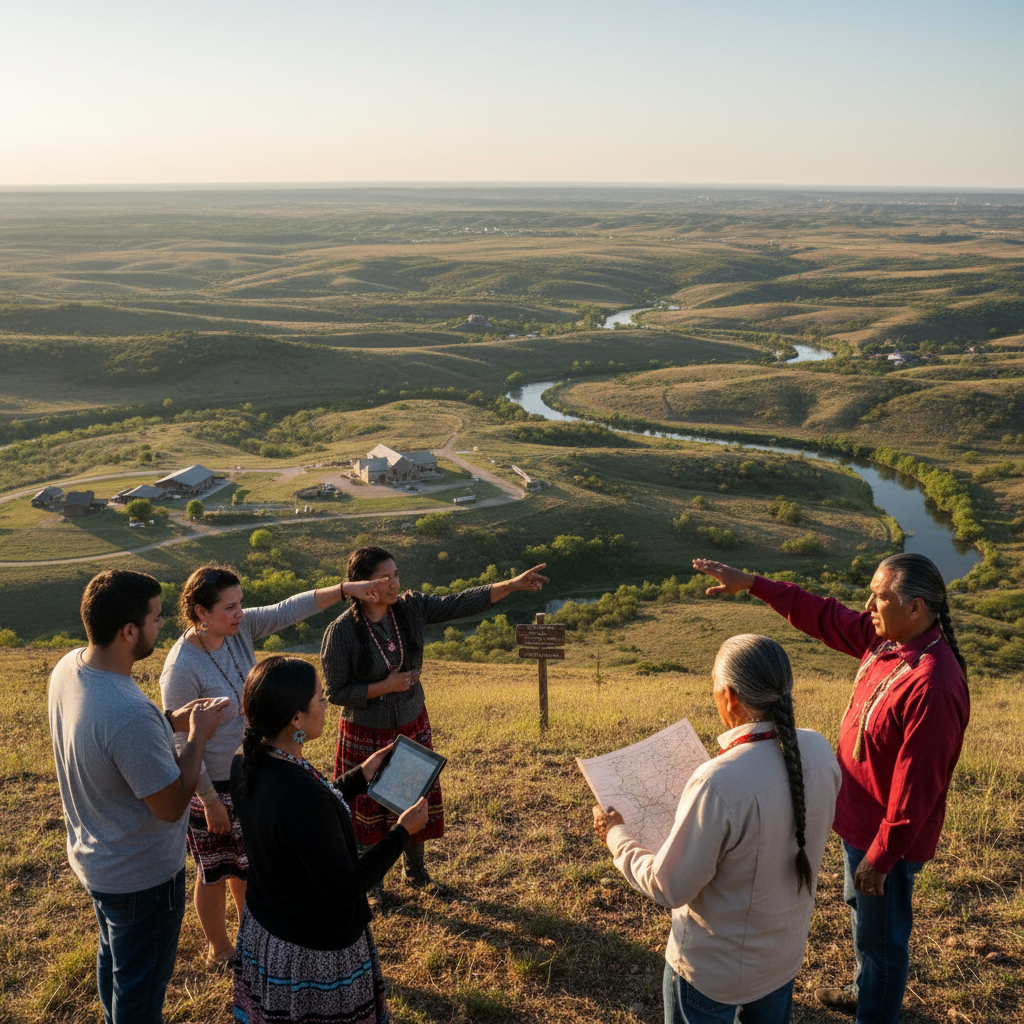
Tribal Trust Lands: Deciphering the Legal Maze of Native Sovereignty
If you have ever driven across the United States, you have likely seen the signs: “Entering the Cherokee Nation” or “Entering the Qualla Boundary.” To the average traveler, these look like simple municipal markers. But in the world of federal Indian law, those lines represent one of the most complex, frustrating, and vital legal structures in existence: Tribal Trust Land. Forget everything you know about standard real estate. In the eyes of the United States government, Tribal Nations don’t always “own” their land in the way you might own a suburban lot. Instead, the federal government holds the legal title “in trust” for the benefit of the Tribe. If that sounds like a backhanded compliment to sovereignty, that is because it is. This arrangement is a relic of 19th-century colonial paternalism that continues to dictate everything from how a Tribal business is taxed to who has the authority to arrest a criminal on a Tuesday afternoon.
What Exactly Is Tribal Trust Land?
In the simplest terms, Tribal Trust Land is land where the legal title is held by the United States government, but the beneficial interest belongs to a Tribal Nation or an individual Native American. This means the Tribe has the right to use the land, live on it, and manage its resources, but they cannot sell it or lease it without the explicit permission of the Secretary of the Interior. This unique status is managed primarily by the Bureau of Indian Affairs (BIA). This isn’t just a quirky historical footnote; it is the cornerstone of modern Tribal sovereignty. Land held in trust is generally exempt from state and local taxes, and it falls under the jurisdiction of the Tribal government and the federal government, rather than the state.
Why Does the Federal Government ‘Hold’ the Land?
To understand why the BIA holds the keys to the house, we have to look at the “Marshall Trilogy”—three Supreme Court cases from the 1820s and 30s. Chief Justice John Marshall famously described Tribes as “domestic dependent nations,” comparing the relationship to that of a “ward to his guardian.” The U.S. government used this legal fiction to argue that Tribes were incapable of managing their own land transactions. While the “ward” language is insulting by modern standards, the resulting “trust responsibility” creates a legal obligation for the U.S. to protect Tribal lands and resources. Today, Tribes use this trust status as a shield against state interference, though the bureaucratic red tape it creates is a constant source of friction.
The Great Land Theft: Trust Land vs. Fee Simple Land
To navigate starting your journey into understanding Tribal resources, you must understand the difference between Trust and Fee land. Most land in the U.S. is “Fee Simple,” meaning the owner holds the deed and can sell it to anyone at any time. For much of the 1800s, the U.S. government sought to end the Trust system through “allotment.” The General Allotment Act (Dawes Act) of 1887 carved up communal Tribal lands into individual plots, often with the goal of forcing Native people to become farmers and eventually tax-paying citizens. The “surplus” land was then sold to white settlers. This decimated the Tribal land base, turning once-contiguous territories into a “checkerboard” of Trust land and Fee land.
Comparison: Trust Land vs. Fee Land
| Feature | Tribal Trust Land | Fee Simple Land |
|---|---|---|
| Title Holder | United States Government | Private Individual or Entity |
| Beneficial Owner | Tribal Nation or Individual Indian | The Deed Holder |
| Property Taxes | Exempt from State/Local Taxes | Subject to State/Local Taxes |
| Ability to Sell | Requires Congressional or BIA Approval | Unrestricted |
| Jurisdiction | Tribal and Federal Law | State and Local Law |
| Zoning | Tribal Governance | Local/Municipal Governance |
“The trust status is a double-edged sword: it protects the land from being taxed or sold out of Tribal hands, but it requires the Tribe to ask ‘Mother BIA’ for permission to build a grocery store or a gas station.”
The Three Cherokee Nations and Their Lands
When we talk about Cherokee land, we are talking about three distinct, sovereign entities with different land histories and legal statuses. It is crucial to distinguish between them when researching Cherokee citizenship or land rights. Note that Osiyo.net is an independent platform and not an official government site; always verify these details with the nations themselves.
1. The Cherokee Nation (Oklahoma)
The Cherokee Nation, headquartered in Tahlequah, Oklahoma, oversees a 14-county jurisdictional area. Following the landmark McGirt v. Oklahoma and Siaw-Hogner decisions, the courts reaffirmed that this area remains an “Indian Reservation” for purposes of federal criminal law. However, much of the land within these 14 counties is actually owned in “Restricted Fee” or is Fee Simple land owned by the Tribe itself. Converting Fee land back into Trust land is a major priority for the Nation to ensure long-term sovereignty and economic stability. You can learn more about the historical records of these lands through a Final Rolls search.
2. Eastern Band of Cherokee Indians (North Carolina)
The Eastern Band of Cherokee Indians (EBCI) occupies the Qualla Boundary in western North Carolina. Unlike many Western reservations, the Qualla Boundary was not “given” to the EBCI. Instead, members of the Tribe and their advocates purchased the land in the 19th century. Later, it was placed into federal trust. Today, the EBCI manages over 56,000 acres held in trust, allowing them to operate a robust economy including gaming and tourism while maintaining strict Tribal control over the land.
3. United Keetoowah Band of Cherokee Indians (Oklahoma)
The United Keetoowah Band (UKB) also has its headquarters in Tahlequah. The UKB has faced significant legal hurdles regarding land-into-trust applications. For years, litigation between the UKB, the Cherokee Nation, and the federal government centered on whether the UKB could have land placed into trust within the Cherokee Nation’s jurisdictional area. Recent court rulings have paved the way for the UKB to move forward with trust applications, a vital step for their housing and economic opportunities.
The ‘Fee-to-Trust’ Process: A Bureaucratic Gauntlet
How does a Tribe get more Trust land? They have to apply for it through a process called “Fee-to-Trust.” A Tribe buys a piece of land on the open market (Fee Simple) and then petitions the BIA to take that land into trust. This process can take years—sometimes decades. The BIA looks at the Tribe’s need for the land, the impact on local tax bases, and potential jurisdictional conflicts. Opponents of Tribal sovereignty often fight these applications, claiming it “removes land from the tax rolls,” ignoring the fact that Tribes provide their own police, fire, and infrastructure services on those lands. For those looking to understand the CDIB or Indian Card status, it is important to remember that land status and individual enrollment are two different legal tracks.
Sovereignty in Action: Why Does It Matter?
Why do Tribes fight so hard for Trust land? It isn’t just about taxes. It is about the right to exist as a self-governing entity. On Trust land, the Tribe’s laws are the law of the land. This allows for:
- Criminal Jurisdiction: Tribal police and courts have primary authority over many crimes committed on trust land.
- Economic Development: Tribes can develop housing, healthcare centers, and businesses without being stifled by hostile state regulations.
- Cultural Preservation: Sacred sites can be protected from development and commercial exploitation.
- Natural Resource Management: Tribes can manage water, timber, and minerals according to their own conservation standards.
You can read more stories of Tribal resilience and how land impacts cultural identity on our platform.
Common Misconceptions About Tribal Lands
- Misconception: “The government gives Native Americans free land.” Fact: Most Tribal land was either retained from ancestral territories through treaties or purchased by the Tribes themselves. The “trust” status is a legal designation, not a government handout.
- Misconception: “All land on a reservation is Trust land.” Fact: Due to the Dawes Act, many reservations are “checkerboarded” with private Fee land owned by non-Indians. This creates a nightmare for law enforcement and zoning.
- Misconception: “Tribes don’t pay for services.” Fact: Tribes often pay millions of dollars into local communities through “payments in lieu of taxes” (PILOTs) and by funding their own emergency services that often respond to calls from non-Indian neighbors.
Key Takeaways
- Tribal Trust Land is held by the U.S. government for the benefit of a Tribe; the Tribe does not hold the “fee simple” deed.
- Trust status protects land from being sold or taxed by states, which is essential for sovereignty.
- The three Cherokee tribes—Cherokee Nation, EBCI, and UKB—each have unique land histories and legal statuses.
- The BIA manages the trust relationship, a process often criticized for being overly bureaucratic.
- Osiyo.net provides information for Tribal Nations, but official land and enrollment data must come from the nations themselves.
Frequently Asked Questions (FAQ)
Can an individual Cherokee citizen own Trust land?
Yes. There is “Individual Trust Land,” also known as allotments. Like Tribal Trust Land, the title is held by the U.S. for the individual’s benefit. Many of these are still in existence in Oklahoma and are subject to strict BIA regulations regarding inheritance and leasing.
Does Trust land ever expire?
No. Trust status remains in place unless the U.S. Congress passes a law to “disestablish” the trust or the land is sold (which requires high-level approval). However, history shows that the U.S. government has, at various times, attempted to terminate these protections.
Why do some people want to ‘privatize’ Tribal lands?
Proponents of privatization argue it would allow for easier lending and mortgage access. However, many Tribal leaders view this as a trap that would lead to another era of land loss, as happened during the Allotment Era, where millions of acres were lost to tax foreclosures and predatory sales.
What is ‘Restricted Fee’ land?
Common in the Cherokee Nation, Restricted Fee land is land where the Tribe or individual holds the deed, but there are federal restrictions on selling or encumbering it. It offers similar tax protections to Trust land but operates under slightly different legal mechanisms.
Next Steps
If you are interested in learning more about the specific lands of the Cherokee people or how to research your own connection to these territories, we recommend the following:
- Visit the About Osiyo.net page to understand our mission of providing accurate Tribal resource information.
- Contact the BIA Land Titles and Records Office (LTRO) for official maps and deeds.
- Review the official government websites of the Cherokee Nation, the Eastern Band, or the UKB.
- Explore our guide on how to begin researching Tribal history.
Last reviewed: June 2026
Osiyo.net is an independently operated information platform. Always verify enrollment information directly with the specific Tribal Nation.