Redbird Smith and the Revival of the Keetoowah Tradition
Osiyo. Welcome to Osiyo.net, your independent guide to Cherokee and Tribal Nations resources. Before we dive into the fire, let’s get the legalities out of the way: Osiyo.net is an independently operated information platform. We are not an official website of any Tribal Nation or the Bureau of Indian Affairs. We don’t handle enrollment, and we don’t decide who is or isn’t Cherokee. Every Tribal Nation is a sovereign government that sets its own rules. If you are looking for official enrollment information, you must contact the specific Tribal Nation directly.
Today, we’re talking about a man who didn’t just live history—he fought to ensure there was a future for the Cherokee people to inhabit. Redbird Smith was more than a leader; he was a catalyst for a spiritual and political revival that still echoes through the hills of Oklahoma and the halls of the Three Cherokee Tribes today. When the United States government tried to dismantle Cherokee sovereignty through the bureaucratic violence of the Dawes Act, Redbird Smith looked at a surveyor’s chain and saw a noose. He chose to resist.
The Man Who Stood His Ground
Born in 1850, Redbird Smith grew up in a Cherokee Nation that was reeling from the aftermath of the Trail of Tears and the internal fractures of the American Civil War. His father, Pig Smith, was a traditionalist who instilled in him the importance of the old ways. Redbird wasn’t interested in the sanitized version of Cherokee identity that the federal government wanted to promote—the “civilized” farmer who abandoned his community for individual land plots.
By the late 1880s, the federal government’s policy of “allotment” was in full swing. The goal was simple and devastating: break up communal tribal lands, give each individual a small piece, and sell the “surplus” to white settlers. It was a land grab disguised as a benevolent social experiment. Redbird Smith saw it for exactly what it was—an attempt to erase the Cherokee as a distinct people. He became the driving force behind the Nighthawk Keetoowah Society, a group dedicated to preserving traditional Cherokee culture and resisting federal interference.
The Dawes Act: A Bureaucratic Ambush
To understand Redbird Smith, you have to understand the Dawes Act and the Final Rolls. The U.S. government wanted to document every tribal citizen not to help them, but to divide their land. For Redbird and the Nighthawks, participating in the Dawes Commission was a betrayal of Cherokee sovereignty.
“I have always believed that the Great Spirit gave us our laws and that we should live by them. I have always been opposed to the allotment of our lands.” — Redbird Smith
Redbird Smith didn’t just write letters. He led a movement of non-compliance. He and his followers refused to register with the Dawes Commission. They hid in the woods. They held meetings in secret. Redbird was eventually arrested and imprisoned for his resistance, but his incarceration only solidified his status as a leader of the traditionalists. He eventually realized that for the Cherokee to survive legally, they had to be on those rolls, but he never accepted the underlying premise that the U.S. had the right to take the land.
The Rise of the Nighthawk Keetoowah Society
The Nighthawk Keetoowah Society was the spiritual and political backbone of traditionalist resistance. Unlike the more assimilated elements of the Cherokee government at the time, the Nighthawks prioritized the Keetoowah way of life. This meant centering the community, the language, and the ancient ceremonies.
If you’re researching your own Cherokee ancestry, you might find ancestors who were part of this movement. They were often listed on records as “Traditionalists” or might have been late to enroll because of their loyalty to Redbird’s cause. The Nighthawks weren’t just about saying “no” to the government; they were about saying “yes” to being Keetoowah.
The Seven Star Fires: Spiritual Sovereignty
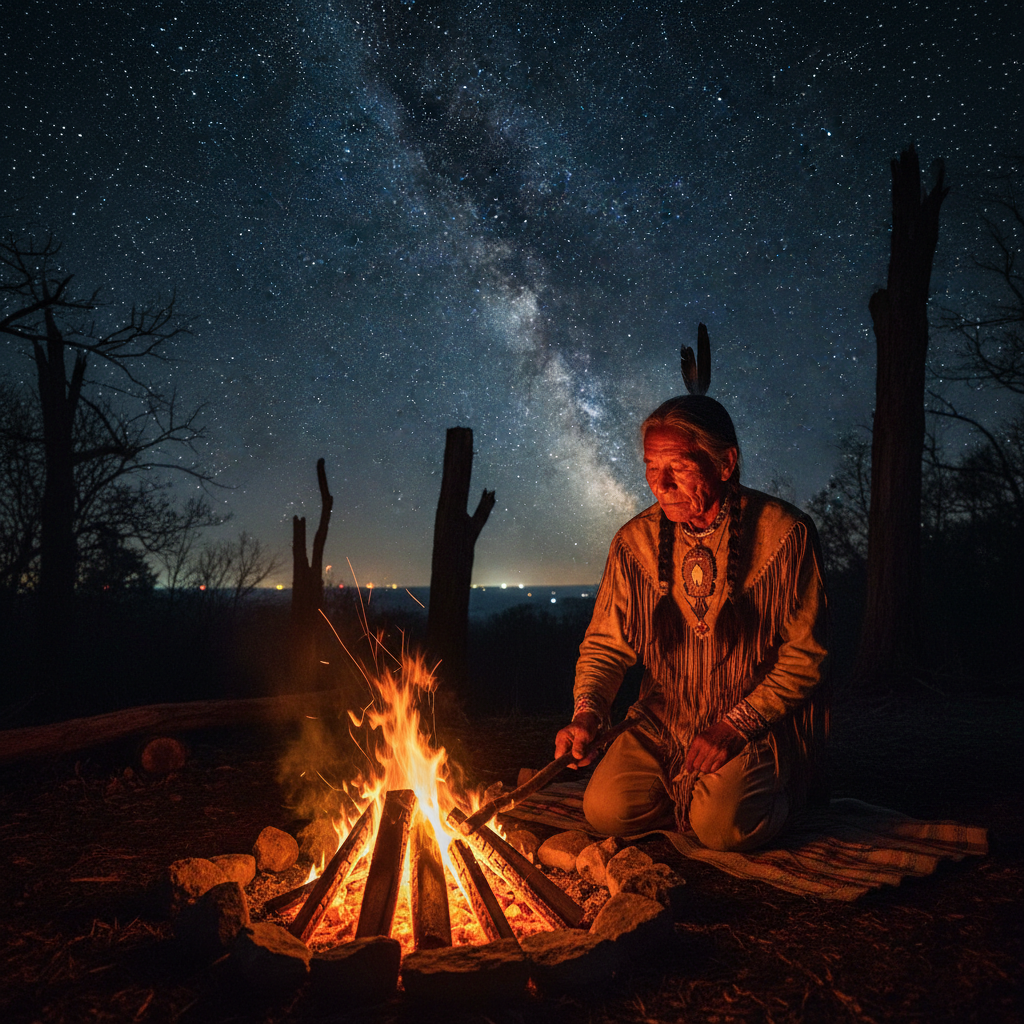
One of Redbird Smith’s most enduring legacies was the revival of the traditional stomp grounds and the Seven Star Fires. These ceremonial fires represent the seven clans of the Cherokee and the spiritual connection to the Creator. Redbird spent years traveling among Cherokee communities, reconnecting people to their clan identities and their responsibilities to the fire.
This wasn’t just “culture” in the way a museum sees it. It was sovereignty in action. By maintaining these fires, Redbird Smith ensured that even if the tribal government was officially dissolved by Congress (which the U.S. tried to do), the heart of the Cherokee Nation would continue to beat in the stomp grounds. Today, these traditions are still practiced, primarily within the Cherokee Nation and the United Keetoowah Band.
Redbird Smith’s Legacy in the Three Cherokee Tribes
It is vital to distinguish between the three federally recognized Cherokee tribes, as each has a unique relationship with the history Redbird Smith helped shape:
- Cherokee Nation (Oklahoma): The largest of the three, which successfully fought to maintain its government and now includes many descendants of Redbird Smith’s Nighthawks.
- United Keetoowah Band of Cherokee Indians in Oklahoma (UKB): A tribe that specifically traces its institutional lineage to the Keetoowah Society and Redbird Smith’s leadership.
- Eastern Band of Cherokee Indians (North Carolina): Descendants of those who remained in their homelands; while they share the Keetoowah heritage, their political history followed a different path after the Removal.
Each of these nations is a sovereign government. If you are trying to find out if your ancestors were part of these movements, you’ll need to look at specific records like the Guion Miller Roll or the Dawes Rolls.
| Topic | Nighthawk Perspective | U.S. Government Goal |
|---|---|---|
| Land Ownership | Communal & Sacred | Individual & Taxable |
| Identity | Clan & Tradition-based | Blood Quantum & Documentation |
| Governance | Keetoowah Laws | Federal Oversight |
| Spirituality | Seven Star Fires | Christian Assimilation |
Key Takeaways
- Redbird Smith was a visionary leader who prioritized spiritual and cultural survival over federal cooperation.
- The Nighthawk Keetoowah Society was a resistance movement against the Dawes Act and land allotment.
- The Seven Star Fires were revitalized by Smith to ensure the spiritual core of the Cherokee people remained intact.
- Cherokee identity is rooted in sovereignty—Redbird Smith proved that being Cherokee is about community and tradition, not just a government roll number.
- Always consult official tribal sources for information regarding enrollment or official history.
Frequently Asked Questions
Was Redbird Smith a chief?
Redbird Smith was the leader of the Nighthawk Keetoowah Society and was later recognized as a Chief of the Keetoowah people. However, his leadership was often spiritual and traditional rather than just administrative.
What is the Nighthawk Keetoowah Society?
It was a group of traditionalist Cherokees who resisted the allotment of tribal lands and worked to preserve the Cherokee language, clan system, and traditional stomp dance ceremonies.
Can I join the Keetoowah tribe if I find Redbird Smith in my tree?
Finding a famous ancestor does not automatically grant citizenship. Each Tribal Nation, including the United Keetoowah Band and the Cherokee Nation, has its own specific enrollment laws. You must contact their respective registration departments.
How do I find records of the Nighthawks?
Many Nighthawks eventually appeared on the Dawes Rolls, though often under protest. You can search these records through the National Archives or the BIA.
Next Steps
- Research the Rolls: If you believe your ancestors were part of the traditionalist movement, start by searching the Final Rolls to see if they eventually enrolled.
- Visit the Heritage Centers: Learn more about Redbird Smith at the Cherokee National Research Center in Tahlequah, Oklahoma.
- Learn the Language: One of Redbird’s main goals was language preservation. Look into Cherokee language resources provided by the education departments of the Tribal Nations.
- Verify Official Info: Always check the official website of the tribe you are researching for the most accurate and sovereign information.
Redbird Smith’s story isn’t just a biography; it’s a blueprint for cultural resilience. In an era that tried to turn Cherokees into “standardized Americans,” he reminded his people that they were Keetoowah first. That fire he relit? It’s still burning.
Last reviewed: June 2026
Osiyo.net is an independently operated information platform. It is not an official website of any Tribal Nation, the Bureau of Indian Affairs, or any government agency. Always verify enrollment information directly with the specific Tribal Nation.