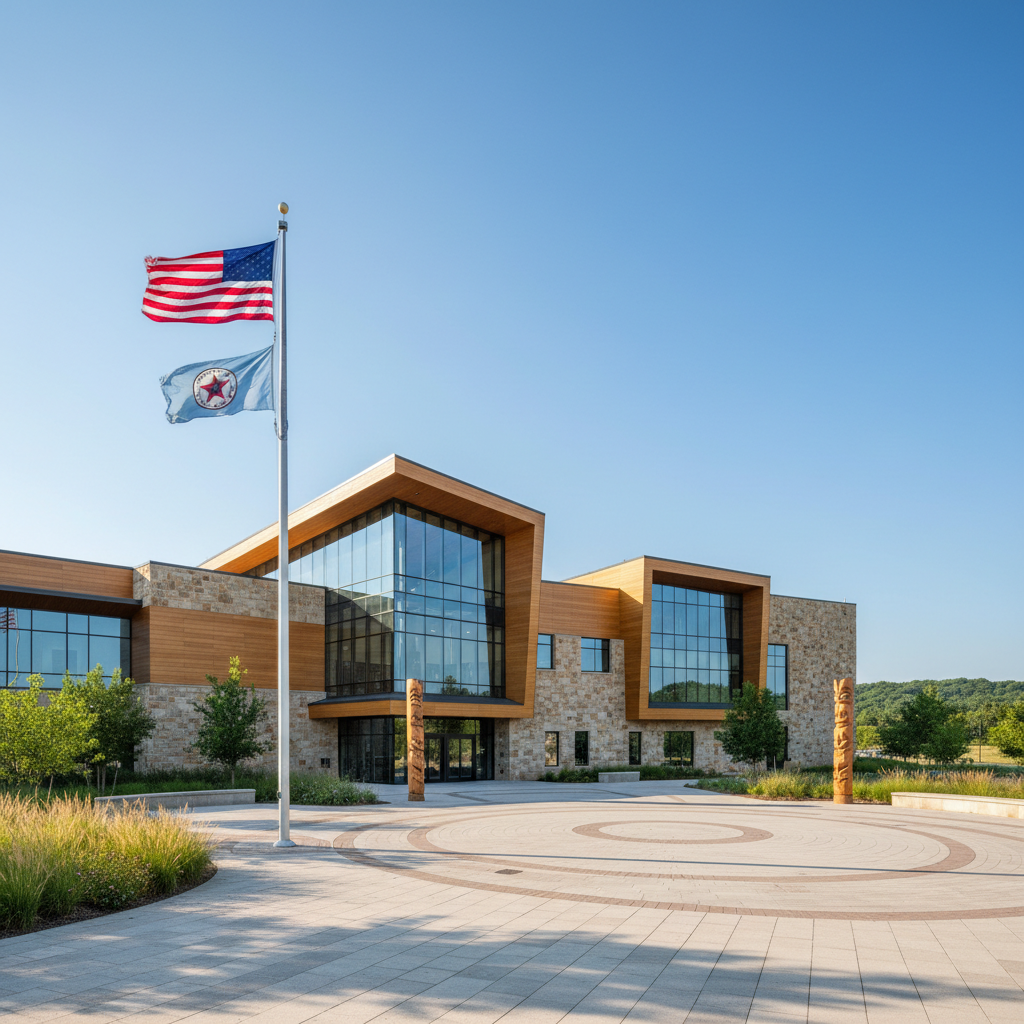
Cherokee Nation Economic Impact in Oklahoma
When people think of the Cherokee Nation, they might think of history, culture, or perhaps the complexity of tribal citizenship. But let’s talk about something that hits the wallet and the community every single day: the Cherokee Nation economic impact in Oklahoma. We aren’t just talking about a few local jobs or some tourist attractions. We are talking about a massive, multi-billion-dollar engine that powers the entire Northeast Oklahoma region and beyond.
Before we dive into the billions, a quick heads-up: Osiyo.net is an independent platform. We are not an official website of any Tribal Nation or government agency. We’re here to give you the real story, backed by data, with a side of honest context. If you are looking for official enrollment information, you should always contact the three federally recognized Cherokee tribes directly: the Cherokee Nation (Oklahoma), the Eastern Band of Cherokee Indians (North Carolina), and the United Keetoowah Band of Cherokee Indians (Oklahoma). Each is a sovereign nation with its own rules.
Key Takeaways
- The Cherokee Nation provides a multi-billion dollar annual economic impact on the state of Oklahoma (estimated at over $3.04 billion in recent studies).
- The tribe is one of the largest employers in Northeast Oklahoma, supporting tens of thousands of direct and indirect jobs.
- Tribal investments in healthcare, education, and infrastructure benefit both Cherokee citizens and non-Native residents.
- Cherokee Nation Businesses (CNB) serves as the economic arm, reinvesting profits into community services.
The $3 Billion Story: Breaking Down the Numbers
The Cherokee Nation economic impact in Oklahoma is not a static number; it is a growing force. According to a comprehensive study by an Oklahoma State University economist, the tribe’s impact exceeded $3 billion recently. This isn’t just “casino money,” though gaming is a significant part of the portfolio. This impact represents a complex web of government spending, business operations, and capital investments.
Why does this matter? Because for decades, the narrative about Tribal Nations in Oklahoma was often one of poverty or dependence. That narrative was wrong then, and it’s definitely wrong now. Today, the Cherokee Nation is a primary driver of rural development. While the state government often struggles with budget shortfalls, the Cherokee Nation is building clinics, paving roads, and expanding high-speed internet in places that private corporations have long ignored.
| Impact Category | Estimated Annual Contribution | Primary Focus Areas |
|---|---|---|
| Total Economic Impact | $3.04 Billion+ | Northeast Oklahoma / 14-County Reservation |
| Direct Employment | 11,000+ Employees | Healthcare, Gaming, Hospitality, Federal Contracting |
| Total Labor Income | $1.3 Billion+ | Wages, benefits, and payroll taxes |
| State & Local Tax Revenue | $170 Million+ | Vehicle tags, sales tax, and payroll-related taxes |
Job Creation and the TERO Factor
If you live in the 14-county reservation area, there is a very high chance you or someone you know works for the Cherokee Nation or one of its subsidiaries. With over 11,000 direct employees, the tribe is a top-tier employer. But the Cherokee Nation economic impact in Oklahoma goes further through the Tribal Employment Rights Office, or TERO.
If you’ve ever wondered what is TERO, it’s essentially a way for the tribe to ensure that Native-owned businesses and workers get a fair shot at contracts and jobs on tribal land. This doesn’t just help individuals; it builds a local ecosystem of entrepreneurs. You can learn more about how this works by looking into how to find tribal TERO jobs or exploring a tribal contracting beginners guide. By prioritizing local and Native labor, the Cherokee Nation keeps its dollars circulating within the community rather than shipping profits off to a corporate headquarters in another state.
Healthcare: A Public Service for the Region
One of the most profound ways the Cherokee Nation impacts Oklahoma is through its healthcare system. The tribe operates the largest tribally run healthcare system in the United States. This includes the W.W. Hastings Hospital in Tahlequah and several sprawling health centers across the reservation.
This isn’t just about treating Cherokee citizens. When the Cherokee Nation builds a state-of-the-art health facility in a rural town, it takes the pressure off local municipal hospitals. It creates hundreds of high-paying medical jobs—doctors, nurses, technicians—who then live in these towns, buy houses, and pay local taxes. Furthermore, the tribe often partners with the state on public health initiatives, providing a safety net that wouldn’t exist otherwise. This is a classic example of tribal sovereignty serving the greater good.
The Cherokee Nation’s investment in healthcare is a direct exercise of sovereignty. By managing their own health systems, they aren’t just providing care; they are building a regional medical infrastructure that benefits the entire state of Oklahoma.
Education and Infrastructure: Beyond the Reservation
Ever notice those Cherokee Nation license plates? They aren’t just for show. A massive portion of the revenue from those tags goes directly to Oklahoma public schools. Under the compact between the tribe and the state, millions of dollars are funneled into school districts—not just for Native students, but for all students. This funding helps pay for textbooks, technology, and teacher salaries in districts that are often chronically underfunded by the state legislature.
On the infrastructure front, the Cherokee Nation often steps in where the Oklahoma Department of Transportation (ODOT) cannot. The tribe frequently funds road and bridge projects throughout the 14 counties. If a bridge is out in a rural county and the state says it will take five years to fix, the Cherokee Nation often provides the funding or the matching grants to get it done in one. This facilitates commerce for everyone—farmers, small business owners, and daily commuters.
Cherokee Nation Businesses (CNB)
To understand the Cherokee Nation economic impact in Oklahoma, you have to understand CNB. This is the business arm of the tribe. It handles everything from the Hard Rock Hotel & Casino Tulsa to federal contracting in the aerospace and defense sectors. Profit from these ventures is what funds the tribe’s government services. When CNB wins a federal contract, those profits come back to Oklahoma to fund native student scholarship resources and elder care. It is a model of sustainable, sovereign economic development.
Addressing the Misconceptions
Let’s get edgy for a second. There is a common misconception that Tribal Nations don’t pay taxes or that they are a “drain” on state resources. This is objectively false. The Cherokee Nation pays millions in payroll taxes, and its employees pay state income tax. Furthermore, through various compacts, the tribe pays the state for the right to operate gaming and sell tobacco and fuel. In many ways, the tribe is a net provider to the state, giving back far more in services and infrastructure than it receives in any form of state assistance.
Another hard truth: The state of Oklahoma has a long history of trying to undermine tribal sovereignty—most recently seen in legal battles over jurisdiction and taxation. Yet, despite these tensions, the Cherokee Nation economic impact in Oklahoma remains the bedrock of the regional economy. Without tribal investment, many rural Oklahoma towns would simply dry up and blow away.
FAQs About Cherokee Nation Economic Impact
Does the Cherokee Nation pay taxes to Oklahoma?
While the sovereign government itself is not taxed like a corporation, the Cherokee Nation pays millions in taxes through various compacts (gaming, tobacco, fuel). Additionally, its thousands of employees pay state and federal income taxes, and the tribe contributes significantly to the state’s economy through motor vehicle tag revenue that goes directly to public schools.
How many people does the Cherokee Nation employ?
The Cherokee Nation and its businesses employ more than 11,000 people, making it one of the largest employers in the state. This does not include the thousands of indirect jobs supported by tribal spending and construction projects.
Do you have to be Cherokee to work for the tribe?
No. While the tribe does have Indian Preference policies for hiring (often managed through TERO), thousands of non-Native people work for the Cherokee Nation and Cherokee Nation Businesses in various capacities, from hospitality to healthcare.
How does tribal gaming revenue help the state?
Under the tribal-state gaming compact, the Cherokee Nation pays