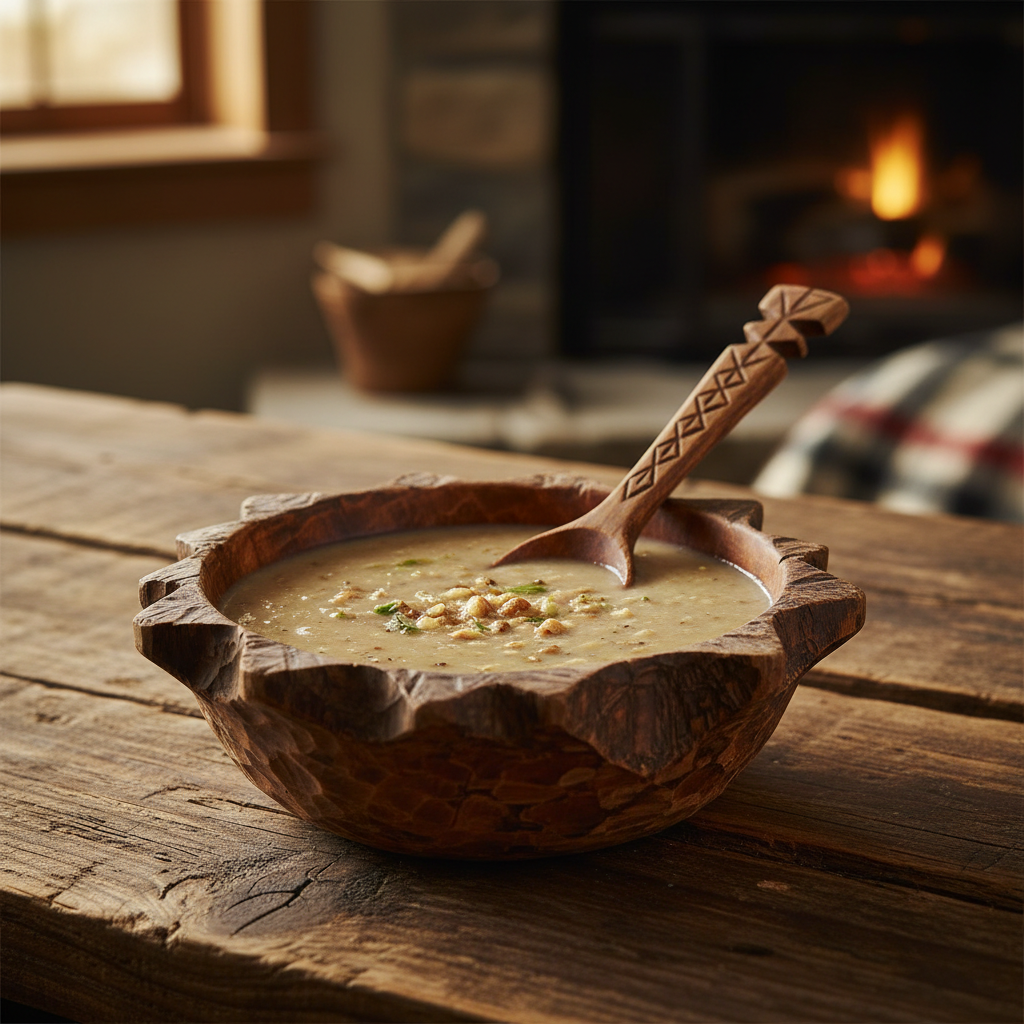
Kanuchi: Traditional Cherokee Hickory Nut Soup
Osiyo! If you have ever spent a crisp autumn afternoon in the woodlands of the Cherokee homelands, you know the sound: the rhythmic, sharp thwack of a heavy stone or a wooden mallet meeting a hard shell. You are likely witnessing the first steps of creating Kanuchi, the iconic traditional Cherokee hickory nut soup. Before we dive into the delicious details, a quick note: Osiyo.net is an independently operated information platform. We are not an official website of any Tribal Nation or government agency. We are just here to share the depth of Cherokee culture and history with you. When it comes to tribal citizenship or official protocols, you must always consult with the sovereign Tribal Nations directly. Each nation sets its own rules, and those rules are as unique as the families who make this soup.
Key Takeaways
- Kanuchi is a traditional Cherokee dish made from crushed hickory nuts, formed into balls for storage, and then boiled into a rich, milky soup.
- The process is highly labor-intensive, representing a deep connection to the land and a communal spirit.
- There are three federally recognized Cherokee tribes—the Cherokee Nation, the Eastern Band of Cherokee Indians (EBCI), and the United Keetoowah Band of Cherokee Indians (UKB)—and while recipes vary, the cultural importance remains constant.
- Kanuchi is more than food; it is a symbol of resilience and food sovereignty in the face of historical displacement and land loss.
What is Kanuchi?
Kanuchi (pronounced kah-noo-chee) is perhaps the most famous traditional Cherokee food. At its simplest, it is a soup or a broth made from hickory nuts. But calling it just “soup” is like calling a hand-woven basket “a container.” It misses the point. Kanuchi is an emulsion of high-quality fats, proteins, and minerals, extracted through a process of crushing the whole nut—shell and all—and then boiling the result. The result is a liquid that looks like coffee with heavy cream but tastes like the very soul of the forest. It is earthy, rich, and slightly sweet. Traditionally, it is served over hominy or rice.
For centuries, this dish has provided vital nutrients during the winter months. In the context of Cherokee education and history, Kanuchi represents the ingenuity of Indigenous people who understood how to extract maximum caloric value from the environment without exhausting its resources. It is a masterclass in ancestral chemistry.
The Three Federally Recognized Cherokee Tribes and Food Traditions
It is vital to understand that “Cherokee” is not a monolith. Today, there are three distinct, sovereign Tribal Nations that carry forward these traditions. While the core of Kanuchi remains the same, the geography of where the nuts are gathered and how the soup is served can differ between the mountains of North Carolina and the rolling hills of Oklahoma. You can learn more about these distinctions in our guide to the three federally recognized Cherokee tribes.
| Tribal Nation | Location | Official Website |
|---|---|---|
| Cherokee Nation | Tahlequah, Oklahoma | cherokee.org |
| Eastern Band of Cherokee Indians | Cherokee, North Carolina | ebci.com |
| United Keetoowah Band of Cherokee Indians | Tahlequah, Oklahoma | ukb-nsn.gov |
Sovereignty is not just about government-to-government relationships; it is about the right of a people to define their own culture and sustain their own food systems. Each of these nations works to protect the natural resources—like the hickory tree—that make Kanuchi possible. If you are interested in visiting these areas, remember to do so with the utmost respect. Check out our tips on visiting tribal communities respectfully.
The Labor of Love: How Kanuchi is Made
You can’t just go to a grocery store and buy a bag of Kanuchi. Even finding the nuts requires a keen eye and a bit of luck. Most families use shagbark or mockernut hickories. The process of making the soup is a multi-day affair that usually involves the whole family.
1. The Harvest
Harvesting usually happens in the late fall. This is where the struggle begins. You aren’t the only one who wants those nuts; you’re competing with every squirrel in the county. Once gathered, the nuts are dried (cured) for several weeks. This makes the nutmeat shrink away from the shell, which is essential for the next step.
2. The Crushing (The Kanon-gwa)
Traditionally, the nuts are placed in a kanon-gwa, a large wooden mortar carved from a tree trunk, and beaten with a heavy wooden pestle. You don’t pick out the shells. You crush everything together. The goal is to get the pieces small enough that the oils are released, but not so fine that they turn into dust. The shells actually serve a purpose—they provide the weight that helps the solids settle at the bottom of the pot during the cooking process.
3. Forming the Kanuchi Ball
Once the nuts are crushed, the oily mass is shaped by hand into balls, usually about the size of a softball. These balls are a marvel of ancient food preservation. Because of the high oil content and the way they are packed, they can be stored in a cool place for a long time. In the past, this was the original “energy bar” for the winter. To learn more about how these traditions are passed down, you can read some of our community stories.
“Kanuchi is the taste of home. It’s the sound of the mortar and pestle, the smell of the woodsmoke, and the patience of our grandmothers. It reminds us that good things take time and that our land provides everything we need if we take care of it.”
Cooking and Serving: The Final Transformation
When it is time to eat, you don’t just bite into a Kanuchi ball. You place the ball into a pot of boiling water. As the water boils, the oils and nutmeat emulsify, creating a rich, creamy liquid. This is where the magic happens. The heavy pieces of shell sink to the bottom of the pot. The cook then carefully strains the liquid through a fine sieve or cheesecloth, ensuring no sharp shell fragments make it into the final bowl.
Traditionally, the soup is served one of two ways:
- Over Hominy: This is a very traditional method, providing a hearty, chewy contrast to the smooth liquid.
- Over Rice: This became common after the introduction of rice into the Cherokee diet, and many families today prefer the way the rice absorbs the rich nut milk.
Some people add a pinch of salt; others add a bit of sugar or honey. There is no “right” way, only the way your family does it. This is a common theme in Cherokee heritage—tradition is a living thing, not a static relic.
The Edge: Food Sovereignty and Historical Injustice
We need to be honest here: making Kanuchi is getting harder. It isn’t just because people are busy. It’s because of the systematic theft of Cherokee land. When the federal government forced the Cherokee people off their ancestral homelands in the Southeast during the 1830s—an atrocity known as the Trail of Tears—they weren’t just moving people; they were severing their connection to specific ecosystems. The hickory forests of the Appalachians were different from the landscapes of Indian Territory (now Oklahoma).
Even today, environmental degradation and climate change threaten the native hickory trees. Furthermore, the commodification of “foraging” by high-end restaurants often ignores the fact that for Tribal Nations, these aren’t just “ingredients” for a trendy menu; they are sacred connections to ancestors. When we talk about tribal resources, we are talking about the right to access the land that makes these traditions possible. If you want to support Native food ways, look for official tribal enterprises and legitimate Indigenous-led food sovereignty initiatives.
FAQ: Frequently Asked Questions about Kanuchi
Can I buy Kanuchi balls online?
It is rare to find authentic Kanuchi balls for sale commercially because they are so labor-intensive. Occasionally, tribal members or local Cherokee-owned shops in Oklahoma or North Carolina will sell them during the fall season. Always try to buy directly from a tribal citizen to ensure the proceeds support the community.
Is Kanuchi the same as hickory nut milk?
They are similar in that they both use the liquid extracted from hickory nuts, but Kanuchi is specific to the Cherokee preparation method involving the crushing of the whole shell and the formation of the balls. It is a specific cultural dish, not just a generic nut milk.
Does Kanuchi contain gluten?
Naturally, Kanuchi (hickory nuts and water) is gluten-free. However, it is traditionally served with hominy or rice. If you are eating it at a community gathering, always ask the cook about any added ingredients if you have specific dietary restrictions.
How long do Kanuchi balls last?
When kept in a cool, dry place or frozen, Kanuchi balls can last for several months. Freezing is the most common modern method to ensure the oils in the nuts do not go rancid.
Where to Go From Here: Next Steps
If you are interested in learning more about Cherokee culture or perhaps even trying to source the materials for Kanuchi, here is how you can move forward responsibly:
- Support Indigenous Food Sovereignty: Research organizations like the Native American Agriculture Fund or local tribal programs that protect native plant species.
- Learn the History: Dive deeper into the history of the three Cherokee tribes to understand the context of their food traditions.
- Respect the Land: If you are not a tribal citizen, do not forage on tribal lands without explicit permission and permits. Sovereignty includes the right to manage and protect natural resources.
- Connect with the Community: Follow official tribal social media pages for announcements about cultural festivals where traditional foods like Kanuchi and bean bread are often served.
Kanuchi is a reminder that despite centuries of attempts to erase Cherokee culture, the people and their traditions remain. It is a taste of resilience, one hickory nut at a time.
Last reviewed: June 2026
Osiyo.net is an independently operated information platform. It is not an official website of any Tribal Nation, the Bureau of Indian Affairs, or any government agency. Always verify enrollment information directly with the specific Tribal Nation.