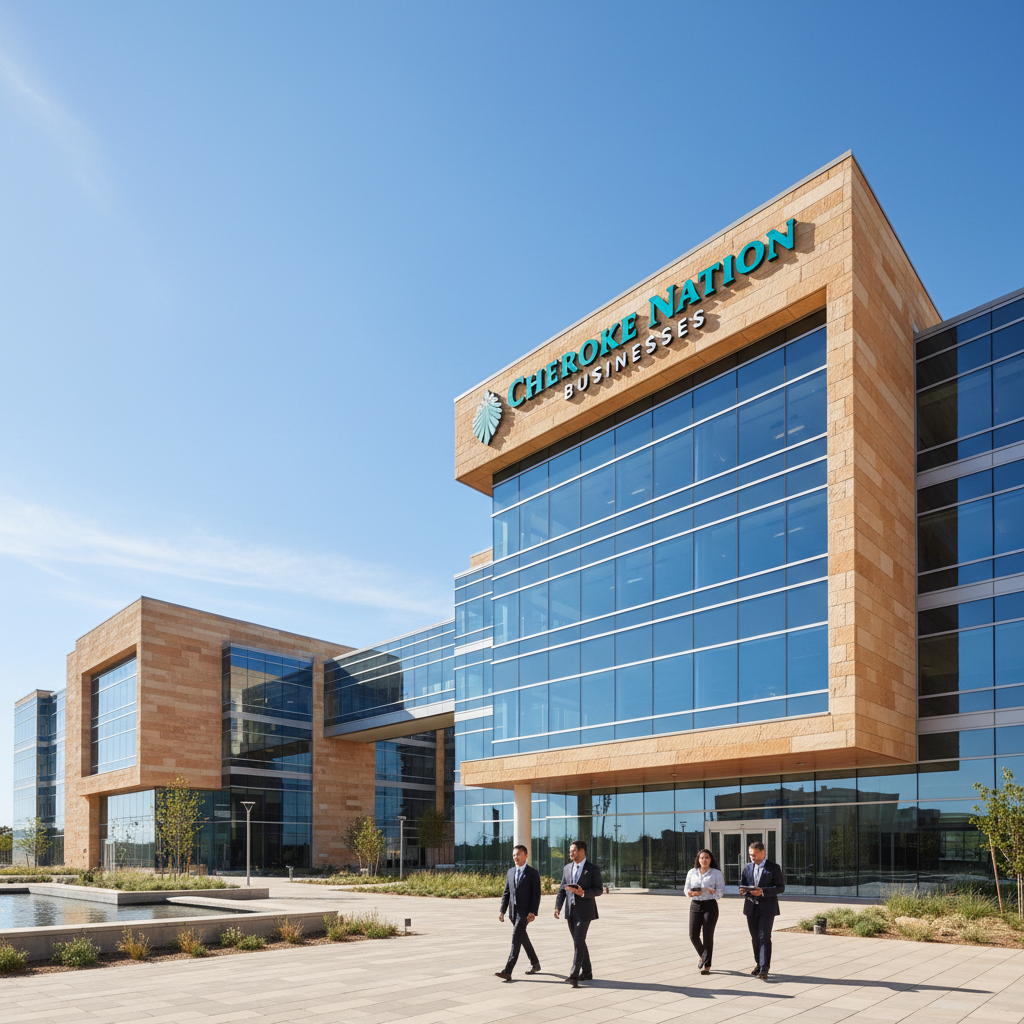
Cherokee Nation Businesses: From Gaming to Aerospace
Osiyo! If you have ever driven through Northeast Oklahoma or looked into government contracting in Washington D.C., you have likely encountered the powerhouse known as Cherokee Nation Businesses (CNB). But here is the thing: most people only see the surface. They see a casino or a logo on a corporate building and think they know the story. They don’t.
At Osiyo.net, we are all about pulling back the curtain. We are an independent information platform—not an official arm of any tribe—and we are here to explain how a Tribal Nation builds a multi-billion dollar empire to fund its own future. Cherokee Nation Businesses is the economic engine of the Cherokee Nation, and its reach extends far beyond the borders of the 14-county reservation. It is a masterclass in tribal sovereignty, proving that when a Tribal Nation controls its own resources, it can change the lives of its citizens forever.
Key Takeaways
- CNB is the wholly owned diversified holding company of the Cherokee Nation.
- It operates in two primary sectors: Hospitality (gaming, retail, tourism) and Cherokee Federal (government contracting).
- 100% of CNB’s profits (after reinvestment) go to the Cherokee Nation to fund healthcare, education, and infrastructure.
- CNB is a leader in the SBA 8(a) Business Development Program, making it a massive player in federal contracting.
- While CNB belongs to the Cherokee Nation (headquartered in Tahlequah, Oklahoma), it is a distinct entity from the Eastern Band of Cherokee Indians or the United Keetoowah Band of Cherokee Indians.
What is Cherokee Nation Businesses (CNB)?
Let’s cut through the corporate jargon. CNB is a conglomerate. Imagine a company that owns world-class casinos, provides advanced medical staffing for the Department of Defense, builds aerospace components, and runs environmental consulting firms. That is CNB. It was created to do one thing: generate revenue for the Cherokee Nation.
As a sovereign government, the Cherokee Nation has the right to engage in commerce to support its people. But here is the edgy truth: for over a century, the federal government tried to dismantle tribal economies. They wanted tribes dependent on federal handouts. CNB is the ultimate “not today” to that colonial mindset. By diversifying into high-growth industries like aerospace and IT, the Cherokee Nation has ensured it isn’t just surviving; it’s competing on a global stage.
The profits generated by CNB are not just “corporate earnings.” They are the fuel for Cherokee clinics, the scholarships for Cherokee students, and the asphalt for reservation roads. This is sovereignty in action.
It is important to remember that there are three federally recognized Cherokee tribes. CNB is specifically the business arm of the Cherokee Nation (Oklahoma). While the Eastern Band of Cherokee Indians (North Carolina) and the United Keetoowah Band of Cherokee Indians (Oklahoma) also have their own economic ventures, they are entirely separate sovereign governments with their own rules and business entities.
The Revenue Engine: How CNB Benefits Cherokee Citizens
Most American corporations exist to make a few shareholders very rich. CNB exists to make 460,000+ Cherokee citizens more secure. The tribal council and executive branch determine how the dividend from CNB is spent. We aren’t talking about small change; we’re talking about hundreds of millions of dollars annually.
This revenue allows the Cherokee Nation to operate the largest tribally-run healthcare system in the United States. When you see a new state-of-the-art hospital in Tahlequah, CNB helped build that. When a student receives a tribal scholarship, CNB likely generated the funds. This is the circular economy of a sovereign nation: tribal talent creates business success, which funds tribal services, which empowers more tribal talent.
Beyond the Casino: The Business Sectors of CNB
Ask a random person on the street what tribal businesses do, and they will probably say “gaming.” And they aren’t wrong—gaming is a massive, vital part of the portfolio. But if you think that’s all there is, you’re missing 60% of the picture. CNB has diversified with the aggression of a Silicon Valley venture firm.
Hospitality and Gaming
Cherokee Nation Entertainment (CNE) is the hospitality arm. They operate Hard Rock Hotel & Casino Tulsa, along with nine other Cherokee Casinos across Northeast Oklahoma. They also manage retail outlets, golf courses, and various tourism destinations. This sector provides thousands of jobs, many of which are held by tribal citizens under TERO (Tribal Employment Rights Office) guidelines, ensuring that the local workforce benefits from tribal success.
Cherokee Federal: The Secret Giant
This is where things get really interesting. Cherokee Federal is a division of CNB that manages dozens of companies specializing in government contracting. They operate in sectors you might not expect from a tribal entity:
- Aerospace & Defense: Manufacturing parts for military aircraft and providing mission-critical support.
- Information Technology: Cybersecurity, data analytics, and software development for federal agencies.
- Health Services: Managing medical programs and staffing for organizations like the CDC and the Department of State.
- Environmental & Construction: Handling large-scale remediation and infrastructure projects worldwide.
By leveraging the SBA 8(a) program, Cherokee Federal can compete for set-aside contracts that help the federal government meet its small-business goals while providing the tribe with a stable, non-gaming revenue stream. This diversification is crucial because it protects the tribe from local economic downturns that might affect the gaming industry.
Sovereignty and Economic Impact
We need to talk about the “sovereignty” factor. Critics often complain that tribal businesses have an “unfair advantage.” Let’s address that head-on. Tribal Nations are governments. When a state lottery or a municipal utility makes money, that money goes to public services. CNB is no different. The “advantage” of being a sovereign entity comes with the heavy responsibility of providing for an entire population that has been historically marginalized by the federal government.
Furthermore, CNB is an economic powerhouse for the entire state of Oklahoma. They are one of the largest employers in the region, bringing in billions of dollars in outside investment through federal contracts and tourism. When CNB wins, the entire regional economy usually wins with them.
Comparison: CNB Business Divisions
| Division | Primary Focus | Key Impact |
|---|---|---|
| Cherokee Nation Entertainment | Gaming, Hotels, Tourism | High local employment, funding for cultural preservation. |
| Cherokee Federal | Government Contracting (Aerospace, IT, Health) | Global revenue diversification, high-tech career paths. |
| Cultural & Economic Development | Small Business Support, Tourism Sites | Supporting Cherokee entrepreneurs and historical education. |
| Real Estate & Internal Services | Infrastructure, Property Management | Building the physical footprint of the Nation. |
FAQ: Common Questions About CNB
Is Cherokee Nation Businesses a government agency?
No. While it is 100% owned by the Cherokee Nation government, CNB is a private corporate entity. This structure allows it to operate with the speed and efficiency of a business while still remaining accountable to the tribal government and its citizens.
Can non-Cherokees work for CNB?
Absolutely. CNB employs thousands of people from all backgrounds. However, they do follow Tribal Preference laws. If you are interested in working there, you should research how TERO works to understand how tribal citizens are prioritized in the hiring process.
Does CNB give money directly to Cherokee citizens?
CNB does not issue “per capita” checks to every citizen. Instead, its profits fund programs that benefit all citizens, such as healthcare, education, housing assistance, and elder services. The goal is long-term community stability rather than a one-time payment.
How can I do business with CNB?
CNB is always looking for vendors and partners. If you are a Native-owned business, you should look into creating a capability statement and registering with their procurement office. They often prioritize Indian-owned businesses in their supply chain.
Next Steps: Where to Go From Here
If you are a Cherokee citizen or just someone interested in the mechanics of tribal sovereignty, here is how you can engage further:
- Research Your Ancestry: If you believe you have Cherokee heritage, you must start with the records. Check out our guide on how to research Cherokee ancestry.
- Check Official Sources: For official business inquiries or job listings, visit the official CNB website.
- Understand the Rules: Enrollment is a government process, not a business one. If you are looking to enroll, you must contact the Cherokee Nation Tribal Registrar directly.
- Stay Informed: Follow the Cherokee Nation’s official news site to see how CNB profits are being allocated to new community projects.
CNB is more than just a company; it is a declaration of independence. It is a reminder that the Cherokee Nation is a modern, thriving, and sophisticated government capable of competing anywhere in the world. Whether it’s at a blackjack table in West Siloam Springs or a high-tech lab in Virginia, the Cherokee presence is felt—and it’s only getting stronger.
Last reviewed: June 2026
Osiyo.net is an independently operated information platform. It is not an official website of any Tribal Nation, the Bureau of Indian Affairs, or any government agency. Always verify enrollment information directly with the specific Tribal Nation.