Cherokee Naming Traditions and Practices
Osiyo! Welcome to a deep dive into the beautiful, complex, and often misunderstood world of Cherokee naming traditions. Before we get into the heart of the matter, let’s get the house rules out of the way: Osiyo.net is an independently operated information platform. We are not an official website of any Tribal Nation or government agency. We’re here to guide you through history and resources, but we don’t determine enrollment or eligibility. For that, you’ll need to contact the sovereign nations themselves: the Cherokee Nation (Oklahoma), the Eastern Band of Cherokee Indians (North Carolina), or the United Keetoowah Band of Cherokee Indians (Oklahoma).
Names in Cherokee culture aren’t just labels we stick on a birth certificate. They are living, breathing identities that evolve as a person moves through life. Traditionally, a Cherokee name told a story about who you were, where you came from, and what you had accomplished. In this guide, we’ll look at how these traditions worked, how colonization tried to strip them away, and how modern Cherokee people are reclaiming their linguistic heritage today.
Key Takeaways: Cherokee Naming at a Glance
- Names were fluid: Historically, a Cherokee person might have several names throughout their life based on deeds, character, or milestones.
- Matrilineal roots: Names and clan identity traditionally passed through the mother’s side, though colonization forced a shift to European-style surnames.
- The Three Tribes: Naming practices and language revitalization efforts vary across the Cherokee Nation, the Eastern Band of Cherokee Indians, and the United Keetoowah Band.
- Naming is Sovereign: Each Tribal Nation has its own cultural protocols and language programs regarding traditional names.
- Genealogy matters: Modern surnames are often tied to the names recorded on historical documents like the Dawes Rolls.
The Traditional Lifecycle of a Cherokee Name
In the pre-removal era, naming was a community event and a spiritual practice. Unlike the Western tradition where you’re born with a first and last name that you carry to the grave, Cherokee naming was dynamic. You didn’t just have a name; you earned your way into new ones.
Childhood Names
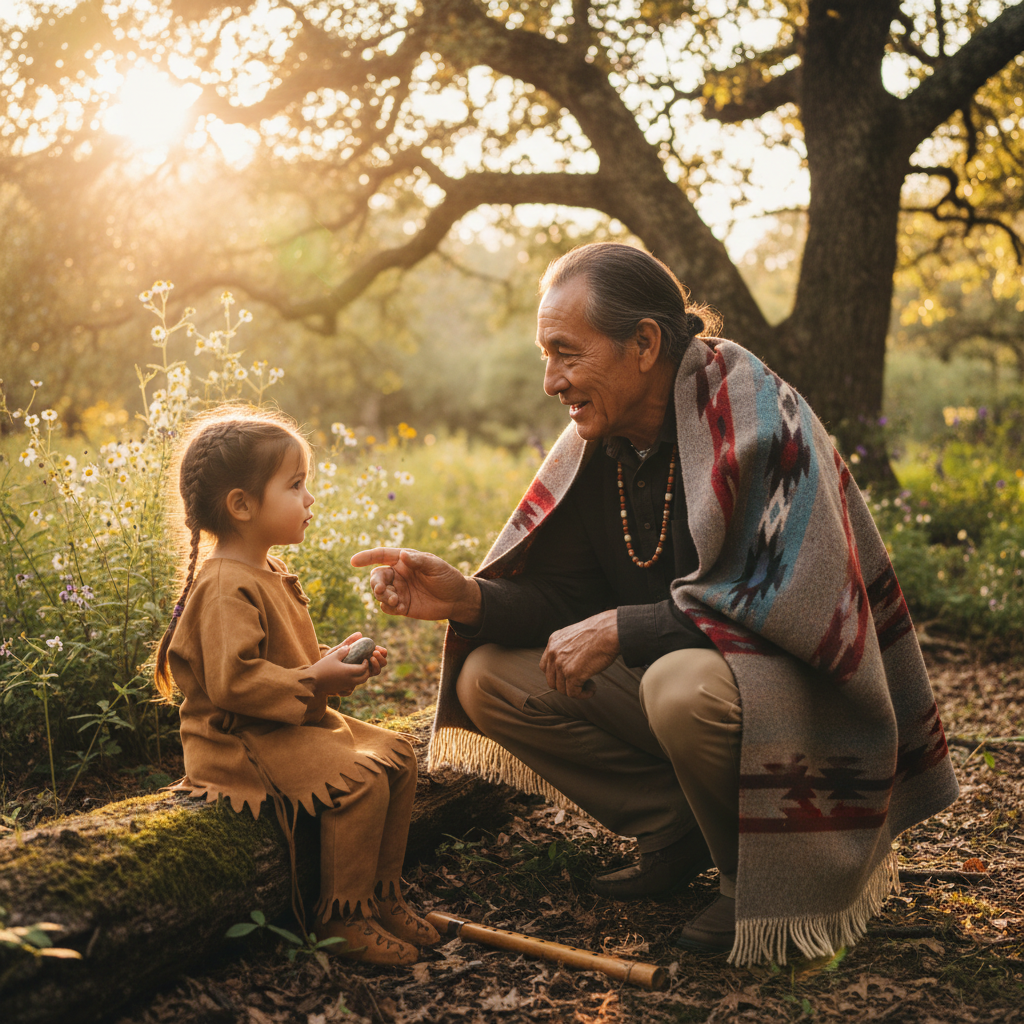
When a baby was born, the grandmother or a respected elder in the mother’s clan usually chose a name. This name was often descriptive of the child’s appearance or a specific circumstance of their birth. These weren’t meant to be permanent. Think of them as “place-holders” while the community waited to see what kind of person the child would become.
Adult Names and Deeds
As a person reached maturity or performed a significant feat—especially in leadership or conflict—they might be given a new name. These names often reflected their character. If you were a swift runner or a particularly wise negotiator, your name would change to reflect that. It was a way of the community acknowledging your growth and your contribution to the people.
“A name is not just a sound; it is a reflection of the soul and the role one plays within the community.”
The Role of the Clan
You cannot talk about Cherokee names without talking about clans. Traditionally, the Cherokee have seven clans: Wolf, Deer, Bird, Long Hair, Blue, Wild Potato, and Paint. Because the Cherokee are matrilineal, you belonged to your mother’s clan. Your name often tied back to the responsibilities or the spiritual history of that specific clan. If you are researching your ancestry, understanding these clan connections is vital, though they are harder to track in post-1900 records. For more on this, check out our guide on how to research Cherokee ancestry.
Colonization and the Forced Shift to Surnames
Let’s get edgy for a second because history isn’t all sunshine and beadwork. The reason most Cherokee people today have surnames like Smith, Ross, or Adair isn’t because we just liked the sound of them. It was the result of systemic pressure from the U.S. government and missionaries to “civilize” the Cherokee people.
The Patriarchal Pivot
The U.S. government found the matrilineal system and fluid naming practices of the Cherokee confusing and “heathen.” To facilitate land ownership and census tracking, they forced a patriarchal system where children took their father’s name. This was a direct attack on Cherokee social structures. By forcing a single, permanent surname, the federal government made it easier to track individuals for the purpose of removal and assimilation.
Translation and Mistranslation
Many traditional names were simply translated into English, sometimes poorly. A name like Tsani might become John. A descriptive name like “He Who Follows the Ridges” might get shortened or distorted into a surname that sounded more “American.” During the creation of the Dawes Rolls and Final Rolls, many names were butchered by government clerks who couldn’t understand the Cherokee language (Tsalagi). If you find a name that looks strange in an old index, it might be a misspelled name in a historical record.
| Traditional Concept | European Influence | Result for Genealogy |
|---|---|---|
| Matrilineal (Mother’s line) | Patrilineal (Father’s line) | Difficulty tracking female ancestors before 1850. |
| Fluid names (Change over time) | Fixed Surnames | Records may show the same person with different names. |
| Clan identity primary | Individual family primary | Loss of clan knowledge in some family lines. |
| Tsalagi (Cherokee Language) | English Translation | Names like “Going-Snake” or “Six-Killer” became family names. |
Naming Practices Across the Three Sovereign Nations
While the history is shared, the way naming is approached today can vary between the three federally recognized Cherokee tribes. It is important to remember that each is a sovereign government with its own rules for citizenship and cultural programs.
Cherokee Nation (Oklahoma)
The Cherokee Nation is the largest of the three. They have robust language programs where many citizens are reclaiming their Tsalagi names. In the Cherokee Nation, naming ceremonies are still performed, often by traditional practitioners or within specific community groups. It’s a way of asserting identity in a modern world.
Eastern Band of Cherokee Indians (North Carolina)
The EBCI consists of descendants of those who remained in their ancestral homelands in the East. Because of their continuous presence in the mountains of North Carolina, some families have maintained very specific local naming traditions and a strong connection to the Qualla Boundary. Their language programs are deeply focused on preservation and immersion.
United Keetoowah Band of Cherokee Indians (Oklahoma)
The UKB often emphasizes a very traditional approach to Cherokee life and culture. For many UKB members, naming is tied closely to ceremonial grounds and traditional spiritual practices. They maintain a distinct identity and have their own specific requirements for enrollment and cultural participation.
Reclaiming a Cherokee Name: A Modern Movement
Many people today are looking to move beyond the English names given to their ancestors. This is part of a larger “decolonization” movement. However, it isn’t as simple as picking a word out of a Cherokee-English dictionary and calling it a day.
Language is the key. Cherokee is a polysynthetic language, meaning one word can contain the meaning of an entire English sentence. To take a Cherokee name is to take on the responsibility of the language. Many Cherokee people work with fluent speakers or elders to ensure that the name they choose is grammatically correct and culturally appropriate. If you are just starting your journey, you might want to look into scholarship resources that support language and cultural studies.
The “Spirit Animal” Myth
Let’s bust a common myth: the idea of a “spirit animal” name you get from an internet quiz. In Cherokee culture, animals are respected and appear in many names, but the concept of a “spirit animal” as a trendy accessory is a New Age appropriation. Names involving animals usually relate to clan identity (like the Wolf or Bird clans) or observed traits, not a mystical animal guide you find on a website.
Finding Ancestral Names in the Records
If you’re searching for your ancestors’ names, you’ll likely be looking at the Final Rolls (often called the Dawes Rolls for the Oklahoma tribes). This is where you’ll see the collision of traditional names and English surnames.
When searching, look for:
- Cherokee Names: Often listed in the “Cherokee Name” column if the person was a fluent speaker at the turn of the century.
- Phonetic Spellings: Names spelled out as they sounded to an English-speaking clerk.
- Aliases: Many individuals are listed with “aka” (also known as) because they used both a traditional name and an English name.
For a detailed look at this process, see our guide on how to search the Final Rolls index. Knowing these names is often the first step in applying for an Indian Card or Certificate of Degree of Indian Blood (CDIB).
FAQ: Common Questions About Cherokee Naming
How do I get a Cherokee name?
Traditional names are typically given by elders, family members, or traditional practitioners within the Cherokee community. It is not something you typically just “pick” for yourself. If you are a citizen of a Cherokee tribe, reach out to your community or language department for guidance on cultural protocols.
What are some common Cherokee surnames?
Because of early intermarriage with Scots-Irish traders and the forced adoption of English names, common surnames include Ross, Adair, Ward, Lowrey, Hicks, and Vann. Others are English translations of Cherokee names, like Sixkiller, Walkingstick, or Fields.
Does having a Cherokee name mean I am enrolled?
No. Having a traditional name is a cultural practice, while enrollment is a legal status determined by a Tribal Nation. You can have a Cherokee name and not be enrolled, or be a fully enrolled citizen and only use an English name. For more on the legal side, read about CDIB vs. Tribal Citizenship.
Can I use a DNA test to find my Cherokee name?
No. DNA tests might suggest Indigenous ancestry, but they cannot tell you anything about your family’s specific names or clan affiliations. Cultural identity and naming are based on genealogy and community, not just biology. Check out our take on DNA tests and tribal citizenship for more.
Where to Go From Here
If you’re interested in the power of Cherokee naming, the best thing you can do is learn. Here are your next steps:
- Research your genealogy: Start with what you know and work back to the 1900s. Use our tribal enrollment document checklist to stay organized.
- Learn the language: The nuances of Cherokee names are found in the Tsalagi language. Check out the official language programs of the three tribes.
- Respect the process: If you are looking for a traditional name, engage with the community respectfully. Listen more than you speak. Use our guide on questions for elders to learn more about your family’s specific naming history.
- Consult the nations: If you believe you are eligible for citizenship, contact the Cherokee Nation, EBCI, or UKB directly. Each has its own unique citizenship rules.
Names carry weight. They carry history. Whether you are a citizen of the Cherokee Nation, the Eastern Band, or the United Keetoowah Band—or someone just beginning to uncover their roots—understanding these naming traditions is a way of honoring those who came before us and ensuring our culture continues for the next seven generations.
Last reviewed: June 2026
Osiyo.net is an independently operated information platform. It is not an official website of any Tribal Nation, the Bureau of Indian Affairs, or any government agency. Always verify enrollment information directly with the specific Tribal Nation.