Traditional Cherokee Dwellings and Architecture
Welcome to Osiyo.net. If you are here, you likely have an interest in the deep history and enduring culture of the Cherokee people. Before we dive into the fascinating world of Traditional Cherokee Dwellings, we need to get some important housekeeping out of the way. Osiyo.net is an independently operated information platform. We are NOT an official website of any Tribal Nation, the Bureau of Indian Affairs (BIA), or any government agency. We do not handle enrollment, nor can we tell you if you qualify for citizenship. Each Tribal Nation is a sovereign government that sets its own rules. To learn about enrollment, you must contact the three federally recognized Cherokee tribes directly: the Cherokee Nation (Oklahoma), the Eastern Band of Cherokee Indians (North Carolina), or the United Keetoowah Band of Cherokee Indians (Oklahoma).
Now, let’s talk about home. When you think of “Native American housing,” your brain might jump to tipis or longhouses. But for the Cherokee people (the Tsalagi), home was something much more permanent and architecturally sophisticated. Traditional Cherokee Dwellings were engineered to withstand the humid summers and chilly winters of the Southeastern United States, specifically the Appalachian mountains and surrounding valleys. These structures weren’t just shelters; they were physical manifestations of a complex social order and a deep spiritual connection to the land.
Key Takeaways on Cherokee Architecture
- Dual-Housing System: Historically, Cherokee families maintained two distinct homes: a “winter house” (asi) and a “summer house.”
- The Townhouse: The central hub of any Cherokee town was a massive, seven-sided townhouse used for government and ceremony.
- Wattle and Daub: This signature construction technique used woven river cane and a clay-and-grass plaster.
- Evolution: Cherokee architecture didn’t stay frozen in time; it adapted from mounds and earth-lodges to log cabins and modern structures.
- Sovereign Heritage: Today, these architectural traditions are preserved and celebrated by the three sovereign Cherokee Tribal Nations.
The Heart of the Community: The Seven-Sided Townhouse
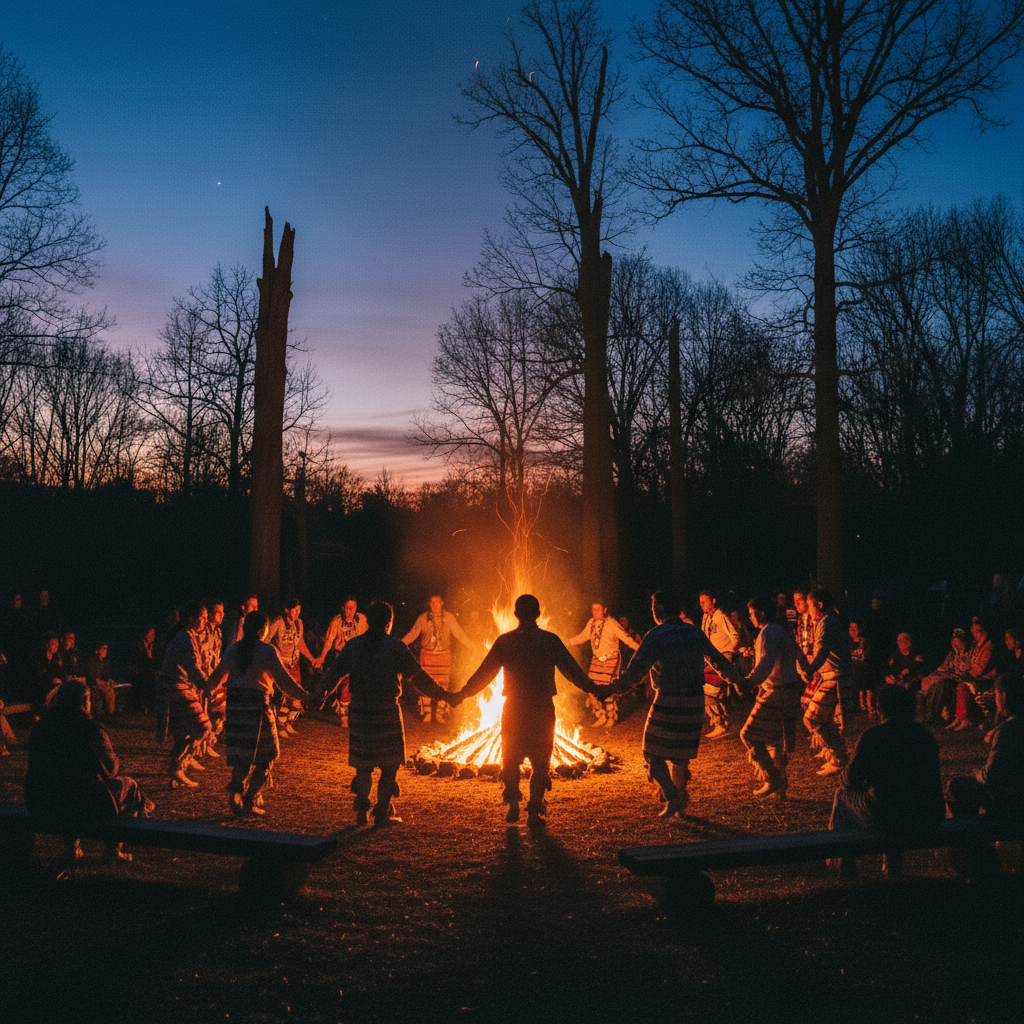
Imagine a structure large enough to hold several hundred people, built atop a human-made earthen mound. This was the Cherokee townhouse, the beating heart of every significant settlement. These buildings were usually heptagonal—meaning they had seven sides. Why seven? Because there are seven primary clans in Cherokee society: Wolf, Wild Potato, Deer, Bird, Paint, Blue, and Long Hair. Each clan had its designated seating area within the townhouse.
The construction was a feat of community engineering. Massive logs served as the frame, and the roof was often thatched or covered in earth. At the center of the townhouse, a sacred fire was kept burning. This fire was more than just a light source; it represented the life and continuity of the town. When new towns were formed, coals from the mother town’s fire were carried to start the new one. This is a powerful reminder that for the Cherokee, architecture and governance were inseparable. You can see modern interpretations of this design today at the Cherokee Nation headquarters in Tahlequah or the Eastern Band of Cherokee Indians facilities in Cherokee, North Carolina.
Surviving the Seasons: Winter and Summer Houses
Life in the Southeast meant dealing with extreme humidity and varying temperatures. To stay comfortable, traditional Cherokee families used a dual-home strategy. If you were looking for a traditional Cherokee dwelling in the 17th century, you wouldn’t find just one house, but a homestead.
The Winter House (Asi)
The asi, or winter house, was designed for maximum heat retention. These were typically small, circular structures. The walls were made using the “wattle and daub” method: a frame of upright poles was interwoven with flexible river cane (wattle) and then plastered with a thick mixture of clay, mud, and dry grass (daub). Once dried, this created a solid, windproof wall. The roof was cone-shaped and heavily thatched. Inside, a small fire kept the space incredibly warm, even in the dead of a mountain winter. It was cozy, functional, and efficient.
The Summer House
As the humidity rose, the family moved a few yards away to their summer house. These were rectangular and much larger than the winter houses. The walls were often made of open-weave cane or removable bark panels to allow for maximum airflow. These homes were breezy and light, often featuring raised beds to keep residents away from the damp ground and insects. This transition between homes highlights the Cherokee people’s deep understanding of their environment—a trait you’ll find explored in many of our cultural heritage stories.
The Transition to Log Cabins
History isn’t static, and neither is architecture. By the late 18th century, as European contact increased and trade patterns shifted, the Cherokee began adopting the log cabin style. However, they didn’t just “copy” Europeans; they adapted the style to fit their needs. These cabins were often sturdier and more permanent than the older wattle and daub structures, fitting the shift toward more individualized farmsteads.
It is a common misconception that this shift was purely a move toward “civilization” (a loaded and often derogatory term). In reality, it was a strategic adaptation. However, this period was also marked by intense pressure from the U.S. government, eventually leading to the forced removal known as the Trail of Tears. When you research Cherokee ancestry, you often find records of these farmsteads in the valuations made before the removal. These records prove that the Cherokee were thriving homeowners with orchards, barns, and well-constructed dwellings long before they were forced west.
Cherokee Construction Materials and Methods
| Feature | Winter House (Asi) | Summer House | Townhouse |
|---|---|---|---|
| Shape | Circular/Round | Rectangular | Seven-Sided (Heptagonal) |
| Wall Material | Wattle and Daub (Clay/Cane) | Bark or Woven Cane | Log Frame / Earth-covered |
| Roof Type | Thatched Cone | Gabled Bark/Thatch | Massive Earth or Thatch Mound |
| Primary Function | Warmth and Sleeping | Cooking and Daily Living | Governance and Ceremony |
The materials used in traditional Cherokee dwellings were all sourced from the local environment. This sustainable approach included:
- River Cane: A versatile plant used for everything from walls to mats and baskets.
- Red Clay: Abundant in the Southeast, it provided a durable, fire-resistant exterior when mixed with grass.
- Black Locust and Cedar: Preferred for structural posts due to their natural resistance to rot.
- Poplar and Hickory Bark: Used for roofing and siding on summer structures.
Architecture and Sovereignty
Why does studying old houses matter today? Because architecture is a declaration of sovereignty. Every time a Tribal Nation chooses to incorporate traditional design elements into a new health clinic or government building, they are asserting their continued presence and their right to define their own cultural aesthetic. The visiting of tribal communities allows you to see this blend of ancient wisdom and modern innovation firsthand.
“Our buildings were never just about wood and mud. They were about how we related to each other, our clans, and the fire at the center of our world.”
Frequently Asked Questions
Did the Cherokee live in tipis?
No. Tipis were primarily used by nomadic Plains tribes. The Cherokee were a settled, agrarian people who built permanent structures like wattle and daub houses and log cabins.
What is wattle and daub?
Wattle and daub is a construction technique where a woven lattice of wooden strips (wattle) is smeared with a sticky material like wet soil, clay, sand, animal dung, or straw (daub). It was the primary building method for traditional Cherokee dwellings for centuries.
Are there any original Cherokee townhouses left?
While most original wooden structures have long since decayed, the earthen mounds they sat upon still exist throughout the Southeast. Sites like the Kituwah Mound in North Carolina (the “mother town” of the Cherokee) are protected and sacred. Reconstructions can be found at places like the Museum of the Cherokee Indian.
How did the Trail of Tears affect Cherokee architecture?
The forced removal in 1838 stripped the Cherokee of their homes, farms, and townhouses in the East. Upon arriving in Indian Territory (modern-day Oklahoma), the Cherokee had to rebuild from scratch, often utilizing log cabin styles and later, Victorian and modern architecture, while still maintaining the concept of the ceremonial ground and the seven-sided community influence.
Next Steps: Explore Further
Ready to dive deeper into Cherokee history and culture? Here is where you should go next:
- Visit the Source: Plan a trip to the Cherokee Nation in Oklahoma or the Eastern Band of Cherokee Indians in North Carolina to see reconstructed villages.
- Research Your Roots: If you believe you have Cherokee ancestry, start with our guide on how to search the Final Rolls.
- Learn the Language: Architecture and language are linked. Many terms for home and hearth are central to the Cherokee language.
- Support Official Institutions: Visit the Bureau of Indian Affairs website to learn more about the federal trust responsibility and the status of Tribal Nations.
Understanding traditional Cherokee dwellings is a gateway to understanding the resilience of the Cherokee people. From the sacred fire of the townhouse to the warmth of the winter asi, these structures tell a story of a people who know exactly who they are and where they belong.
Last reviewed: June 2026
Osiyo.net is an independently operated information platform. It is not an official website of any Tribal Nation, the Bureau of Indian Affairs, or any government agency. Always verify enrollment information directly with the specific Tribal Nation.