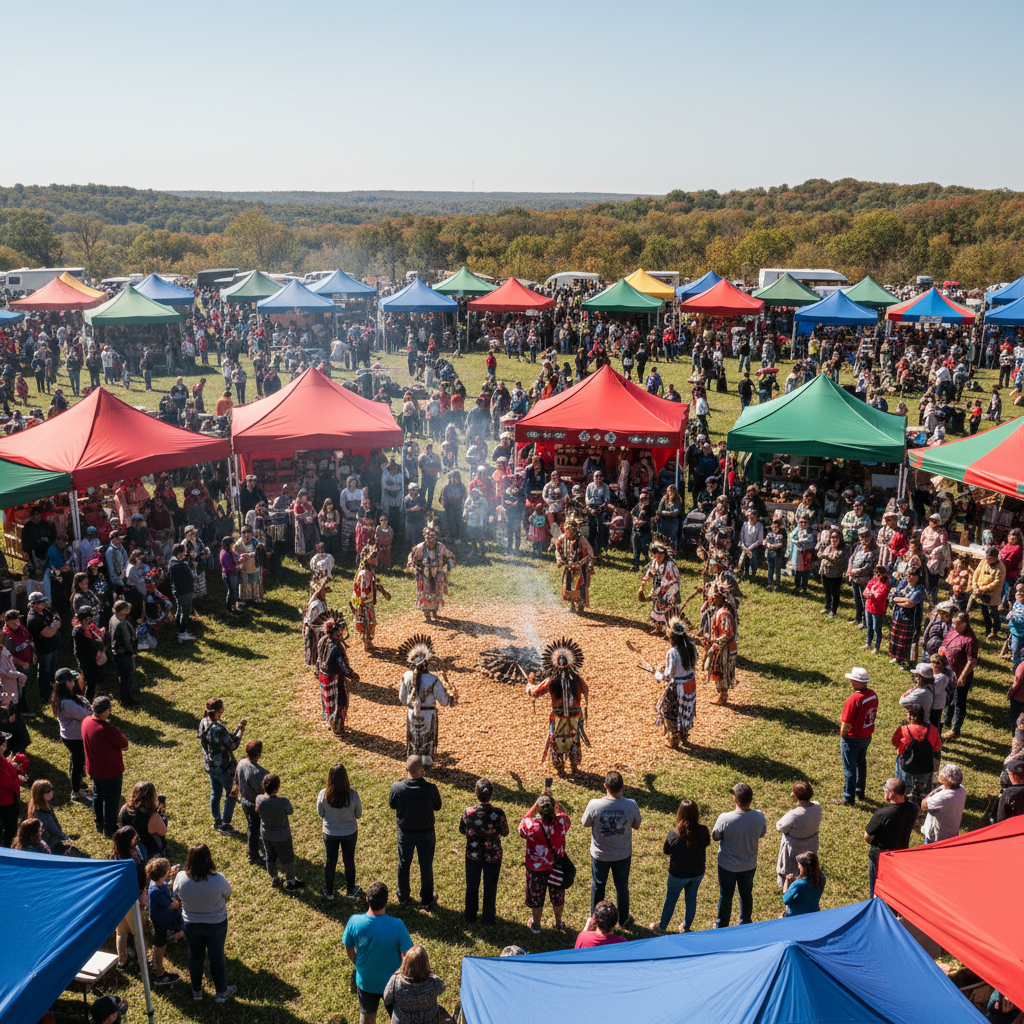
The Cherokee National Holiday: Celebration of Culture
Osiyo! Welcome. If you have ever wanted to experience the heartbeat of the Cherokee Nation, there is no better time than Labor Day weekend in Tahlequah, Oklahoma. The Cherokee National Holiday isn’t just a festival with food and crafts; it is a profound act of sovereignty, a commemoration of resilience, and a homecoming for a people whose history was once written in the ink of forced removal. Before we dive into the details, it is important to note that Osiyo.net is an independent information platform. We are not an official website of the Cherokee Nation, the Eastern Band of Cherokee Indians, or the United Keetoowah Band of Cherokee Indians. We are here to guide you through the history and culture, but always check with official tribal sources for the most current event schedules.
Key Takeaways
- The Cherokee National Holiday commemorates the signing of the 1839 Cherokee Nation Constitution.
- The event is held annually over Labor Day weekend in Tahlequah, Oklahoma, the capital of the Cherokee Nation.
- It features traditional games like stickball and cornstalk shoots, alongside a massive intertribal powwow and a state-of-the-nation address.
- While hosted by the Cherokee Nation (Oklahoma), the holiday welcomes all who wish to learn and celebrate, though specific ceremonies may have boundaries.
- It is a celebration of survival and political reunification following the Trail of Tears.
The History Behind the Celebration: More Than Just a Long Weekend
To understand why the Cherokee National Holiday matters, you have to look back to 1839. This wasn’t a time of peace; it was a time of immense trauma and fractured leadership. Following the illegal Treaty of New Echota and the subsequent forced removal known as the Trail of Tears, the Cherokee people were divided. There were the “Old Settlers” (those who moved west before the removal), the Treaty Party, and the Ross Party (the majority who were forcibly removed).
On September 6, 1839, these groups came together to sign a new constitution. This document didn’t just organize a government; it declared to the world—and specifically to the United States government that had just tried to destroy them—that the Cherokee Nation was still a sovereign, unified power. When you attend the holiday today, you are celebrating that defiant act of statehood. If you are curious about the legal structures of the tribes today, you might want to read about the three federally recognized Cherokee tribes to see how history shaped our modern landscape.
The 1839 Constitution was a bridge over a river of blood and broken promises, re-establishing a government that the federal authorities hoped would vanish in the dust of the trail.
Where and When: The Heart of the Nation
The holiday takes place in Tahlequah, Oklahoma. As the capital of the Cherokee Nation, Tahlequah becomes a bustling hub of activity. The events usually kick off the Friday before Labor Day and run through Sunday evening. It is a massive undertaking, drawing over 100,000 visitors from across the globe.
It is important to distinguish which tribe is hosting. While all three Cherokee tribes have their own unique gatherings and commemorations, the “Cherokee National Holiday” specifically refers to the event hosted by the Cherokee Nation in Oklahoma. The Eastern Band of Cherokee Indians (North Carolina) and the United Keetoowah Band of Cherokee Indians (Oklahoma) are distinct sovereign nations with their own rules, traditions, and enrollment requirements. Always remember that tribal sovereignty means each nation sets its own rules for citizenship and cultural participation. For more on this, check out our guide on tribal citizenship rules.
Signature Events You Can’t Miss
The State of the Nation Address
This is the political heart of the holiday. The Principal Chief of the Cherokee Nation delivers a speech to the citizens and the public, outlining the tribe’s achievements over the past year and the challenges ahead. It’s a powerful reminder that the Cherokee Nation is not a relic of the past, but a living, breathing government providing health care, education, and economic stability to its people.
The Grand Parade
Imagine the streets of downtown Tahlequah lined with thousands of people. The parade features tribal royalty, traditional dancers, veterans, and floats from various tribal departments. It is a vibrant display of Cherokee culture and traditions, blended with the community spirit of a modern town. It’s fun, it’s loud, and it’s deeply rooted in community pride.
Traditional Games: Stickball and Cornstalk Shoots
If you want to see the “Little Brother of War,” you have to watch a stickball game. This isn’t a sanitized sport; it is intense, physical, and deeply spiritual. Historically, stickball was used to settle disputes between clans or nations without resorting to full-scale warfare.
Then there is the cornstalk shoot—a traditional Cherokee archery competition. Participants use hand-crafted bows to shoot at targets made of cornstalks. It requires incredible precision and is a direct link to the survival skills of Cherokee ancestors. For those interested in how these traditions are maintained, our section on visiting tribal communities respectfully is a must-read.
The Intertribal Powwow
As the sun sets, the action moves to the cultural grounds for the powwow. While the Cherokee people historically had different dance traditions (like the Stomp Dance), the intertribal powwow is a beautiful display of various Native American styles—Fancy Dance, Grass Dance, Jingle Dress, and more. The drum beat is the heartbeat of the weekend, and the grand entry is a sight you will never forget.
The Cherokee National Holiday Schedule (General)
| Event Type | Typical Day | Significance |
|---|---|---|
| State of the Nation | Saturday morning | Political update and tribal address |
| Traditional Games | Fri – Sun | Demonstration of ancestral skills and sport |
| Artisan Market | Fri – Sun | Showcase of authentic Cherokee basketry, pottery, and art |
| Intertribal Powwow | Fri – Sat Nights | Pan-Indian celebration of song and dance |
| Hog Fry | Various | Traditional community meal and social gathering |
Navigating the Holiday: A Guide for Visitors
If you are planning to attend, there are a few things you should know. First, respect the culture. While the holiday is a celebration, many events have spiritual components. Always ask before taking photos of individuals, especially during traditional dances or ceremonies. Second, wear comfortable shoes. Tahlequah is beautiful, but you will be doing a lot of walking between the various venues like the Cherokee National Capitol Square and the cultural grounds.
Third, don’t expect a “Hollywood” version of Native American life. You will see people in suits, people in traditional ribbon shirts, and people in jeans and t-shirts. Cherokee identity is lived in the 21st century. If you are there because you believe you have Cherokee heritage and are looking for genealogy resources, the holiday is a great time to visit the Cherokee National Research Center, but don’t expect to walk away with a citizenship card that day. Enrollment is a rigorous legal process based on historical records like the Dawes Rolls.
Addressing the uncomfortable: Sovereignty vs. Stereotypes
It wouldn’t be an Osiyo.net article if we didn’t get a little edgy. The Cherokee National Holiday exists because the Cherokee Nation refused to die. It is a celebration held in a land that was once meant to be a prison. When we talk about “celebrating culture,” we aren’t just talking about pretty baskets. We are talking about the survival of a language that the U.S. government tried to beat out of children in boarding schools. We are talking about a government that persists despite centuries of federal broken promises and the ongoing complexities of blood quantum politics.
When you see the Cherokee flag flying high in Tahlequah, remember that it represents a sovereign nation that manages its own courts, its own police force, and its own destiny. It is not a “club” or a “social group.” It is a country within a country.
Frequently Asked Questions
When is the Cherokee National Holiday?
The holiday is held every year over Labor Day weekend. This coincides with the anniversary of the signing of the 1839 Cherokee Nation Constitution on September 6th.
Is the Cherokee National Holiday open to the public?
Yes! Most events are free and open to the public. It is a wonderful opportunity for non-Cherokees to learn about the culture and history of the tribe in an authentic setting.
Where is the Cherokee National Holiday held?
The primary events are held in Tahlequah, Oklahoma, which is the capital of the Cherokee Nation. Specific locations include the Capitol Square, the Cherokee County Fairgrounds, and the One Fire Field.
Can I find out if I am Cherokee at the holiday?
While you can visit the Cherokee National Research Center in Tahlequah to look at records, the holiday is a busy time. It is better to start your research online using official indexes. Remember, Osiyo.net cannot determine your eligibility; you must contact the Cherokee Nation Registration Department directly for enrollment questions.
Next Steps: Planning Your Journey
- Check the Official Schedule: Visit the official Cherokee Nation website (cherokee.org) a few months before Labor Day for the specific event calendar.
- Book Lodging Early: Hotels in Tahlequah and surrounding areas like Muskogee fill up months in advance.
- Research Your History: Before you go, familiarize yourself with the difference between CDIB vs. Tribal Citizenship so you understand the legal context of the people you are visiting.
- Learn a Few Words: Learning a simple greeting like “Osiyo” (hello) or “Wado” (thank you) goes a long way in showing respect for the Cherokee language.
- Support Local Artists: Bring extra room in your suitcase. The artisan markets feature world-class Cherokee basketry, pottery, and jewelry that you won’t find anywhere else.
The Cherokee National Holiday is a powerful experience. It is a mixture of family reunion, political rally, and cultural revival. Whether you are a citizen returning home or a guest eager to learn, you will leave with a deeper understanding of what it means to be Cherokee. Just remember: the stories told here are not just about the past—they are about a vibrant, sovereign future.
Last reviewed: June 2026
Osiyo.net is an independently operated information platform. It is not an official website of any Tribal Nation, the Bureau of Indian Affairs, or any government agency. Always verify enrollment information directly with the specific Tribal Nation.