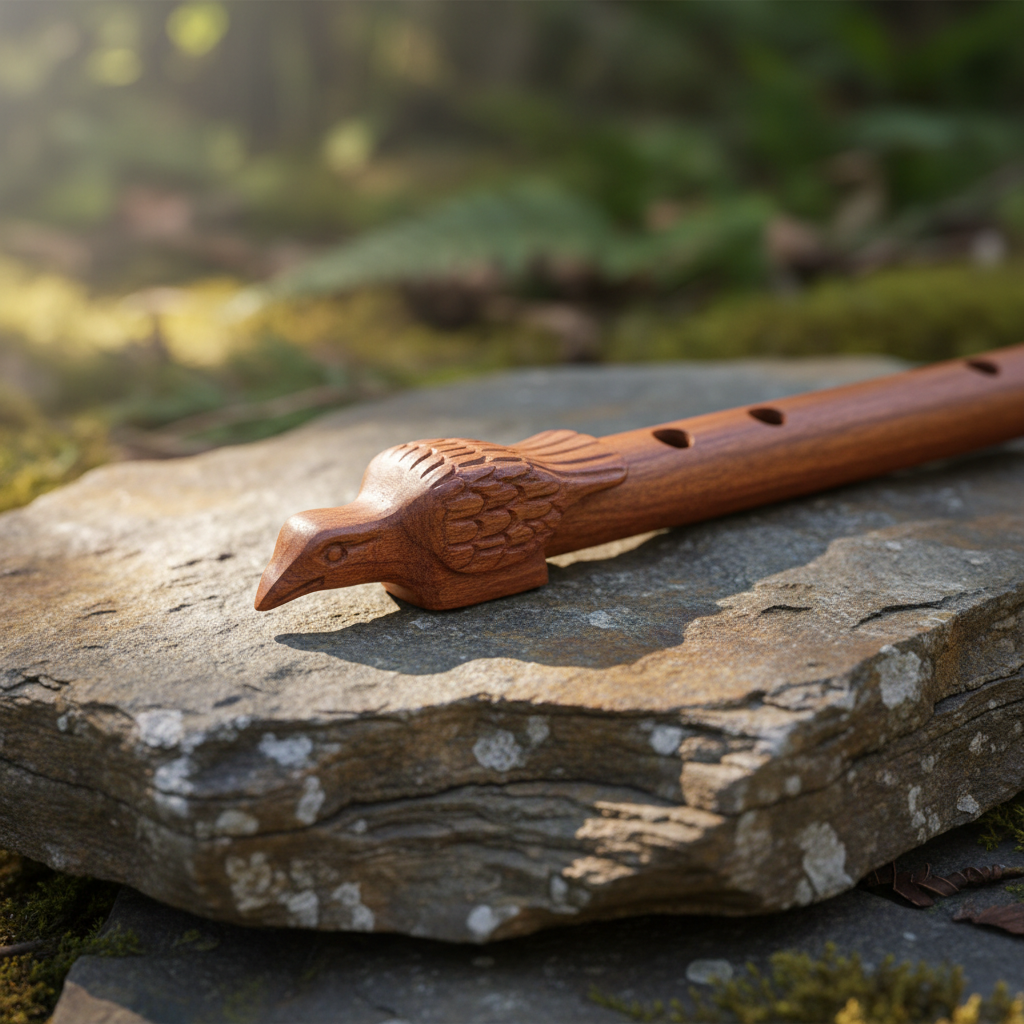
The Cherokee Flute: Sound of a Nation
Osiyo! If you have ever stood near a river in the early morning and heard a melody that seemed to float through the mist, you might have been hearing the soul of the Cherokee people. The Cherokee flute is more than just a musical instrument; it is a testament to survival, a connection to the land, and a bridge between generations. At Osiyo.net, we believe that understanding the music is a vital part of understanding the people. However, it is important to remember that Osiyo.net is an independent platform. We are not an official arm of any Tribal Nation or the Bureau of Indian Affairs. We are here to guide you through the history and culture, but for official tribal matters or enrollment, you must always contact the sovereign nations directly.
When we talk about the flute in a Cherokee context, we have to talk about the three federally recognized Cherokee tribes: the Cherokee Nation (Oklahoma), the Eastern Band of Cherokee Indians (North Carolina), and the United Keetoowah Band of Cherokee Indians (Oklahoma). Each of these nations is a sovereign government with its own unique history and relationship to traditional arts. While the music might sound similar to the untrained ear, the stories behind the songs are as distinct as the landscapes of the Smoky Mountains and the rolling hills of northeastern Oklahoma.
Key Takeaways
- The traditional Cherokee flute is historically made from river cane, native to the American Southeast.
- Cherokee flute music served multiple purposes, including courtship, healing, and storytelling.
- The three federally recognized Cherokee tribes maintain their own distinct cultural programs and musical traditions.
- Cherokee identity and citizenship are governed by each sovereign nation; music is a cultural expression, not a legal proof of ancestry.
- Respecting the boundaries of sacred music is essential when exploring tribal cultures.
The Breath of the River: What Makes a Cherokee Flute?
Most people, when they think of “Native American flutes,” imagine the cedar flutes of the Plains tribes. Those are beautiful, but they aren’t the historical standard for the Cherokee. Our ancestors utilized what the land provided, and in the Southeast—the ancestral homelands of the Cherokee—that meant river cane (Arundinaria gigantea). River cane is a hardy, hollow plant that once grew in massive “brakes” across the South. It is the only bamboo native to North America, and it is the backbone of Cherokee material culture, used for everything from blowguns to baskets to flutes.
A traditional Cherokee river cane flute is a masterpiece of natural engineering. Unlike the modern Western flute played horizontally, the Cherokee flute is held vertically. It typically features a two-chambered system. You blow into the first chamber (the slow air chamber), and the air is then pushed through a narrow channel over a “fipple” or sound hole into the second chamber. It is this design that gives the flute its haunting, breathy quality—a sound often described as the wind moving through the trees.
The Evolution of the Craft
While river cane remains the traditional gold standard, many modern Cherokee artists also work with woods like cedar, walnut, and cherry. This evolution reflects the forced migration of the three federally recognized Cherokee tribes. When the majority of the Cherokee people were forcibly removed to Indian Territory (modern-day Oklahoma) during the Trail of Tears, they found themselves in a different ecology. While river cane does grow in parts of Oklahoma, the materials available to makers shifted over time. Today, a flute maker might choose cedar for its resonance or river cane for its historical authenticity. Either way, the Cherokee flute remains a vital symbol of cultural persistence.
The Three Nations and Musical Sovereignty
It is crucial to recognize that the Cherokee Nation, the Eastern Band of Cherokee Indians (EBCI), and the United Keetoowah Band (UKB) each hold their own cultural keys. If you are researching your heritage or looking to connect with these traditions, your journey will differ depending on which nation your ancestors belonged to. For instance, the EBCI in North Carolina has a continuous physical connection to the Appalachian river cane brakes that have existed for millennia. Their flute-making traditions are deeply tied to the Qualla Boundary.
In Oklahoma, both the Cherokee Nation and the UKB have vibrant communities of artists and musicians who have kept the flute tradition alive through centuries of upheaval. When looking for authentic music or instruction, we always recommend starting with official tribal resources. You can find official Tribal Nation websites through our directory to ensure you are supporting genuine tribal citizens and sovereign programs.
| Feature | Traditional Cherokee Flute | Plains-Style Flute |
|---|---|---|
| Primary Material | River Cane (Arundinaria gigantea) | Cedar or Softwoods |
| Construction | Often jointed or natural nodes | Two halves glued together |
| Sound Profile | Breathy, sharp, mimics nature | Mellow, resonant, deep |
| Historical Origin | Southeastern Woodlands | Great Plains |
The Role of the Flute: More Than a Love Song
You may have heard the Cherokee flute referred to as a “courting flute.” While it is true that young men historically used flute music to catch the attention of a potential partner, reducing the instrument to a mere “dating tool” is a bit of a colonial oversimplification. In Cherokee culture, music is often functional. It does a job.
Historically, the flute was used for:
- Healing: Certain melodies were believed to assist in the recovery from illness or to soothe a troubled mind.
- Storytelling: Flute music often accompanies oral histories, providing an atmospheric backdrop to the tales of the Ani-Yunwiya (the Real People).
- Personal Expression: Because the flute mimics the human voice, it was a way for individuals to express grief, joy, or longing when words failed.
- Connection to the Land: By using materials from the riverbanks, the player is literally breathing life into the environment.
The flute is not just an instrument; it is the breath of the ancestors captured in cane. When you play, you are not just making noise; you are honoring the wind that carried our people through the dark times.
Navigating Cultural Appreciation vs. Appropriation
In the age of the internet, “Native-style” flutes are sold everywhere. But here is the edgy truth: there is a massive difference between a mass-produced “pan-Indian” flute made in a factory and a Cherokee flute crafted by a citizen of a federally recognized tribe. Cultural appropriation often turns sacred or significant items into trendy hobbies. If you are not Cherokee, it is perfectly fine to appreciate the music, but be wary of people claiming to teach “ancient Cherokee secrets” for a fee.
If you are interested in learning, look for workshops sanctioned by the Cherokee Nation, the Eastern Band of Cherokee Indians, or the United Keetoowah Band. Supporting authentic tribal artists ensures that the economic benefits of Cherokee culture stay within Cherokee communities. This is part of respecting tribal sovereignty.
Flute Music and Genealogy: A Common Misconception
We often get questions from people who say, “My grandmother played a flute, does that mean I can enroll in the Cherokee Nation?” The short answer is no. While cultural practices are beautiful, tribal citizenship is a legal matter based on documented ancestry. Each of the three tribes has its own rules. For the Cherokee Nation and the UKB, this usually involves tracing an ancestor to the Dawes Rolls. For the EBCI, it involves the Baker Roll.
Playing an instrument or owning a flute does not grant legal status. If you are starting your research, we recommend checking out our guide on how to research Cherokee ancestry and our deep dive into the Dawes Rolls. Music is a part of the identity, but the records are the key to the “Indian Card” or tribal citizenship.
FAQ: Frequently Asked Questions about the Cherokee Flute
Is the Cherokee flute different from other Native American flutes?
Yes. The primary difference is the historical use of river cane and the specific tuning and fingering styles native to the Southeastern Woodlands. While the mechanical principle of the “two-chamber” design is shared with many North American tribes, the Cherokee flute has a distinct voice shaped by the ecology of the South.
Where can I buy an authentic Cherokee flute?
You should purchase directly from artists who are enrolled citizens of the three federally recognized Cherokee tribes. Check official tribal gift shops or annual festivals like the Cherokee National Holiday in Tahlequah or the Fall Festival in Cherokee, North Carolina. Always ask for the artist’s tribal affiliation.
Can women play the Cherokee flute?
Historically, the flute was primarily a male instrument, often associated with courtship and warriors. However, in the modern era, many talented Cherokee women are master flute players and makers. Traditions evolve, and the voice of the flute is now shared by all citizens who wish to carry the culture forward.
Do I need to be a tribal citizen to play a Cherokee-style flute?
No, anyone can appreciate and play the instrument. However, you should be honest about your identity. Do not claim to be a “Cherokee flute player” if you are not a citizen of a Cherokee nation. Use the term “Cherokee-style” and credit the tribal sources you learned from.
Where to Go From Here: Next Steps
- Listen to the Masters: Look up musicians like Tommy Wildcat (Cherokee Nation) or other tribal citizens who have dedicated their lives to the instrument.
- Visit the Homelands: If you can, visit the Museum of the Cherokee Indian in North Carolina or the Cherokee National Museum in Oklahoma to see ancient river cane flutes in person.
- Research Your History: If you believe you have Cherokee ancestors who carried these traditions, begin your genealogy search using official federal records like the National Archives.
- Support Sovereign Arts: When buying music or instruments, ensure your money goes to registered tribal citizens. This supports the survival of the art form for the next seven generations.
The Cherokee flute is a living thing. It survived the removal, it survived the boarding schools, and it survives today because the people refused to let their breath be silenced. Whether you are a descendant looking for your roots or a friend of the nation, listen closely to the music. It tells a story that no history book can fully capture.
Last reviewed: June 2026
Osiyo.net is an independently operated information platform. It is not an official website of any Tribal Nation, the Bureau of Indian Affairs, or any government agency. Always verify enrollment information directly with the specific Tribal Nation.