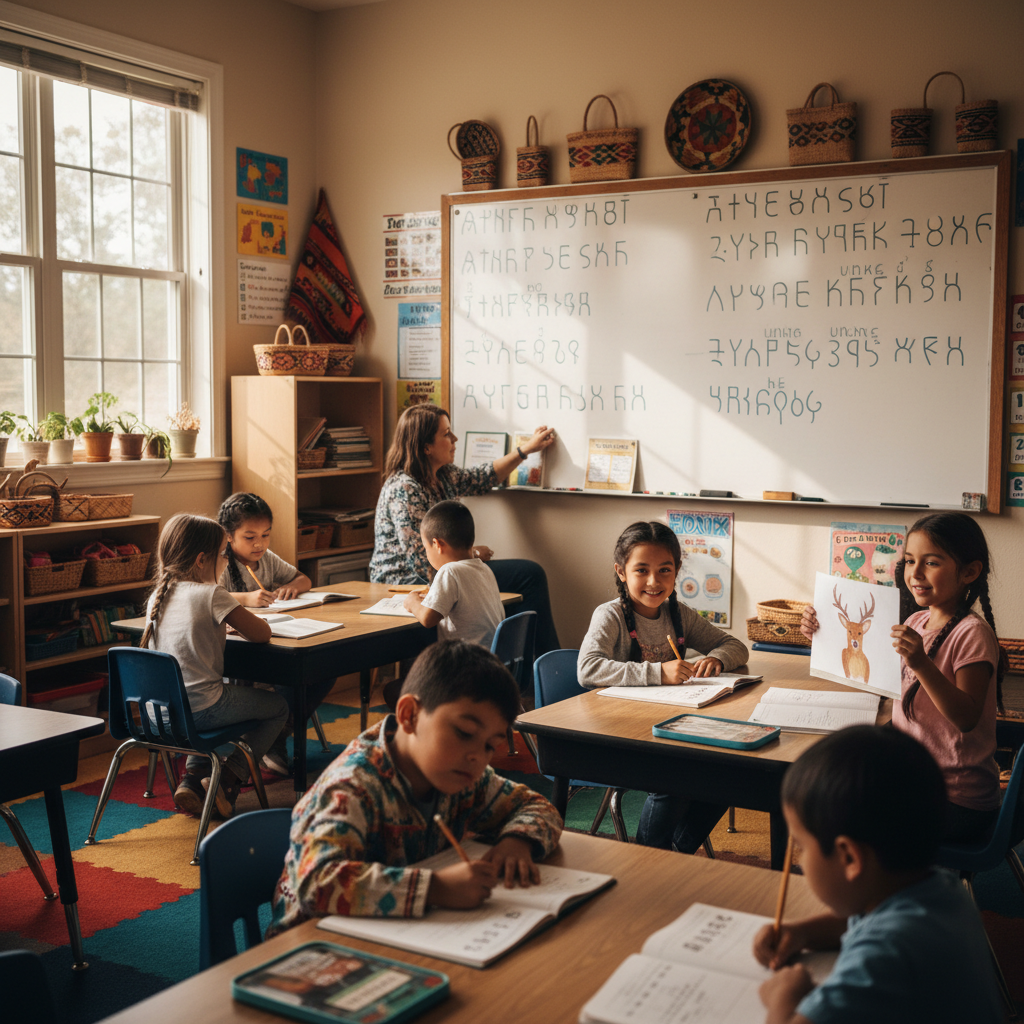
Cherokee Language Immersion Schools: Saving a Culture One Word at a Time
Osiyo! If you are here, you likely already know that the Cherokee language is far more than just a means of communication; it is the heartbeat of a people. However, that heartbeat has been under threat for generations. Today, Cherokee language immersion schools are the front line in a high-stakes battle to ensure our language doesn’t just survive in books, but lives on the tongues of our children. Before we dive into the incredible work being done in Oklahoma and North Carolina, a quick heads-up: Osiyo.net is an independent information platform. We are not an official website for any Tribal Nation or government agency. We’re here to guide you, but for specific enrollment or policy questions, you must contact the sovereign Tribal Nations directly.
Key Takeaways
- Cherokee language immersion schools are operated by two of the three federally recognized Cherokee tribes: the Cherokee Nation (Oklahoma) and the Eastern Band of Cherokee Indians (North Carolina).
- These schools use a “full immersion” model, meaning all subjects—from math to science—are taught exclusively in the Cherokee language and Syllabary.
- The goal is to produce fluent speakers who can bridge the gap between the “silent generation” of elders and future generations.
- Enrollment rules, waitlists, and eligibility requirements are set by each sovereign Tribal Nation and vary significantly.
The Language Emergency: Why Immersion Matters
Let’s get real for a second. The state of the Cherokee language is a direct result of historical injustices. For decades, the U.S. government’s “boarding school” policy operated under the horrific mantra: “Kill the Indian, Save the Man.” Children were beaten for speaking Cherokee. They were shamed into silence. This created what linguists call a “broken transmission,” where parents stopped teaching the language to their children to protect them from trauma or to help them assimilate into a society that didn’t value their heritage.
Today, we are in a state of emergency. Most fluent speakers are elders. When a speaker passes away, a library of cultural knowledge goes with them. Cherokee language immersion schools are the radical response to this crisis. By placing children in an environment where the language is the only tool for social and academic success, these schools are creating a new generation of first-language speakers.
“The language is the soul of the people. Without our language, we lose the unique way we see the world.”
If you are researching your family history to understand your connection to these programs, you might want to start with our guide on how to research Cherokee ancestry or look into the three federally recognized Cherokee tribes to understand which community your ancestors belonged to.
Cherokee Nation: Tsalagi Tsunadeloquasdi (Tahlequah, OK)
Located in the capital of the Cherokee Nation, Tsalagi Tsunadeloquasdi is a powerhouse of revitalization. This immersion school serves students from preschool through the 8th grade. In these classrooms, you won’t see English on the walls. You’ll see the Syllabary—the writing system invented by Sequoyah in the early 19th century.
How It Works
Students learn the same state-mandated curriculum as any other Oklahoma student, but they do it entirely in Cherokee. Imagine learning long division or the water cycle through Cherokee verb structures. It’s intense, it’s difficult, and it is working. The Cherokee Nation has invested millions into this program, including a state-of-the-art facility and an adjacent teacher training academy to ensure there are enough fluent educators to keep the doors open.
Enrollment and Eligibility
Because the Cherokee Nation is a sovereign government, they set their own rules for who can attend. Generally, preference is given to citizens of the Cherokee Nation. If you are unsure of your status, you may want to check out our resources on Cherokee citizenship and tribal enrollment document checklists. For official enrollment forms, always visit the Cherokee Nation official website.
Eastern Band of Cherokee Indians: New Kituwah Academy (Cherokee, NC)
Across the country in the Qualla Boundary of North Carolina, the Eastern Band of Cherokee Indians (EBCI) operates the New Kituwah Academy. This school is a beacon of hope for the preservation of the Kituwah dialect. Like its counterpart in Oklahoma, New Kituwah focuses on total immersion for early childhood and elementary-aged children.
The Cultural Connection
New Kituwah isn’t just about grammar. It’s about the land. The school integrates traditional Cherokee values and history into the daily schedule. Students learn about the mountains they live in, the plants that have sustained the Kituwah people for millennia, and the stories that define their identity. It’s an education that grounds the child in who they are before the rest of the world tells them otherwise.
Accessing the Program
The EBCI has specific requirements for their immersion program, often prioritizing children of tribal members to ensure the language stays within the community. You can find more information on the official EBCI website. If you are trying to find if your ancestors were part of the EBCI, our guide on finding ancestors for tribal enrollment can help you navigate the specific records like the Baker Roll.
Comparing the Programs
While both schools share a mission, they operate under different tribal governments and serve different dialects. Here is a quick look at the two primary Cherokee language immersion schools.
| Feature | Tsalagi Tsunadeloquasdi (CN) | New Kituwah Academy (EBCI) |
|---|---|---|
| Location | Tahlequah, Oklahoma | Cherokee, North Carolina |
| Tribal Nation | Cherokee Nation | Eastern Band of Cherokee Indians |
| Grade Levels | Pre-K through 8th Grade | Early Childhood through Elementary |
| Dialect | Otali (Western) | Kituwah (Middle/Eastern) |
| Primary Focus | Academic Fluency & Syllabary | Community Fluency & Cultural Values |
The United Keetoowah Band (UKB) and Language
The United Keetoowah Band of Cherokee Indians in Oklahoma also places a massive emphasis on language. While they may not currently operate a standalone K-8 immersion school on the scale of Tsalagi Tsunadeloquasdi, they offer intensive community language programs and adult immersion initiatives. The UKB is known for having a high percentage of fluent speakers per capita, and their dedication to the traditional “Keetoowah way” often centers around the preservation of the spoken word in ceremonial and community life. You can learn more about their specific efforts at the official UKB website.
Challenges Facing Immersion Schools
It’s not all sunshine and syllabary. These schools face massive hurdles:
- Teacher Shortages: Most fluent speakers are not certified teachers, and most certified teachers are not fluent speakers. Bridging this gap requires intensive “Master-Apprentice” programs.
- Funding: While the tribes provide significant funding, these programs are expensive to run. They require specialized curriculum development since you can’t just buy a Cherokee-language physics textbook off the shelf.
- Standardized Testing: Students are often required to take state tests in English. Transitioning their brains from a Cherokee-only environment to an English-test environment is a significant challenge for educators.
- External Influence: In a world dominated by English-language media, TikTok, and YouTube, keeping a child “immersed” once they leave the school grounds is an uphill battle.
How to Support Language Revitalization
You don’t have to be a student at an immersion school to support the language. Here is how you can get involved:
- Learn the Syllabary: It was designed to be learned quickly. There are many apps and online resources provided by the Tribal Nations.
- Respect the Process: Understand that immersion spots are limited and often reserved for tribal citizens as a matter of sovereign right and cultural survival.
- Support Tribal Businesses: Many tribal businesses funnel profits back into language programs. Look for TERO-certified businesses or tribal enterprises.
- Educate Others: Correct the misconceptions. The Cherokee language isn’t “dead” or a “relic”—it is a living, breathing, evolving language being used to teach modern science and math.
FAQ about Cherokee Language Immersion Schools
Can non-Cherokee children attend these immersion schools?
Generally, no. These schools are specifically designed for the cultural and linguistic preservation of the Cherokee people. Enrollment is typically restricted to citizens of the respective Tribal Nation (Cherokee Nation or EBCI) or their descendants, depending on specific tribal policies. Always check with the tribal education department for current rules.
Are the students behind in English because they only speak Cherokee at school?
Studies actually show the opposite. Like many bilingual students, children in immersion programs often develop better problem-solving skills and executive function. While they might have a slight “lag” in English reading scores in the very early grades, they typically catch up to or exceed their peers by middle school.
How can I find out if my ancestor spoke Cherokee?
Historical records like the Dawes Rolls or the Guion Miller Roll sometimes include notes about whether an individual required an interpreter or was a “non-English speaker.” Researching these records can give you a clue about your family’s linguistic history.
Next Steps: Where to Go From Here
If you are inspired by the work of these schools, your next steps depend on your goals:
- For Tribal Citizens: Contact your tribe’s education department immediately to inquire about waitlists or adult language classes.
- For Descendants: Focus on verifying your ancestry. Use our ancestry search guide to start building your tree and see where your family fits within the three tribes.
- For Educators: Look into the various Cherokee language teacher training programs offered by the Cherokee Nation or Western Carolina University.
- For Everyone: Use the official tribal nation websites to find verified language apps and dictionaries to start your own learning journey at home.
The journey to reclaim a language is long, but every word learned is a victory against the forces that tried to silence it. Donadagohvi (Until we meet again).
Last reviewed: June 2026
Osiyo.net is an independently operated information platform. It is not an official website of any Tribal Nation, the Bureau of Indian Affairs, or any government agency. Always verify enrollment information directly with the specific Tribal Nation.