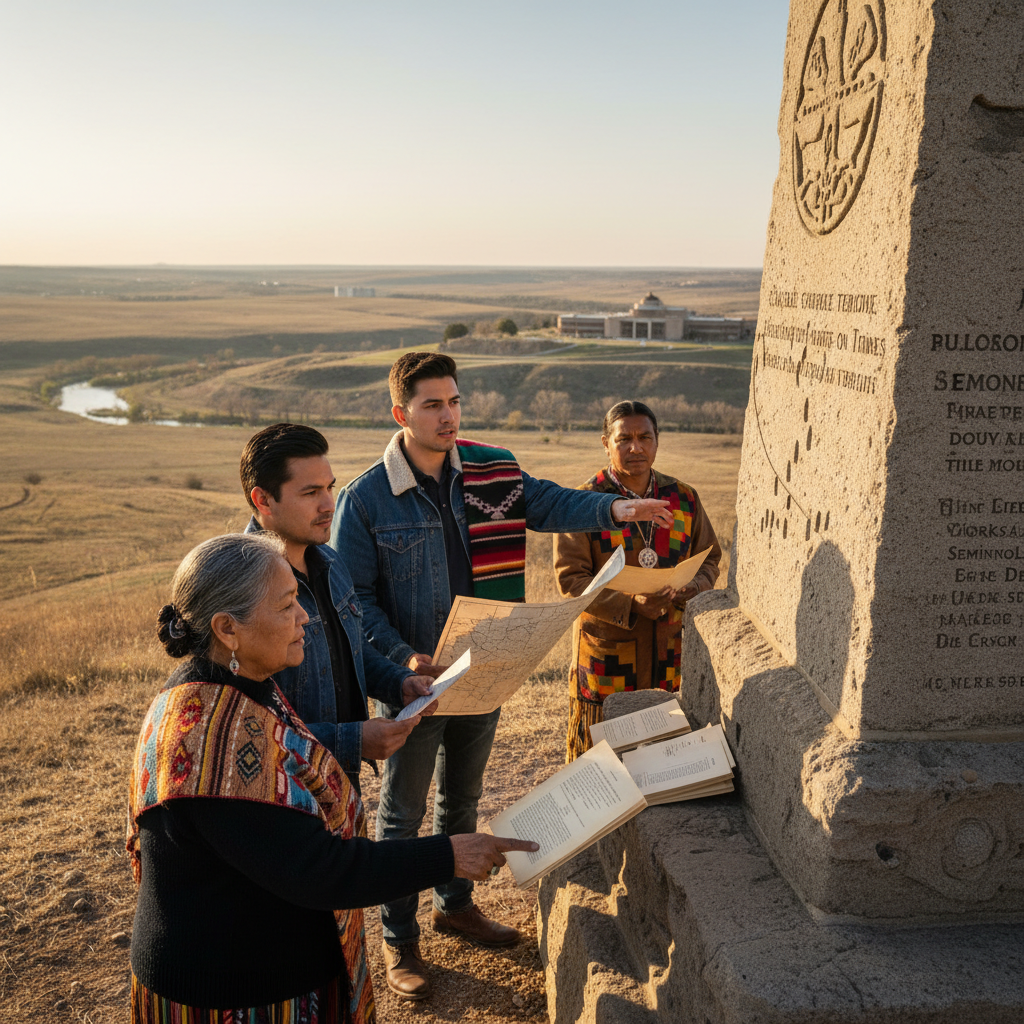
Five Civilized Tribes: History, Controversy, and the Nations Behind the Label
Let’s get one thing straight from the jump: the term “Five Civilized Tribes” is a historical relic that carries as much baggage as a cross-country wagon train. If you’ve spent any time researching Indigenous history, you’ve run into it. It’s a label that was slapped onto five distinct, sovereign nations—the Cherokee, Chickasaw, Choctaw, Muscogee (Creek), and Seminole—by European settlers and the U.S. government. The implication? That these five were “better” or more “advanced” because they adopted Western legal systems, religions, and social structures.
But history is never that clean. While the label was meant to denote assimilation, the reality was a strategic play for survival. At Osiyo.net, we believe in stripping away the white-washed narratives to look at the raw sovereignty and resilience of these nations. This isn’t just a history lesson; it’s a look at how these five nations shaped the American landscape, survived attempted erasure, and continue to lead as powerhouses of tribal governance today.
Key Takeaways
- The “Five Civilized Tribes” is a colonial-era term used to describe the Cherokee, Chickasaw, Choctaw, Muscogee, and Seminole nations.
- The label is controversial because it implies other Indigenous nations were “uncivilized” and ignores the strategic reasons for adopting Western practices.
- All five nations were forcibly removed from their ancestral homelands in the Southeastern U.S. to Indian Territory (now Oklahoma) via the Trail of Tears.
- Today, these nations are leaders in tribal sovereignty, economic development, and cultural preservation.
- There are three distinct federally recognized Cherokee tribes, each with its own government and history.
The Origins of a Loaded Label
In the late 18th and early 19th centuries, the young United States was obsessed with “civilizing” the Indigenous peoples whose land they coveted. George Washington and Henry Knox promoted a policy of assimilation, believing that if Native people abandoned communal land ownership, traditional dress, and Indigenous spirituality in favor of small-scale farming, Christianity, and European-style government, they could be integrated into the American republic.
The Cherokee, Chickasaw, Choctaw, Muscogee, and Seminole were the primary targets of this policy because their homelands occupied the fertile soils of the Deep South. These nations didn’t just “accidentally” become civilized; they strategically adapted. They developed written constitutions, centralized governments, and in the case of the Cherokee, a written syllabary. They did this to protect their lands and prove to the U.S. that they were sovereign equals.
“The term ‘civilized’ was never a compliment; it was a measurement of how much an Indigenous person had surrendered to become like their oppressor.”
The irony? No matter how many laws they passed or churches they built, the U.S. government’s ultimate goal was always the land. The “civilization” of these tribes didn’t stop the Indian Removal Act of 1830. If anything, it made their success a threat to the expansionist desires of white settlers.
The Five Nations: A Closer Look
While the U.S. government lumped these nations together, they are culturally and politically distinct. Understanding the tribes means recognizing their individual histories.
1. The Cherokee Nation(s)
Perhaps the most well-known of the five, the Cherokee are often the face of this era’s history. However, it is vital to distinguish between the three federally recognized Cherokee tribes today:
- Cherokee Nation: The largest tribe, headquartered in Tahlequah, Oklahoma. Most descendants of those who traveled the Trail of Tears are citizens here.
- United Keetoowah Band of Cherokee Indians (UKB): Also based in Oklahoma, the UKB maintains a distinct identity and government, often emphasizing traditional Keetoowah roots.
- Eastern Band of Cherokee Indians (EBCI): Located in their ancestral homelands in North Carolina (the Qualla Boundary), these are the descendants of those who resisted removal or remained behind.
Each has its own criteria for Cherokee citizenship and its own sovereign government. You can learn more at official sites like cherokee.org.
2. The Choctaw Nation
The Choctaw were the first of the five to be forcibly removed. Known as great traders and agriculturalists, their removal was a brutal precursor to the Trail of Tears. Today, the Choctaw Nation of Oklahoma is a global economic force, but their heart remains in the stories of the “Long Walk” and their resilience in the face of the Treaty of Dancing Rabbit Creek.
3. The Chickasaw Nation
Referred to as the “Unconquered and Unconquerable,” the Chickasaw were renowned for their military prowess. They were the last of the five to move to Indian Territory, and they did so with a level of organization that allowed them to maintain significant resources. Their modern governance is a model for tribal economic success.
4. The Muscogee (Creek) Nation
The Muscogee people are a confederacy of various groups. Their history is marked by internal conflict—between those who wanted to assimilate (the “Lower Creeks”) and those who fought to maintain traditional ways (the “Red Sticks”). Their recent legal victory in the McGirt v. Oklahoma Supreme Court case has redefined the landscape of tribal sovereignty in the 21st century.
5. The Seminole Nation
The Seminoles are unique in that they were forged from various Muskogean-speaking groups and escaped African slaves (Black Seminoles) in the Florida Everglades. They fought three bloody wars against the U.S. government. While many were removed to Oklahoma, a significant portion remained in Florida, where they are still recognized today.
The Removal and the Dawes Rolls
The dark center of this history is the Trail of Tears. Between 1830 and 1850, the U.S. government forced approximately 60,000 members of these five nations to move west of the Mississippi River. Thousands died from exposure, disease, and starvation.
Once in Indian Territory, the pressure didn’t stop. The General Allotment Act (Dawes Act) of 1887 sought to break up communal tribal lands into individual plots. To do this, the government created the “Dawes Rolls,” a census of tribal members. Today, the final rolls search is often the first step for those looking into their ancestry. However, the Dawes Rolls were a tool of colonization, and many individuals were excluded or wrongly categorized based on the whims of government agents.
| Tribe | Ancestral Homeland | Current Headquarters | Major Historical Treaty |
|---|---|---|---|
| Cherokee | TN, GA, NC, AL | Tahlequah, OK | Treaty of New Echota |
| Chickasaw | MS, AL, KY, TN | Ada, OK | Treaty of Pontotoc Creek |
| Choctaw | MS, AL, LA | Durant, OK | Treaty of Dancing Rabbit Creek |
| Muscogee | AL, GA | Okmulgee, OK | Treaty of Fort Jackson |
| Seminole | FL | Wewoka, OK | Treaty of Payne’s Landing |
Modern Sovereignty and the “Civilized” Myth
Calling these tribes “civilized” was a way for the U.S. to justify taking land from others they deemed “savage.” It created a hierarchy of Indigeneity that serves no one but the colonizer. Today, these nations reject the label while embracing the history of their survival.
Modern tribal sovereignty is about more than just history; it’s about the right to self-govern, provide education for youth, and manage healthcare and law enforcement. The 2020 McGirt decision proved that for the Muscogee (Creek) Nation—and by extension the other four—their reservations were never technically disestablished. This is a massive win for sovereignty that is still being litigated and settled today.
Next Steps: Digging Deeper
If you’re ready to move beyond the textbooks, here’s how to start:
- Research Your Ancestry: If you believe you have ancestors from these nations, start with the getting started guide.
- Visit the Nations: Modern travel to tribal capitals like Tahlequah or Tishomingo offers a firsthand look at living history.
- Support Official Sources: Check out the Bureau of Indian Affairs for federal records and tribal websites for current government affairs.
FAQ
Why were they called the “Five Civilized Tribes”?
The term was used by white settlers in the 19th century to describe these five nations because they adopted many colonial customs, including written constitutions, centralized governments, and Christianity, in a strategic effort to maintain their sovereignty and land.
Are there more than five Cherokee tribes?
There are exactly three federally recognized Cherokee tribes: The Cherokee Nation, the United Keetoowah Band of Cherokee Indians (UKB), and the Eastern Band of Cherokee Indians (EBCI). Any other groups claiming tribal status are not federally recognized.
How can I find out if I am a descendant?
You should begin by identifying ancestors on the Dawes Rolls or other historic tribal records. You can use our Indian Card info page to understand what federal recognition and tribal citizenship entail.
What is the status of their land today?
Following the McGirt v. Oklahoma decision, much of eastern Oklahoma is recognized as Indian Country for the purposes of federal criminal jurisdiction, asserting that the reservations of the Five Tribes were never legally dissolved by Congress.
Last reviewed: June 2026
Osiyo.net is an independently operated information platform. Always verify enrollment information directly with the specific Tribal Nation.