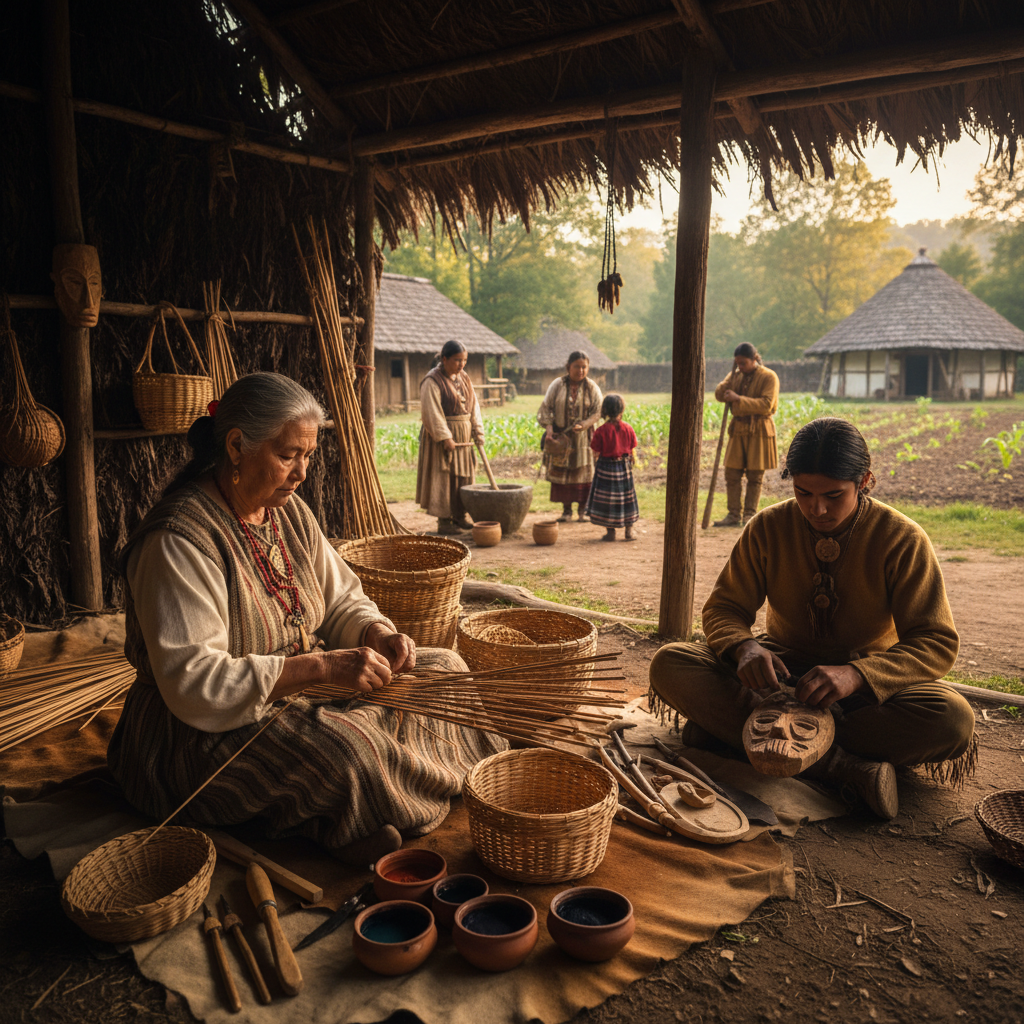
Oconaluftee Indian Village: Stepping into the 18th Century Cherokee Soul
Let’s get one thing straight from the jump: if you are looking for Hollywood’s version of a ‘Native American village’—replete with historically inaccurate feathered headdresses and generic tipis—you are in the wrong place. But if you want to witness the living, breathing defiance of a culture that refused to be erased, then Oconaluftee Indian Village in Cherokee, North Carolina, is your destination. This isn’t just a tourist stop; it’s a meticulously reconstructed 1760s Cherokee community that serves as a middle finger to the notion that Indigenous history is a ‘dead’ subject.
Before we dive into the smoke of the hearths and the rhythm of the blowguns, a quick housekeeping note: Osiyo.net is an independently operated information platform. We are not an official tribal government site. If you are looking for official enrollment information, you must go directly to the tribal offices. Our goal is to provide a knowledgeable guide to the resources and history that define the Cherokee experience.
Key Takeaways for Your Visit
- Authenticity Over Everything: The Village uses 18th-century methods for pottery, canoe making, and weaving.
- Sovereign Soil: You are on the Qualla Boundary, the land of the Eastern Band of Cherokee Indians (EBCI).
- Educational Depth: This is a primary resource for Indigenous education, moving beyond textbook summaries.
- Three Tribes, One Heritage: While the Village is EBCI-run, it represents the ancestral roots shared by the Cherokee Nation and the United Keetoowah Band (UKB).
Understanding the Landscape: The Three Sovereign Nations
When you walk through the gates of Oconaluftee, it is essential to understand whose house you are in. The Cherokee people are not a monolith. Today, there are three federally recognized Cherokee tribes, each with its own government, laws, and sovereign leadership:
| Tribe | Location | Historical Context |
|---|---|---|
| Eastern Band of Cherokee Indians (EBCI) | Cherokee, NC | Descendants of those who remained in the mountains or returned after the Trail of Tears. |
| Cherokee Nation | Tahlequah, OK | The largest tribe, established in Oklahoma following forced removal. |
| United Keetoowah Band (UKB) | Tahlequah, OK | Descendants of the ‘Old Settlers’ who migrated before the forced removal. |
Oconaluftee is owned and operated by the Cherokee Historical Association on the Qualla Boundary. It’s an immersive look at the time before the forced removals of the 1830s—a time when the Cherokee (Ani-Kituwah) were the masters of the Southern Appalachians. For more on the distinct tribal structures, visit our tribes overview page.
What to Expect: A Walk Through Time
The Village isn’t a museum where things are behind glass. It is a ‘living history’ site. You will smell the woodsmoke, hear the rhythmic scraping of the dugout canoes, and see the intricate precision of finger weaving.
The Craft Lines
As you follow the guided paths, you’ll encounter various ‘stations’ where master artisans work. This isn’t a performance; these are skills passed down through generations. You’ll witness:
- Dugout Canoes: Watch as fire and hand-tools hollow out massive poplar logs. This wasn’t just transportation; it was engineering.
- Pottery: No wheels here. Cherokee pottery is hand-coiled and fired in open pits, a method that dates back thousands of years.
- Weaponry: From the iconic blowgun—used for small game with terrifying accuracy—to the crafting of flintlock-era tools.
The Council House and Square Ground
At the heart of the village sits the seven-sided Council House. The number seven is sacred, representing the seven clans of the Cherokee (Wolf, Wild Potato, Deer, Paint, Bird, Long Hair, and Blue). In the 18th century, this was the center of political and spiritual life. It is where decisions were made through consensus, a concept of Indigenous governance that often baffled European colonists accustomed to monarchs.
“To understand the Cherokee people, you must understand the Square Ground. It is the place of fire, the place of dance, and the center of the universe for the community.”
The Edge: Why This Matters Today
History books often treat the 18th century as the ‘beginning of the end’ for Indigenous people. At Oconaluftee, they flip that script. The 1760s were a period of intense diplomatic maneuvering, trade, and power. The Cherokee were not passive victims; they were savvy political actors holding their own against the British and French empires.
Visiting the village is a reminder that the sovereignty discussed in modern courtrooms is rooted in these ancient mountain soils. The techniques you see—the basket weaving using rivercane, the mask carving—are acts of cultural preservation. They are the reason the Cherokee culture didn’t vanish on the Trail of Tears.
Practical Information for the Culturally Curious
If you’re planning a trip as part of your Cherokee heritage travel, keep these tips in mind:
- Check the Calendar: The Village is typically open from late April through October. Check the official Visit Cherokee NC site for exact dates.
- Respect the Artisans: Feel free to ask questions—the guides are incredibly knowledgeable—but remember you are in a place of work and cultural significance.
- Combine Your Trip: The Village is a short distance from the Unto These Hills outdoor drama and the Museum of the Cherokee People.
Comparison: 18th Century vs. Modern Misconceptions
| The Myth | The Reality at Oconaluftee |
|---|---|
| Cherokee lived in tipis. | Cherokee lived in permanent wattle-and-daub cabins and townhouses. |
| They were primitive ‘nomads’. | They were an advanced agrarian society with complex legal systems. |
| Cherokee culture is extinct. | The EBCI is a thriving, multi-million dollar sovereign economy today. |
Frequently Asked Questions
Is Oconaluftee Indian Village a real historical site?
The Village is a replica built to exact historical specifications based on archaeological evidence and oral traditions. It sits on the ancestral lands of the Cherokee, making the setting authentic even if the structures are modern reconstructions of 1760s designs.
Do I need to be Cherokee to visit?
Not at all. The Village is designed to educate the public—Native and non-Native alike. It is a vital tool for debunking stereotypes and providing a factual look at Cherokee history.
Can I take photos?
Generally, yes, photography is encouraged for personal use. However, always be respectful of the artisans and follow the guidelines provided by your tour guide. Some ceremonial demonstrations may have restrictions.
How does this differ from the Cherokee Nation in Oklahoma?
While the 18th-century lifestyle shown here is the ancestral history of *all* Cherokee people, this specific site is located in the original homelands and is managed by the Eastern Band of Cherokee Indians. For information on the Cherokee Nation, visit cherokee.org.
Next Steps: Continuing Your Journey
If your visit to Oconaluftee sparked a deeper interest in your heritage or Indigenous history, don’t stop there:
- Visit the Museum: Head to the Museum of the Cherokee People for a deep dive into the archaeological record.
- Search the Records: If you are looking for ancestors, start with our Final Rolls search guide.
- Learn the Language: Support the revitalization of the Cherokee syllabary through official tribal programs.
- Understand Governance: Read up on the Bureau of Indian Affairs to see how the federal-tribal relationship has evolved since the 1760s.
Oconaluftee is more than a walk through the woods. It is a confrontation with history and a celebration of a people who are very much still here.
Last reviewed: June 2026
Osiyo.net is an independently operated information platform. Always verify enrollment information directly with the specific Tribal Nation.