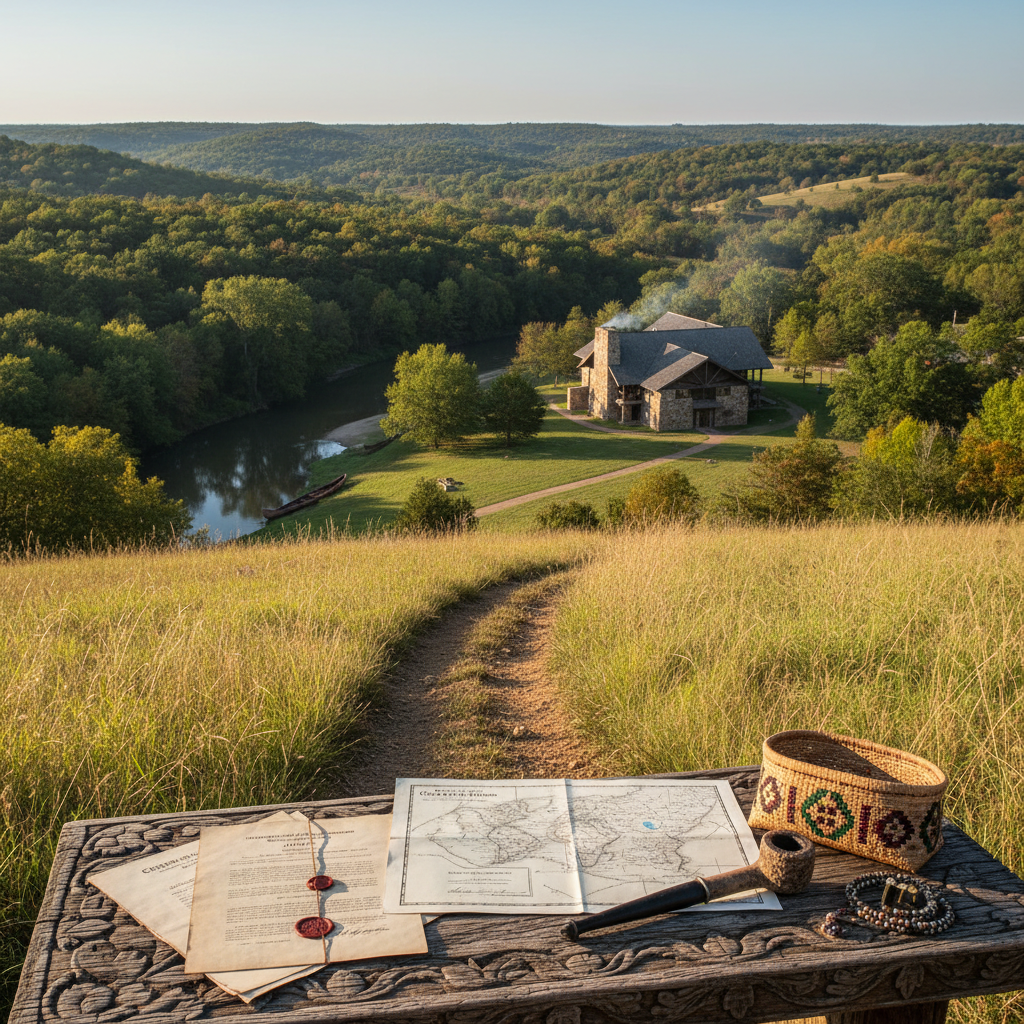
UKB Sovereignty and Trust Lands: The Keetoowah Band’s Decades-Long Path to 188 Acres
For decades, the United Keetoowah Band of Cherokee Indians in Oklahoma (UKB) existed in a legal limbo that would make even the most hardened bureaucrat blink. While their status as a federally recognized tribe was settled in 1946, their right to a land base was treated like an optional extra by the federal government and contested by their neighbors. The story of the ‘188 acres’ isn’t just a real estate transaction; it is a gritty, high-stakes battle for sovereignty, self-determination, and the right to exist as a distinct political entity in the heart of the Cherokee Nation's jurisdictional area.
Key Takeaways: The Fight for Keetoowah Land
| Key Aspect | Details |
|---|---|
| The Land | 188 acres located in Tahlequah, Oklahoma. |
| Legal Basis | Section 3 of the Oklahoma Indian Welfare Act (OIWA). |
| The Conflict | Competing jurisdictional claims between the UKB and the Cherokee Nation (CN). |
| Current Status | The BIA officially took the land into trust for the UKB in 2021 after years of litigation. |
| Significance | Allows for tribal housing, government offices, and economic development under UKB jurisdiction. |
A Tale of Three Cherokees
Before we dive into the dirt—literally—we need to clear up the most common misconception. There isn’t just one ‘Cherokee Tribe.’ There are three distinct, federally recognized sovereign nations: the Cherokee Nation (CN), the United Keetoowah Band (UKB), and the Eastern Band of Cherokee Indians (EBCI). While they share ancestral roots and culture, they are politically separate. If you are researching your heritage or looking for specific resources, understanding which tribe you are engaging with is step one. Note: Osiyo.net is an independent platform and not a government site for any of these nations.
"The Keetoowah people have always been the keepers of the fire. Our sovereignty isn't a grant from the United States; it is an inherent right that we have fought to see recognized in our own homelands."
The Roots of the Conflict: The OIWA and Federal Recognition
The UKB's modern legal journey began with the 1934 Indian Reorganization Act and its Oklahoma-specific sibling, the 1936 Oklahoma Indian Welfare Act (OIWA). While the ‘Old Settler’ Cherokees and the Keetoowah Society had long maintained their traditional structures, the UKB formally organized under the OIWA in 1946. However, unlike many other tribes, the UKB did not have a federally protected reservation or substantial trust land at that time. They were a landless tribe in their own ancestral territory.
The ‘Consent’ Argument
For years, the Department of the Interior (DOI) and the Cherokee Nation argued that under federal law, the UKB could not have land taken into trust within the Cherokee Nation's jurisdictional area without the Cherokee Nation's express consent. This created a catch-22: the UKB needed land to exercise full sovereignty, but their primary political rival held the keys to the gate. This disagreement isn't just about pride; it's about jurisdiction, taxation, and the ability to provide services to members. You can learn more about the complexities of tribal documentation on our Indian Card information page.
The 188-Acre Breakthrough
The specific 188 acres in question became the focal point of a legal war that spanned three decades. The land, located in Tahlequah, Oklahoma, was intended to house the UKB tribal headquarters, a museum, and essential social services. After the BIA initially agreed to take the land into trust, the Cherokee Nation sued, leading to a dizzying array of court rulings, reversals, and appeals.
The 10th Circuit Ruling
The tide turned significantly when the U.S. Court of Appeals for the 10th Circuit ruled in favor of the UKB. The court found that the OIWA specifically authorized the Secretary of the Interior to acquire land for tribes like the UKB, and that the ‘consent’ requirement often cited by the Cherokee Nation did not apply in the same way the DOI had previously claimed. This was a massive win for UKB sovereignty, proving that ‘federally recognized’ actually means something, even if the surrounding political climate is hostile. For those tracing their lineage back to the Final Rolls, these distinctions in tribal governance are critical to understand.
Why Trust Land Matters
Why fight so hard for 188 acres when Oklahoma is vast? Because in federal Indian law, land status is everything. Land held ‘in trust’ by the federal government for a tribe is considered ‘Indian Country.’ This status provides:
- Jurisdictional Clarity: The tribe has the authority to enforce its own laws on that land.
- Economic Development: Trust land is essential for certain types of federal grants and economic ventures, including gaming.
- Housing: The UKB can develop tribal housing projects specifically for its members without interference from local municipal zoning.
- Taxation: Trust land is generally exempt from state and local property taxes.
Without trust land, a tribe is essentially a social club with a fancy title. With it, they are a government. For the UKB, these 188 acres represent the physical manifestation of their right to self-govern. This is a core part of the Cherokee citizenship experience for UKB members.
The Aftermath: Sovereignty and Cooperation?
Since the land was officially taken into trust in 2021, the UKB has moved forward with revitalizing its tribal complex. However, the ‘edge’ in this history remains. Tensions between the UKB and the Cherokee Nation continue to flare over issues like hunting and fishing rights, car tags, and law enforcement jurisdiction, especially in light of the McGirt v. Oklahoma Supreme Court decision. While the UKB now has its 188 acres, the broader jurisdictional map of Oklahoma remains a complex ‘patchwork quilt’ that requires constant legal navigation.
A Comparison of the Three Cherokee Tribes
| Tribe | Headquarters | Land Status | Approx. Enrollment |
|---|---|---|---|
| United Keetoowah Band (UKB) | Tahlequah, OK | 188 acres in trust; seeking more. | ~14,000 |
| Cherokee Nation (CN) | Tahlequah, OK | Massive reservation jurisdiction (McGirt). | ~450,000 |
| Eastern Band (EBCI) | Cherokee, NC | Qualla Boundary (Trust land). | ~16,000 |
Each of these nations has its own leadership and criteria for belonging. Understanding the UKB's path helps illuminate the broader struggle for all smaller tribes to maintain their identity alongside larger, more politically powerful neighbors.
FAQ: UKB Sovereignty and Trust Land
1. Can I join the UKB if I am already a member of the Cherokee Nation?
Generally, no. Federal law and tribal constitutions usually prohibit ‘dual enrollment.’ You must choose which sovereign nation you wish to be a citizen of. For more on this, check our getting started guide.
2. Does the 188 acres mean the UKB has its own reservation?
While the 188 acres is ‘Indian Country’ and trust land, the legal definition of a ‘reservation’ for the UKB is still a subject of ongoing legal and political discussion, particularly following the McGirt ruling which recognized the Cherokee Nation's reservation boundaries.
3. What can the UKB do on this land that they couldn’t before?
They can exercise full governmental authority, including building tribal housing, operating a court system on-site, and pursuing economic development projects that require trust status under federal law.
4. Where can I find official UKB documents?
You should always visit the official UKB website for government documents and enrollment information.
Next Steps
- Explore the history of the three Cherokee tribes to understand their different paths.
- Visit the Bureau of Indian Affairs (BIA) website to learn more about the ‘Fee-to-Trust’ process.
- Read the official stance of the Cherokee Nation regarding jurisdictional overlaps.
- Check out our About page to see how Osiyo.net sources its information.
Last reviewed: June 2026
Osiyo.net is an independently operated information platform. Always verify enrollment information directly with the specific Tribal Nation.