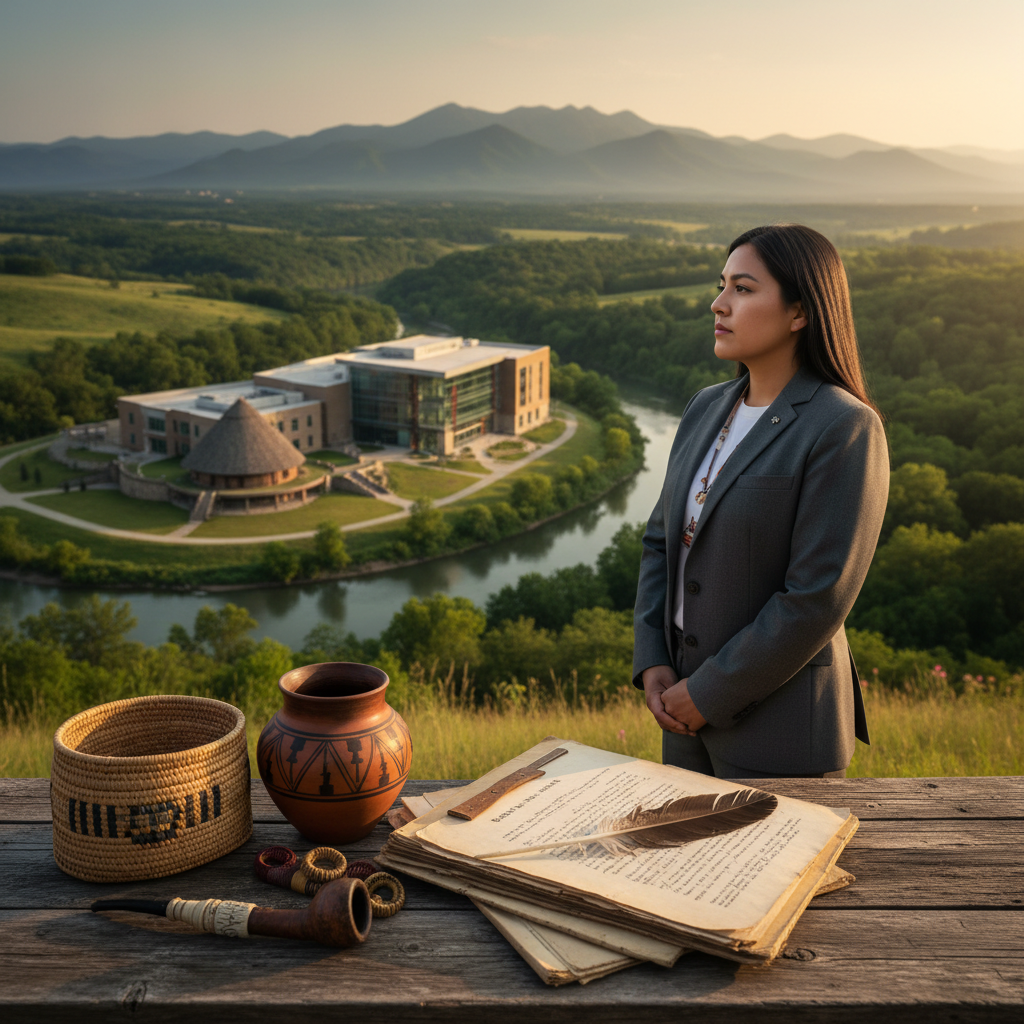
UKB Delegate to Congress: The United Keetoowah Band’s Congressional Representation
Key Takeaways
- The right to a non-voting Delegate in the U.S. House of Representatives is rooted in Article 7 of the 1835 Treaty of New Echota.
- While the Cherokee Nation (CN) has officially nominated a delegate, the United Keetoowah Band (UKB) asserts its own historical and legal right to representation as a successor in interest to the treaty.
- The UKB was federally recognized under the 1946 Indian Reorganization Act, distinguishing its political evolution from the CN and the Eastern Band of Cherokee Indians (EBCI).
- Congressional seating for a tribal delegate would mark a historic shift in tribal-federal relations, acknowledging sovereignty beyond mere symbolic gestures.
For nearly two centuries, a promise has sat gathering dust in the archives of the U.S. State Department. It wasn’t a handshake deal or a pinky swear; it was a legally binding treaty provision. We’re talking about Article 7 of the 1835 Treaty of New Echota—the same treaty used to justify the forced removal of Cherokee people known as the Trail of Tears. If the U.S. government is going to hold tribes to the devastating terms of that document, the United Keetoowah Band (UKB) is making it clear: it’s time to pay up on the representation clause.
At Osiyo.net, we don’t just look at the surface-level politics. We look at the legal machinery of sovereignty. The push for a UKB Delegate to Congress isn’t just about a seat in a fancy room in D.C.; it’s about the fundamental right of a Tribal Nation to have a voice where its fate is often decided without its consent.
The Ghost in the House: Article 7 and the 1835 Treaty
To understand why the UKB is fighting for a seat, you have to understand the Treaty of New Echota. Most history books focus on the tragedy of removal, but they often skip the fine print that the Cherokee negotiators—the Treaty Party—demanded in exchange for their ancestral lands.
The Specific Language of Representation
Article 7 of the treaty states that the Cherokee Nation “shall be entitled to a delegate in the House of Representatives of the United States whenever Congress shall make provision for the same.” For 190 years, Congress has conveniently forgotten to “make provision.”
“The United States government has a convenient memory. It remembers the land it took, but it forgets the seats it promised. The UKB Delegate isn’t asking for a favor; they are demanding the fulfillment of a contract signed in blood and ink.”
The UKB maintains that as a successor in interest to the original Cherokee signatories, they possess the inherent rights outlined in those treaties. While the three federally recognized Cherokee tribes share a common history, their political paths to the present have created a complex legal landscape regarding who gets to sit in that chair.
UKB vs. CN: A Tale of Two Sovereignties
It’s the elephant in the room. The Cherokee Nation (CN), based in Tahlequah, has already named Kim Teehee as its delegate-designee. So, where does that leave the United Keetoowah Band? To understand the UKB’s claim, you have to look at their unique status.
The 1946 Keetoowah Milestone
While the Cherokee Nation reorganized under a new constitution in the 1970s, the UKB was formally recognized by Congress in 1946 under the Oklahoma Indian Welfare Act. The UKB argues that they represent the “full-blood” Keetoowah core that has maintained continuous political and cultural existence, separate from the larger Cherokee political body that emerged post-removal.
The distinction is vital for anyone looking into Cherokee citizenship or tribal politics. The UKB operates its own government, courts, and social programs. If the Treaty of New Echota applies to “The Cherokees,” the UKB asserts that they are inextricably part of that definition and entitled to the same representative rights.
| Feature | United Keetoowah Band (UKB) | Cherokee Nation (CN) | Eastern Band (EBCI) |
|---|---|---|---|
| Location | Tahlequah, OK | Tahlequah, OK | Cherokee, NC |
| Fed. Recognition | 1946 (OIWA) | 1970s (Reorganization) | 1868/1889 |
| Delegate Stance | Asserts Treaty Right | Nominated Kim Teehee | Supportive of Treaty Rights |
| Membership | Minimum 1/4 Keetoowah blood | Descendant-based (Dawes) | Minimum 1/16 blood |
Why a Delegate Matters: Beyond Symbolism
Some critics argue that a non-voting delegate is a toothless position. They point to delegates from D.C., Guam, and Puerto Rico as examples of limited power. However, for a Tribal Nation, a delegate in the House is a game-changer for several reasons:
- Direct Advocacy: A delegate can introduce legislation, participate in committee debates, and influence the federal budget for Indian Country.
- Sovereignty Reinforcement: Having a seat in Congress is a permanent, visible reminder to the U.S. government that Tribal Nations are political entities, not just ethnic minorities.
- Accountability: It forces the Bureau of Indian Affairs (BIA) and other agencies to answer directly to a tribal representative on the House floor.
The UKB’s push for representation is about ensuring that their specific needs—ranging from land-into-trust issues to healthcare funding—aren’t overshadowed by larger tribal entities. You can learn more about how these structures affect daily life in our section on Tribal Leadership.
The Legal and Political Quagmire
Why hasn’t the seat been filled yet? It’s a mix of bureaucratic inertia and legitimate legal debate. The U.S. House of Representatives has the sole power to seat members. In recent years, the House Committee on Rules has held hearings, but the process has stalled.
Successor in Interest Arguments
The primary legal hurdle is determining which entity represents the “Cherokee Nation” mentioned in 1835. The CN argues it is the sole successor. The UKB argues that since they are composed of the descendants of those who were parties to the treaty, they share that right. From a strictly legalistic view, the U.S. often finds it easier to ignore both claims rather than navigate the internal complexities of Cherokee sovereignty.
This is where the “edge” comes in: The U.S. government uses tribal disunity as a shield. By claiming the situation is “too complicated,” they avoid fulfilling a 190-year-old debt. It’s a classic divide-and-conquer tactic that has been used against Indigenous peoples since contact.
The Path Forward: What’s Next?
The momentum for a UKB and/or CN Delegate is at an all-time high. Native advocacy groups and some members of Congress are pushing to finally seat a representative. For the UKB, this involves constant communication with the United Keetoowah Band official government and federal lobbyists.
What Can You Do?
- Educate Yourself: Read the 1835 Treaty of New Echota. Don’t take our word for it—look at the primary source.
- Follow Tribal News: Stay updated on the UKB’s official announcements regarding their political status and Congressional outreach.
- Support Sovereignty: Recognize that the fight for a delegate is part of a larger movement for tribal self-determination.
If you are just beginning your journey into understanding tribal structures, our homepage offers a roadmap to the many facets of Cherokee life and history. For those looking for historical records, the Final Rolls search can provide context on the ancestors who lived through the era when these treaties were signed.
FAQ: UKB Delegate to Congress
1. Would the UKB delegate be able to vote on laws?
No. Like delegates from U.S. territories, a tribal delegate would be a “non-voting” member. They can vote in committees and participate in debates, but they cannot vote on the final passage of legislation on the House floor.
2. Does the Eastern Band of Cherokee Indians (EBCI) have a delegate claim?
The EBCI generally supports the seating of a Cherokee delegate. While they are a separate sovereign nation today, they recognize the shared treaty history. However, the 1835 treaty was specifically linked to the groups that removed west, which complicates the EBCI’s direct claim under that specific document.
3. Why is the UKB’s claim different from the Cherokee Nation’s?
The UKB claims a specific cultural and political continuity as the Keetoowah people. They argue that their federal recognition in 1946 affirms their status as a successor to the treaty-signing body, independent of the Cherokee Nation’s later 20th-century reorganization.
4. Has a tribal delegate ever been seated before?
No. While several treaties (including those with the Delaware and the Choctaw) have mentioned delegates, the U.S. House of Representatives has never actually seated one. This would be a historic first.
Next Steps for the Informed Citizen
The struggle for the UKB Delegate to Congress is a live issue. It’s not just history—it’s current events. To stay informed, visit the Bureau of Indian Affairs for updates on federal tribal recognitions and the official Congress website to track any introduced resolutions regarding tribal delegates.
Understanding the nuances of the three Cherokee tribes is the first step in being a true ally to tribal sovereignty. Whether it’s through educational resources or following modern tribal stories, staying engaged ensures these promises aren’t forgotten for another 200 years.
Last reviewed: June 2026
Osiyo.net is an independently operated information platform. Always verify enrollment information directly with the specific Tribal Nation.