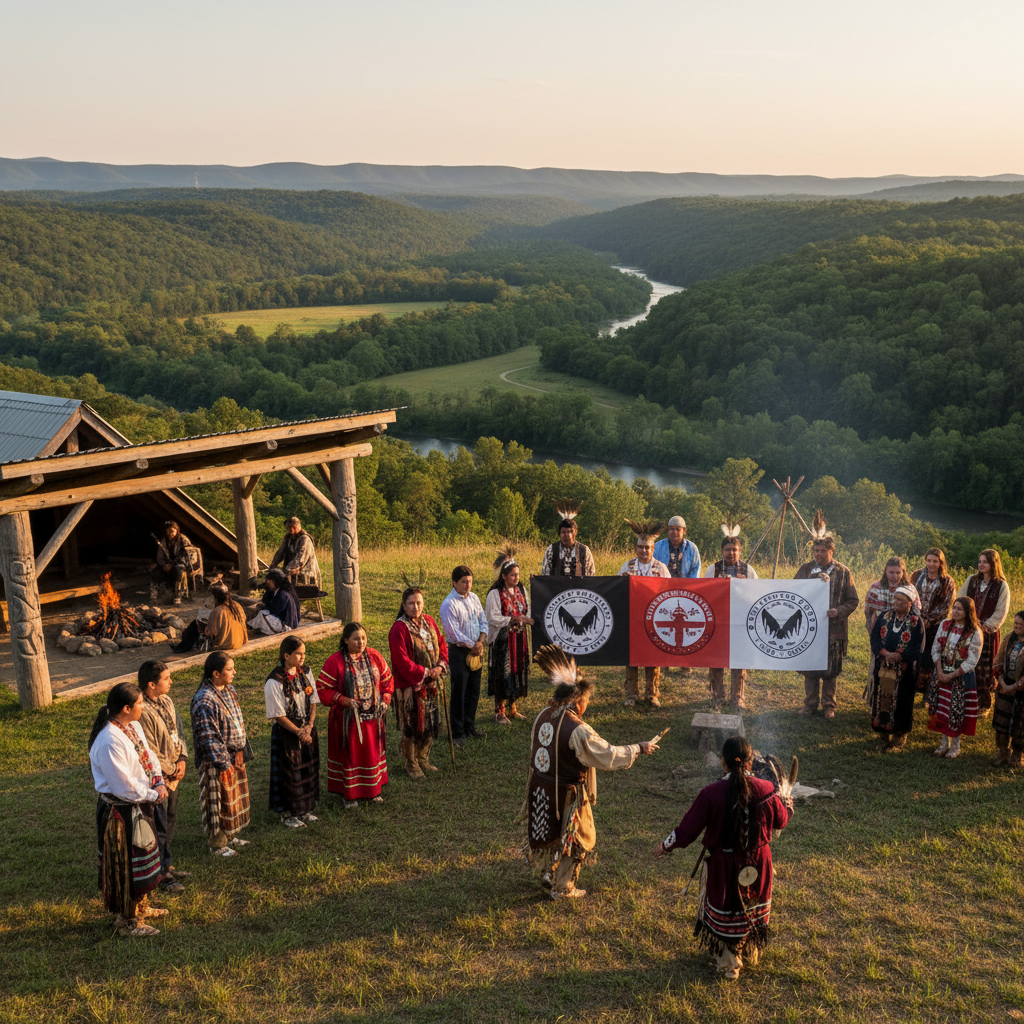
The Three Federally Recognized Cherokee Tribes: A Definitive Guide to CN, UKB, and EBCI
First things first: there is no such thing as a generic "Cherokee." If you have spent any time in Indian Country, or if you are just starting to peel back the layers of your family history, you need to understand that being Cherokee isn’t just about heritage—it is about political citizenship. Today, the United States government recognizes three distinct, sovereign Cherokee nations. Each has its own government, its own laws, and its own unique history of survival against the odds.
At Osiyo.net, we are an independent platform dedicated to these resources. Osiyo.net is not an official tribal government site. While we provide this guide to help you navigate the landscape of 101-level knowledge, you must always verify specific legal or enrollment matters with the individual tribes themselves.
Key Takeaways
- There are exactly three federally recognized Cherokee tribes: The Cherokee Nation, the United Keetoowah Band of Cherokee Indians in Oklahoma, and the Eastern Band of Cherokee Indians.
- Each tribe has distinct enrollment criteria based on specific historical rolls.
- Sovereignty is the bedrock of these nations; they are not social clubs, but political entities.
- Understanding the difference between the three is crucial for anyone researching Cherokee citizenship or tribal history.
The Landscape of Cherokee Sovereignty
The history of the Cherokee people is a saga of forced removal, internal fracture, and incredible resilience. To understand the three tribes today, you have to understand the pressures that split the people apart in the 19th century. Whether it was the systemic theft of land via the Trail of Tears or the political maneuvers of the late 1800s, the Cherokee people adapted by forming distinct legal structures to protect their people and their culture.
| Tribe | Abbreviation | Headquarters | Primary Enrollment Base |
|---|---|---|---|
| Cherokee Nation | CN | Tahlequah, OK | 1906 Dawes Rolls |
| Eastern Band of Cherokee Indians | EBCI | Cherokee, NC | 1924 Baker Roll |
| United Keetoowah Band | UKB | Tahlequah, OK | 1949 Base Roll (Dawes ancestry) |
1. The Cherokee Nation (CN)
The Cherokee Nation is the largest of the three, with over 450,000 citizens. Headquartered in Tahlequah, Oklahoma, the CN operates across a 14-county jurisdictional area in Northeastern Oklahoma. This is the government that emerged from the reconstruction of the tribe following the Trail of Tears and the American Civil War.
The CN is a powerhouse of economic and cultural influence. They manage a robust healthcare system, extensive housing programs, and linguistic revitalization efforts. Enrollment is based on linear descent from the Final Rolls of the Five Civilized Tribes, commonly known as the Dawes Rolls. If your ancestor isn’t on that specific document, the CN does not recognize you as a citizen, regardless of DNA results.
"The Cherokee Nation is a modern, sophisticated government that maintains a government-to-government relationship with the United States. It is a political entity, not a racial category."
2. The Eastern Band of Cherokee Indians (EBCI)
While the majority of the Cherokee people were forced west, a small group remained in their ancestral homelands in the mountains of North Carolina. These are the descendants of those who hid in the hills, or those who held onto land through specific legal exemptions. Today, they are the Eastern Band of Cherokee Indians, based on the Qualla Boundary.
The EBCI is unique because they are situated in the original heartland. They have a distinct dialect of the Cherokee language and maintain deep connections to the sacred sites of the Southeast. Their enrollment is governed by the 1924 Baker Roll and includes a blood quantum requirement, which distinguishes them from the Cherokee Nation in Oklahoma. You can learn more about their specific governance at ebci.com.
3. The United Keetoowah Band of Cherokee Indians in Oklahoma (UKB)
The UKB is often misunderstood by those outside of Cherokee circles. They are also headquartered in Tahlequah, and their history is rooted in the "Old Settlers"—those Cherokees who moved west to Arkansas and Oklahoma before the forced removal of 1838. The UKB considers themselves the cultural and spiritual "keepers" of the Cherokee people.
The UKB was formally recognized by the federal government under the Oklahoma Indian Welfare Act of 1936. They have a separate government from the Cherokee Nation, though both tribes share a geographic area. The UKB places a heavy emphasis on traditional Keetoowah values and maintains its own unique enrollment standards. More information on their history can be found at ukb-nsn.gov.
The History That Shaped the Split
Why three? Why not one? The answer lies in the "colonizer logic" of the 19th-century U.S. government and the internal political decisions made by Cherokee leaders to save their people. To navigate the list of tribes effectively, you must understand these three historical pivot points:
The Treaty of New Echota and the Trail of Tears
In 1835, a minority faction of Cherokees signed the Treaty of New Echota, agreeing to move west. The majority, led by Principal Chief John Ross, resisted. This split eventually led to the forced removal in 1838. The survivors of the Trail of Tears joined the "Old Settlers" (who became the basis for the UKB) in Oklahoma, eventually merging into the unified Cherokee Nation of the 19th century—while those who stayed in the East became the EBCI.
The Dawes Act and Allotment
By the late 1800s, the U.S. government wanted to dissolve tribal governments and turn tribal land into individual plots (allotment). The Dawes Commission was tasked with creating a list of individuals eligible for these allotments. This document, the Dawes Rolls, is the legal "ground zero" for the two Oklahoma-based tribes today. It wasn’t about "how much Indian you are"; it was about who was present and recognized by the tribe during that specific window of time (1899–1906). If you’re looking for your Indian Card, this is where the paper trail usually starts.
The Baker Roll
In the East, a similar process occurred. The Baker Roll of 1924 served as the final census for the Eastern Band before their land was placed into federal trust. Because the EBCI remained in North Carolina, their legal evolution followed a different path than their Oklahoma cousins, leading to the distinct requirements they hold today.
Common Misconceptions (The "Edge" Check)
Let’s be blunt: having a family legend about a "Cherokee Princess" does not make you a member of any of these three tribes. The 19th century was rife with people claiming Cherokee heritage to gain land or status, and many families have passed down these myths for generations.
- DNA is not Citizenship: You cannot take a saliva test and walk into a tribal office to get a card. Sovereignty means the tribe decides who its citizens are based on historical records, not genetic percentages.
- State-Recognized Tribes: There are dozens of groups claiming to be "Cherokee" that are not recognized by the federal government. While some may have historical merit, they do not have the same sovereign status or government-to-government relationship as the CN, UKB, or EBCI.
- The "Cherokee Princess" Myth: Cherokee society was matrilineal, but we didn’t have royalty. If your ancestor was a "princess," someone likely made that up to make their ancestry sound more exotic to non-Indigenous neighbors.
The Significance of Federal Recognition
Federal recognition is not a "stamp of approval" from the U.S. government; it is a formal acknowledgment of a pre-existing sovereign status. It means these three tribes have the right to tax, the right to form their own police forces, the right to run their own courts, and the right to provide for their citizens. You can explore more about tribal opportunities and how these governments serve their people in our dedicated sections.
Frequently Asked Questions
Can I be a member of more than one Cherokee tribe?
No. Federal law and tribal constitutions generally prohibit "dual enrollment." An individual must choose which nation they wish to be a citizen of, provided they meet the criteria for both. Moving your enrollment from one to another is a complex legal process.
Where do I find official enrollment information?
For the Cherokee Nation, visit cherokee.org. For the United Keetoowah Band, visit their official site at ukb-nsn.gov. For the Eastern Band, go to ebci.com. These are the only authoritative sources for citizenship requirements.
What is the "CDIB" card?
A CDIB, or Certificate of Degree of Indian Blood, is a document issued by the Bureau of Indian Affairs (BIA) that verifies a person’s specific percentage of Native American blood based on historical rolls. While it is often used alongside a tribal citizenship card, it is not the same thing as being a citizen of a tribe.
Next Steps
- Identify Your Ancestor: Start with your parents and grandparents. Find their names on the Dawes or Baker Rolls using our search guide.
- Contact the Tribe: Once you have identified a direct linear ancestor, contact the registration office of the specific tribe they were associated with.
- Learn the Culture: Citizenship is the beginning, not the end. Explore Cherokee education and language resources to connect with the community.
Last reviewed: June 2026
Osiyo.net is an independently operated information platform. Always verify enrollment information directly with the specific Tribal Nation.