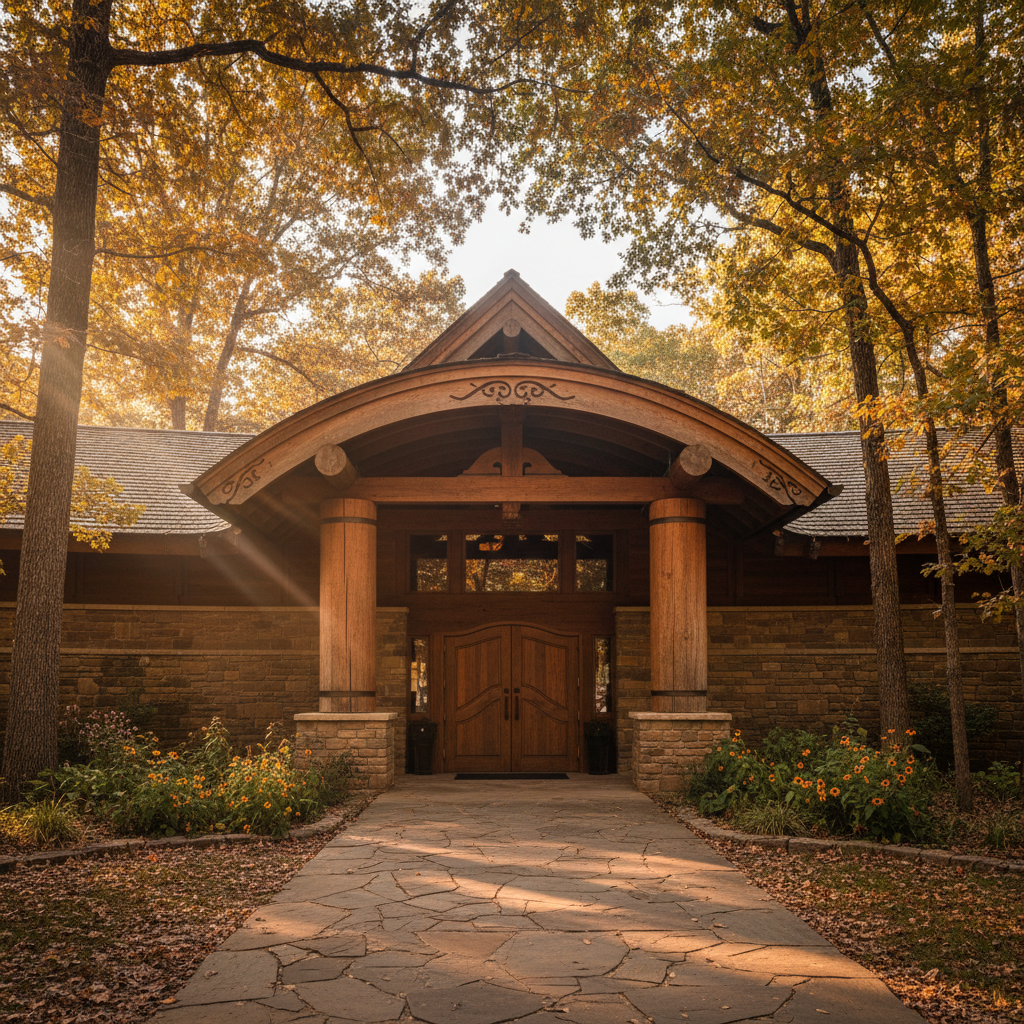
The Cherokee Heritage Center in Park Hill: A Deep Dive into History and Sovereignty
Osiyo! If you are looking for the epicenter of Cherokee history, culture, and preservation in the West, you eventually find yourself in Park Hill, Oklahoma. The Cherokee Heritage Center (CHC) isn’t just a museum; it is a testament to survival. It sits on the site of the original Cherokee Female Seminary, a place that once earned Park Hill the nickname “Athens of the West.” But before we dive into the wattle-and-daub houses and the haunting pillars of the seminary, let’s get the record straight: Osiyo.net is an independently operated information platform. We are not an official website of any Tribal Nation, the Cherokee Heritage Center, or any government agency.
Understanding the Cherokee story requires acknowledging that we are not a monolith. There are three federally recognized Cherokee tribes: the Cherokee Nation (headquartered in Tahlequah, OK), the Eastern Band of Cherokee Indians (based in Cherokee, NC), and the United Keetoowah Band of Cherokee Indians (also in Tahlequah, OK). Each is a sovereign government with the absolute right to determine its own citizenship rules. If you are here because you think you have Cherokee ancestors, the CHC is a fantastic place to start your research, but you must contact the specific Tribal Nation for enrollment questions.
Key Takeaways
- The Cherokee Heritage Center is located in Park Hill, Oklahoma, on the grounds of the historic Cherokee Female Seminary.
- Major attractions include Diligwa (a 1710 Cherokee Village), Adams Corner (an 1890s rural settlement), and the permanent Trail of Tears exhibit.
- The center houses the Cherokee National Archives, a critical resource for genealogy and historical research.
- Tribal sovereignty is central to the mission; the center preserves the specific history of the Cherokee people’s resilience through forced removal and rebuilding.
- Always distinguish between the three federally recognized Cherokee tribes when researching history or citizenship.
More Than a Museum: The Heart of Park Hill
Park Hill is more than just a pin on a map; it is a site of profound historical weight. Following the forced removal known as the Trail of Tears, the Cherokee people didn’t just survive—they rebuilt. They established a sophisticated educational system that was years ahead of its time. The Cherokee Female Seminary, opened in 1851, was the first higher education institution for women west of the Mississippi River. Today, the three remaining brick pillars of that seminary stand as silent sentinels at the entrance of the Cherokee Heritage Center, reminding every visitor of the burning of the school in 1887 and the resilience that followed.
When you walk these grounds, you aren’t just looking at artifacts behind glass. You are walking on the soil where a nation reconstructed its government, its school system, and its future after the federal government tried to erase them. If you’re planning a trip, check out our guide on visiting tribal communities respectfully to ensure your visit is as meaningful as possible.
Diligwa: Life Before the World Changed
One of the most immersive experiences at the Cherokee Heritage Center is Diligwa. This is a recreation of a 1710 Cherokee village. Why 1710? Because that was a pivotal time before the full weight of colonial expansion fundamentally altered Cherokee society.
At Diligwa, you won’t find Hollywood stereotypes. Instead, you see the sophisticated social structure of the Cherokee. You’ll see:
- Wattle-and-daub houses: Built using local river cane, mud, and clay, these structures were perfectly suited for the Southeastern climate of the original Cherokee homelands (what is now TN, NC, GA, and AL).
- The Council House: The seven-sided center of government representing the seven clans of the Cherokee people.
- Craft Demonstrations: From basket weaving to flint knapping, these aren’t just hobbies; they are sovereign technologies passed down through generations.
The 1710 village reminds us that Cherokee identity didn’t start with the Trail of Tears. We were a fully realized, complex society with a government, a spiritual life, and a deep connection to the land long before European contact.
Adams Corner: Rebuilding in Indian Territory
Fast forward nearly 200 years from Diligwa, and you find Adams Corner. This part of the heritage center represents a rural Cherokee crossroad settlement from the 1890s. It captures the “Golden Age” of the Cherokee Nation in Indian Territory—a time of flourishing commerce, schools, and newspapers before the devastating impact of the Dawes Act and Oklahoma statehood. It shows how the Cherokee people adapted to a new landscape while maintaining their unique identity.
The Trail of Tears Exhibit: Facing the Hard Truths
The Cherokee Heritage Center does not soft-pedal history. The Trail of Tears National Memorial Gallery is a raw, unflinching look at the forced removal of the Cherokee people in 1838-1839. It chronicles the political betrayals by the U.S. government, the illegal Treaty of New Echota, and the harrowing journey where thousands of Cherokee citizens died from exposure, disease, and starvation.
As an independent platform, Osiyo.net believes in calling out these historical injustices by name. This wasn’t just a “sad walk”; it was a state-sponsored ethnic cleansing aimed at land acquisition. The exhibit uses contemporary art, historical documents, and personal narratives to move beyond the “performative grief” often seen in history books and instead focuses on the legal and political reality of tribal sovereignty under fire. If you are researching your ancestors from this era, you should learn how to search the Final Rolls index to see if your family was documented during these later census periods.
The Cherokee National Archives: Hunting for Your Roots
For many visitors, the draw isn’t just the history—it’s the genealogy. The Cherokee Heritage Center houses the Cherokee National Archives. This is one of the most important repositories for researchers looking for their ancestors. However, there are some things you need to know before you show up with a stack of papers.
The archives contain microfilm and digital records of the Dawes Rolls, the Guion Miller Roll, and various other census records. But remember: Having an ancestor on a roll is the start of the process, not the end. Each of the three tribes has specific requirements. For example, the Cherokee Nation requires a direct linear descendant from an ancestor listed on the Dawes Final Rolls of the Five Civilized Tribes.
Researching at the Archives vs. Online
| Resource Type | What You’ll Find | Best For |
|---|---|---|
| Dawes Rolls | Federal records of tribal members (1898-1914) | Proving lineage for citizenship |
| Guion Miller Roll | Applications for a 1906 settlement | Finding family stories and locations |
| Cultural Documents | Manuscripts and letters in Cherokee Syllabary | Historical and academic research |
| Genealogy Staff | Professional guidance (often for a fee) | Breaking through “brick walls” in research |
If you’re just starting, we recommend reading our guide on how to research Cherokee ancestry before you make the trip to Park Hill. It will save you hours of frustration.
The Sovereignty Perspective
Why does a place like the Cherokee Heritage Center matter? Because sovereignty is not just about law; it is about memory. When a Tribal Nation controls its own story, it prevents that story from being distorted by colonial perspectives. The CHC is a tool of sovereignty. By preserving the Cherokee language (developed by Sequoyah) and the history of Cherokee government, the center ensures that the next generation of citizens understands where they came from.
It is also important to recognize that Cherokee identity is lived, not just found in a dusty record. While the archives are vital, the culture is alive in the art shows, the traditional games, and the community gatherings held at the center. If you are looking for your “Indian card,” you should read our breakdown on CDIB vs. Tribal Citizenship to understand the difference between federal recognition and tribal belonging.
Frequently Asked Questions
Where is the Cherokee Heritage Center located?
The center is located at 21192 S. Keeler Drive, Park Hill, OK 74451. It is just south of Tahlequah, the capital of the Cherokee Nation.
Can I find out if I am Cherokee at the Heritage Center?
The archives can help you find historical records of your ancestors, but the staff cannot tell you if you are eligible for enrollment. You must submit an application to one of the three federally recognized Cherokee tribes to determine eligibility. You can start by looking at tribal enrollment document checklists.
Is the Cherokee Heritage Center the same as the Cherokee Nation?
No. While it is located within the Cherokee Nation and works closely with the tribal government to preserve history, it has historically operated as the Cherokee National Historical Society, a non-profit organization. Always check the official Cherokee Nation website for government services.
What is the best time to visit?
The center hosts various events throughout the year, including the Cherokee National Holiday (Labor Day weekend) and various art markets. Spring and Fall offer the best weather for walking the outdoor exhibits like Diligwa.
Next Steps: Where to Go From Here
Ready to dig deeper into your connection to Cherokee history? Here is your action plan:
- Visit the Official Source: Check the Visit Cherokee Nation website for current hours, ticket prices, and event schedules for the Cherokee Heritage Center.
- Start Your Paper Trail: If you’re researching family, gather all birth and death certificates for your parents, grandparents, and great-grandparents before visiting the archives.
- Learn the Language: Sovereignty starts with language. Look into the Cherokee Nation Language Department resources to hear the sounds of the people who built Park Hill.
- Broaden Your Scope: Don’t stop at one tribe. Explore the history of the Eastern Band of Cherokee Indians and the United Keetoowah Band to get a full picture of the Cherokee diaspora.
Park Hill is a place of ghosts and giants. It is where the Cherokee people proved that no matter how many times the government tried to move the goalposts (or the borders), the heart of the Nation remained intact. Whether you are a citizen, a descendant, or a curious guest, the Cherokee Heritage Center offers a profound look at what it means to endure.
Last reviewed: June 2026
Osiyo.net is an independently operated information platform. It is not an official website of any Tribal Nation, the Bureau of Indian Affairs, or any government agency. Always verify enrollment information directly with the specific Tribal Nation.