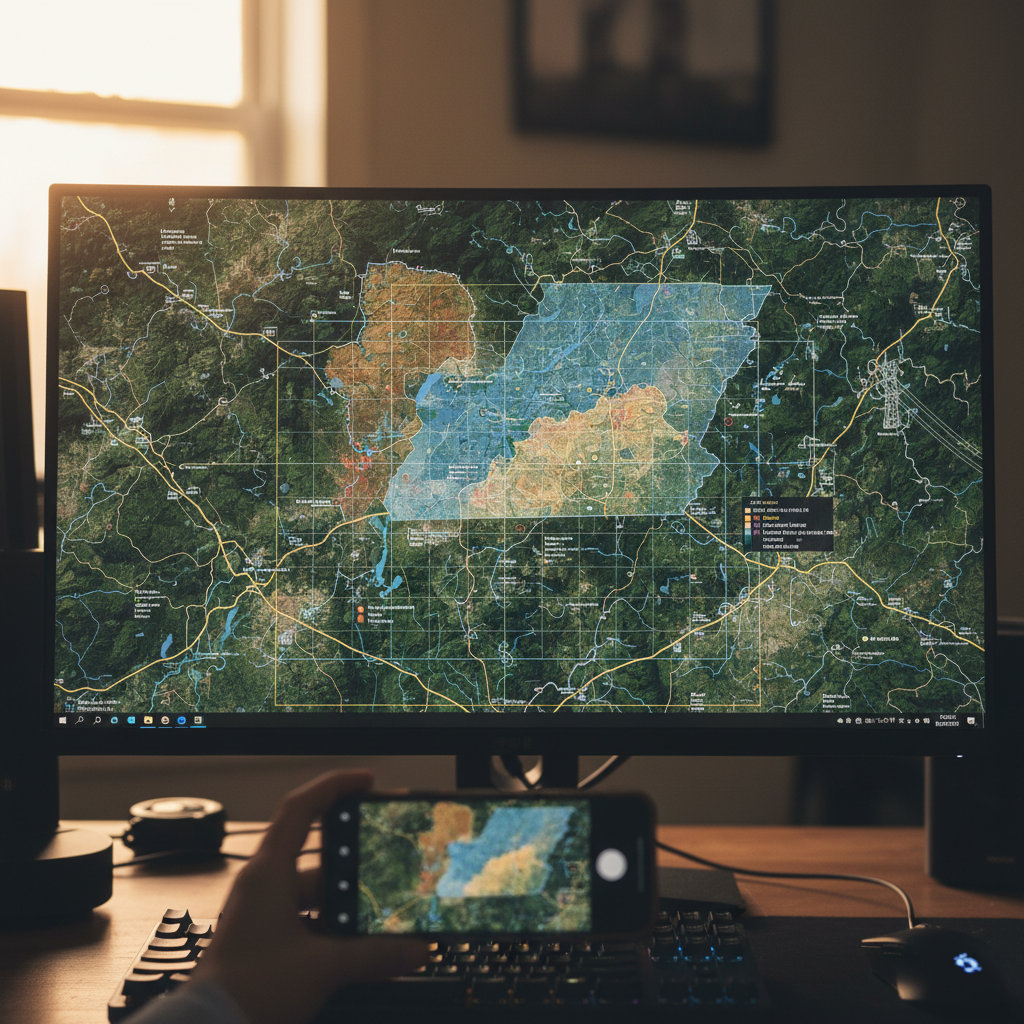
GIS Mapping for Cherokee Land and Cultural Preservation
Let’s talk about how we define where we belong. For centuries, maps were used as weapons against Tribal Nations—drawn by colonizers to carve up the Southeast, slice away ancestral homelands, and eventually, to facilitate the forced removal of the Cherokee people. But today, the story is changing. GIS Mapping for Cherokee Land and Cultural Preservation has become a vital tool for reclamation, sovereignty, and survival. At Osiyo.net, we believe understanding how these digital tools work is essential for anyone interested in the modern landscape of the three federally recognized Cherokee tribes.
Before we dive into the pixels and data points, a quick reminder: Osiyo.net is an independent information platform. We are not an official tribal government site. While we’re here to guide you through the complexities of tribal resources and education, you should always contact the specific Tribal Nation for official matters. Each nation is a sovereign government with its own rules and internal data management systems.
Key Takeaways: Why GIS Matters Today
- Sovereignty in Data: GIS allows tribes to manage their own land and resources without relying on outside agencies.
- Cultural Reclamation: Mapping traditional place names and sacred sites helps preserve history that was nearly erased.
- Environmental Stewardship: Modern maps track water quality, forest health, and the impact of climate change on tribal lands.
- Data Sovereignty: Indigenous communities are asserting control over how their geographic data is collected, stored, and shared.
- Three Tribes, Unique Needs: The Cherokee Nation, Eastern Band of Cherokee Indians (EBCI), and United Keetoowah Band of Cherokee Indians (UKB) each utilize GIS in distinct ways to serve their citizens.
The Basics: What is GIS Mapping?
GIS stands for Geographic Information Systems. Think of it as a digital layered cake. The bottom layer might be a standard satellite image of the Earth. On top of that, you can stack layers of data: property boundaries, soil types, the locations of historical markers, or the migration patterns of elk in the Great Smoky Mountains. When you combine these layers, you get more than just a map; you get a powerful analytical tool that can predict flood risks or identify the best locations for new community centers.
For the Cherokee people, GIS isn’t just about finding the nearest coffee shop. It’s about documenting the three federally recognized Cherokee tribes‘ relationship with the land. Whether it’s the 7,000-square-mile jurisdictional area of the Cherokee Nation in Oklahoma or the rugged terrain of the Qualla Boundary in North Carolina, GIS makes the invisible visible.
“Maps have always been about power. By mastering GIS, Tribal Nations are taking that power back, ensuring that our boundaries, our stories, and our sacred sites are defined by us, for us.”
Healing the Scars of Removal
One of the most profound uses of GIS Mapping for Cherokee Land and Cultural Preservation is the documentation of the Trail of Tears. For decades, the exact routes taken by the various detachments during the 1838-1839 removal were based on general historical accounts and patchy government records. Today, researchers and tribal historians use high-resolution GIS data to pinpoint exact paths, campsite locations, and burial grounds.
The Cherokee Nation (Oklahoma)
The Cherokee Nation maintains an extensive GIS department. They use these tools to manage everything from tribal health clinic zones to the distribution of language immersion programs. Their public-facing portals often provide maps that help citizens find services, while their internal datasets protect sensitive cultural sites from looters or unauthorized development. You can learn more about their jurisdictional boundaries by visiting the official Cherokee Nation website.
The Eastern Band of Cherokee Indians (North Carolina)
For the EBCI, GIS is essential for managing the Qualla Boundary. Because the land is held in federal trust, mapping is critical for individual land assignments (possessory holdings) and natural resource management. They use GIS to monitor the health of the river systems and the diverse flora of the Appalachian mountains, which are vital for traditional medicine and basket weaving. Understanding these boundaries is a key part of visiting tribal communities respectfully.
The United Keetoowah Band (Oklahoma)
The UKB utilizes geographic data to support their community development and historical preservation efforts. Mapping allows them to track the growth of their land base and ensure that Keetoowah identity remains anchored to specific geographic markers that hold spiritual and historical significance.
The Fight for Indigenous Data Sovereignty
Historically, colonial governments used maps to claim land that wasn’t theirs. The General Allotment Act (also known as the Dawes Act) was essentially a massive mapping project designed to break up communal tribal lands into individual plots, making it easier for the federal government to sell off “surplus” land to non-Indigenous settlers. This was theft by grid paper.
Modern GIS mapping must contend with this history. Indigenous Data Sovereignty is the principle that a Tribal Nation has the right to control the data about its people and its land. This is why you won’t find every sacred site on a public Google Map. Tribes often keep “closed” GIS layers to protect sensitive locations. If you are interested in finding official tribal nation websites to see what data they share, remember that access is a privilege, not a right.
Comparing Public vs. Tribal GIS Data
| Data Type | Publicly Accessible? | Primary Purpose |
|---|---|---|
| Jurisdictional Boundaries | Yes | Legal jurisdiction, service areas, and tax zones. |
| Natural Resource Data | Partial | Environmental monitoring and resource protection. |
| Sacred Site Locations | Rarely | Protection from vandalism, looting, and desecration. |
| Tribal Service Locations | Yes | Helping citizens access health, education, and housing. |
| Genealogical Records | Partial | Researching ancestry (links to final rolls search). |
GIS and the Future of Cherokee Culture
Mapping isn’t just about the physical world; it’s about the linguistic and spiritual world, too. Several projects are currently underway to map traditional Cherokee place names throughout the Southeast (the original homelands). By replacing colonial names on a digital map with Cherokee names, tribes are performing a digital act of “re-naming” the world in their own language. This is a vital part of stories and cultural preservation.
Moreover, GIS is a major career path for tribal youth. Indigenous cartographers and data scientists are in high demand. Tribal governments are increasingly looking for citizens who have the technical skills to manage these complex systems, blending traditional ecological knowledge (TEK) with high-tech software like ArcGIS.
FAQ: Common Questions About Cherokee Mapping
Can I use GIS to find my ancestors’ land?
Partially. You can use historical maps and the Dawes Rolls to identify where an ancestor may have lived at the time of allotment. However, modern GIS portals are generally for current land management. To start your research, check out our guide on how to find ancestors for tribal enrollment.
Why aren’t all tribal lands shown on standard maps?
Sovereignty and privacy. Tribal Nations may choose not to share specific boundary data with third-party map providers for security reasons or to protect sensitive cultural resources. Always rely on official tribal sources for accurate boundary information.
How do tribes protect their data from hackers?
Tribal Nations employ IT professionals and cybersecurity measures similar to state and federal governments. Data sovereignty includes the right to secure data on tribal servers, ensuring that sensitive cultural information is not exploited by outside commercial interests.
Is there a map of all Cherokee sites in the U.S.?
There is no single, comprehensive public map of all sites. The National Park Service manages the Trail of Tears National Historic Trail map, but many specific sites are held privately or within tribal trust lands and are not publicly disclosed to ensure their preservation.
Next Steps: Explore the Land
If you’re interested in the intersection of geography and Cherokee history, here is how you can get started:
- Visit Official Portals: Explore the Cherokee Nation GIS department’s website to see how they manage their 14-county jurisdiction.
- Study Historical Maps: Visit the National Archives (NARA) or the Library of Congress to view 18th and 19th-century maps of Cherokee territory.
- Support Language Projects: Look into the Cherokee Nation Language Department’s efforts to preserve place names.
- Learn the Tech: If you’re a student, look for GIS certificate programs that offer a focus on tribal land management. Check our about page for more resources on tribal education.
GIS Mapping for Cherokee Land and Cultural Preservation is about more than just coordinates on a grid. It is about the persistence of a people who refuse to be erased from the map. Whether it’s protecting a burial mound or planning a new housing development, these digital tools ensure that the Cherokee future is as vibrant and well-defined as its past.
Last reviewed: June 2026
Osiyo.net is an independently operated information platform. It is not an official website of any Tribal Nation, the Bureau of Indian Affairs, or any government agency. Always verify enrollment information directly with the specific Tribal Nation.