Sequoyah: The Man Who Gave Cherokee a Written Language
Osiyo! If you have ever seen the unique, graceful characters of the Cherokee language on a street sign in Tahlequah or a historical marker in North Carolina, you have met the legacy of one man: Sequoyah. He is often simplified in history books as a “illiterate genius,” but that label misses the point. Sequoyah was a polymath—a silversmith, a soldier, and a diplomat who understood that for a Tribal Nation to survive the encroaching pressure of colonial expansion, it needed more than just land; it needed a voice that could live on paper.
Before we dive into the incredible story of the Sequoyah Cherokee Syllabary, let’s get one thing straight: Osiyo.net is an independent platform. We aren’t the Cherokee Nation, the Eastern Band of Cherokee Indians, or the United Keetoowah Band. We are here to help you navigate the history and resources of these sovereign nations, but we don’t handle enrollment or speak for tribal governments. Each of the three federally recognized Cherokee tribes is a sovereign power that sets its own rules. If you’re looking for your ancestors or want to know if you qualify for citizenship, you’ll need to talk to them directly after doing your homework.
Key Takeaways
- Sequoyah (also known as George Gist) created the Cherokee Syllabary between 1809 and 1821.
- Unlike an alphabet where letters represent individual sounds, a syllabary uses symbols to represent entire syllables.
- The syllabary allowed the Cherokee people to achieve nearly 90% literacy in their own language within a few years of its adoption.
- It was a tool of sovereignty, allowing the Cherokee to codify laws and publish the first Native American newspaper, the Cherokee Phoenix.
- Today, the syllabary is vital to language revitalization efforts across all three federally recognized Cherokee tribes.
The Man Behind the Symbols: Who Was Sequoyah?
Sequoyah was born around 1770 in the town of Tuskegee (in present-day Tennessee). His mother, Wut-teh, was Cherokee, and his father is widely believed to have been a white fur trader named Nathaniel Gist. Sequoyah grew up immersed in Cherokee culture and never learned to speak, read, or write English. This makes his achievement even more staggering. He didn’t just adapt a European system; he built something entirely new from the ground up.
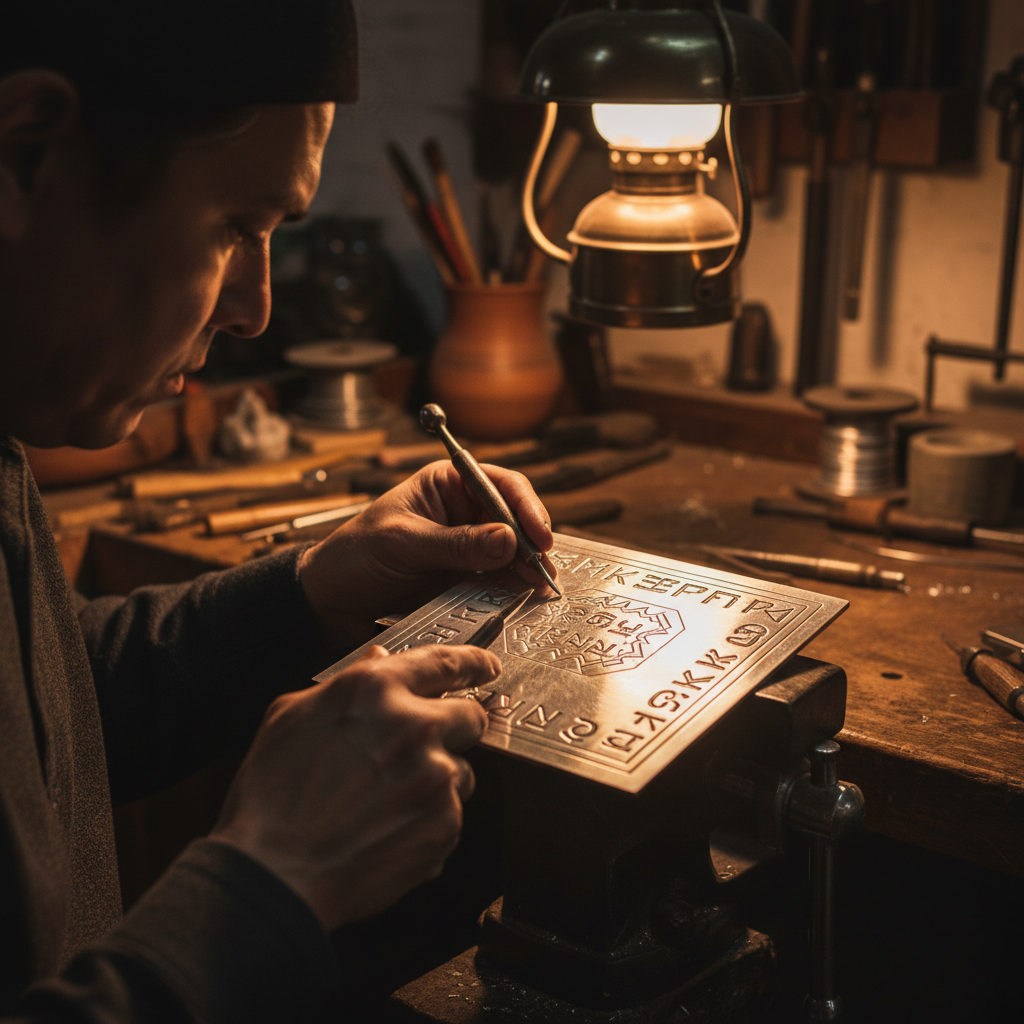
In his early life, he was a master silversmith. This trade required incredible attention to detail and an understanding of how to make distinct marks on metal. Later, he served with the Cherokee Regiment in the War of 1812. It was during these years that he became fascinated by what he called the “talking leaves”—the pieces of paper white soldiers used to communicate over long distances. He realized that the ability to record knowledge and transmit it across time and space was a form of power the Cherokee desperately needed to protect their sovereignty.
The Ten-Year Obsession: Creating the Syllabary
Imagine trying to invent a way to write down a language that has only ever been spoken. Sequoyah started by trying to create a symbol for every single word. This was a disaster. After thousands of characters, he realized it was impossible for anyone to memorize. Most people would have quit. Sequoyah didn’t. He pivoted. He began listening to the sounds of the Cherokee language and realized that all speech was made up of a limited number of recurring sounds (syllables).
By 1821, he had refined his system to 86 characters (later 85). Some characters look like Latin letters (like ‘D’, ‘R’, or ‘b’), but don’t be fooled. They don’t sound anything like their English counterparts. For example, the character that looks like a ‘D’ actually makes the sound “a.” Sequoyah chose these shapes because they were easy to distinguish and could be cast in lead type for printing presses.
“Sequoyah’s invention was not merely a linguistic feat; it was an act of intellectual resistance against the narrative that indigenous cultures were ‘primitive’ or ‘uncivilized.'”
The Trial of the Syllabary
People thought he was crazy. His wife famously burned his initial notes, fearing he was practicing witchcraft. The Cherokee leadership was skeptical, too. To prove his system worked, Sequoyah taught it to his young daughter, Ayoka. In a dramatic demonstration before tribal leaders, he was separated from Ayoka. The leaders dictated a message to Sequoyah, who wrote it down. When Ayoka was brought in, she read the message perfectly. The skeptics were silenced. Within months, the Cherokee people were teaching each other to read and write in woods, on cabin walls, and in councils.
Literacy and the Cherokee Phoenix
The impact was almost instantaneous. By the mid-1820s, the Cherokee people had a higher literacy rate in their own language than many of the surrounding white settlers had in English. In 1828, the first edition of the Cherokee Phoenix was printed in New Echota, Georgia. It was a bilingual newspaper, printed in both English and Cherokee Syllabary. You can view digitized copies of this historic paper through the Library of Congress.
This wasn’t just about reading the news. The syllabary allowed the Cherokee Nation to write a formal constitution and codify their laws. When the U.S. government moved to illegally seize Cherokee lands, the Tribe used their written laws and newspaper to fight back in the courts and in the court of public opinion. It proved to the world that the Cherokee were a sophisticated, literate, and sovereign nation.
The Syllabary Across the Three Tribes
While Sequoyah eventually moved west to Arkansas and then to Indian Territory (modern-day Oklahoma), his legacy lives on in all three federally recognized Cherokee tribes. It is important to remember that while they share this history, they are distinct governments:
- Cherokee Nation (Oklahoma): The largest of the three, with headquarters in Tahlequah. They have extensive language immersion programs and use the syllabary on all official signage.
- Eastern Band of Cherokee Indians (North Carolina): Descendants of those who remained in their ancestral homelands. They operate the New Kituwah Academy, an immersion school focused on preserving the Cherokee language.
- United Keetoowah Band of Cherokee Indians (Oklahoma): A tribe that maintains a deep connection to traditional Cherokee culture and the original Keetoowah societies.
If you are exploring your ancestry or tribal enrollment, understanding which of these three nations your ancestors belonged to is the first step. You can start by checking the Final Rolls to see if your ancestors were documented during the allotment era.
Technical Breakdown: Syllabary vs. Alphabet
What makes a syllabary different? In English, you use an alphabet. The letter ‘C’ doesn’t mean anything until you pair it with ‘A’ and ‘T’. In a syllabary, each character stands for a full sound. This makes it much faster to learn for native speakers because they are already familiar with the sounds of the words.
| Feature | English Alphabet | Cherokee Syllabary |
|---|---|---|
| Basic Unit | Individual sounds (phonemes) | Full syllables |
| Number of Characters | 26 | 85 |
| Learning Curve | Requires phonics and spelling rules | Once sounds are memorized, reading is phonetic |
| Visual Origin | Greek/Roman evolution | Original creation by Sequoyah |
Revitalization in the Digital Age
For a long time, the syllabary was at risk. Boarding schools and forced assimilation policies tried to beat the language out of Cherokee children. But sovereignty is persistent. Today, the Cherokee language is experiencing a massive digital resurgence. Thanks to the work of tribal linguists and technology companies, the Cherokee Syllabary is fully supported on iPhones, Android devices, and Gmail.
You can even find Cherokee language lessons online through the Cherokee Nation Language Department. This isn’t just a relic of the past; it’s a living, breathing tool of modern Cherokee identity. If you’re interested in the educational resources available for Tribal Nations, the story of the syllabary is a prime example of how traditional knowledge meets modern technology.
FAQ
Is the Cherokee Syllabary an alphabet?
No, it is a syllabary. In an alphabet, each letter represents a single sound (consonant or vowel). In a syllabary, each character represents a combination of sounds, usually a consonant followed by a vowel (like “ga,” “ge,” “gi”).
Did Sequoyah ever learn to speak English?
History suggests that Sequoyah remained monolingual in Cherokee his entire life. He understood the *utility* of the English “talking leaves” but stayed rooted in his own culture and language.
Where can I see the original syllabary today?
The syllabary is used officially by the Cherokee Nation, the Eastern Band of Cherokee Indians, and the United Keetoowah Band. You can see it on tribal websites, in the Cherokee Phoenix newspaper, and on street signs in tribal jurisdictions. Historical documents can be found at the National Archives.
Can I learn to read the syllabary if I don’t speak Cherokee?
You can learn the characters, but without understanding the Cherokee language’s grammar and vocabulary, you won’t be able to comprehend what you are reading. Literacy and language fluency go hand-in-hand.
Next Steps: Where to Go From Here
If Sequoyah’s story has inspired you to dig deeper into your own connection to the Cherokee people, here is how you can move forward responsibly:
- Research Your Ancestry: Don’t rely on family lore or a DNA test alone. Look for your ancestors on official documents like the Dawes Rolls.
- Support Language Programs: Check out the official websites of the Cherokee Nation, EBCI, or UKB to see how they are preserving the language today.
- Read the History: Learn more about the stories of Cherokee leaders who navigated the complexities of the 19th century.
- Check Your Sources: Always verify information with official tribal government sources before making any claims about citizenship or heritage.
Sequoyah didn’t just give the Cherokee a way to write; he gave them a way to remain Cherokee in a changing world. His work reminds us that sovereignty isn’t just about borders—it’s about the words we use to define ourselves.
Last reviewed: June 2026
Osiyo.net is an independently operated information platform. It is not an official website of any Tribal Nation, the Bureau of Indian Affairs, or any government agency. Always verify enrollment information directly with the specific Tribal Nation.