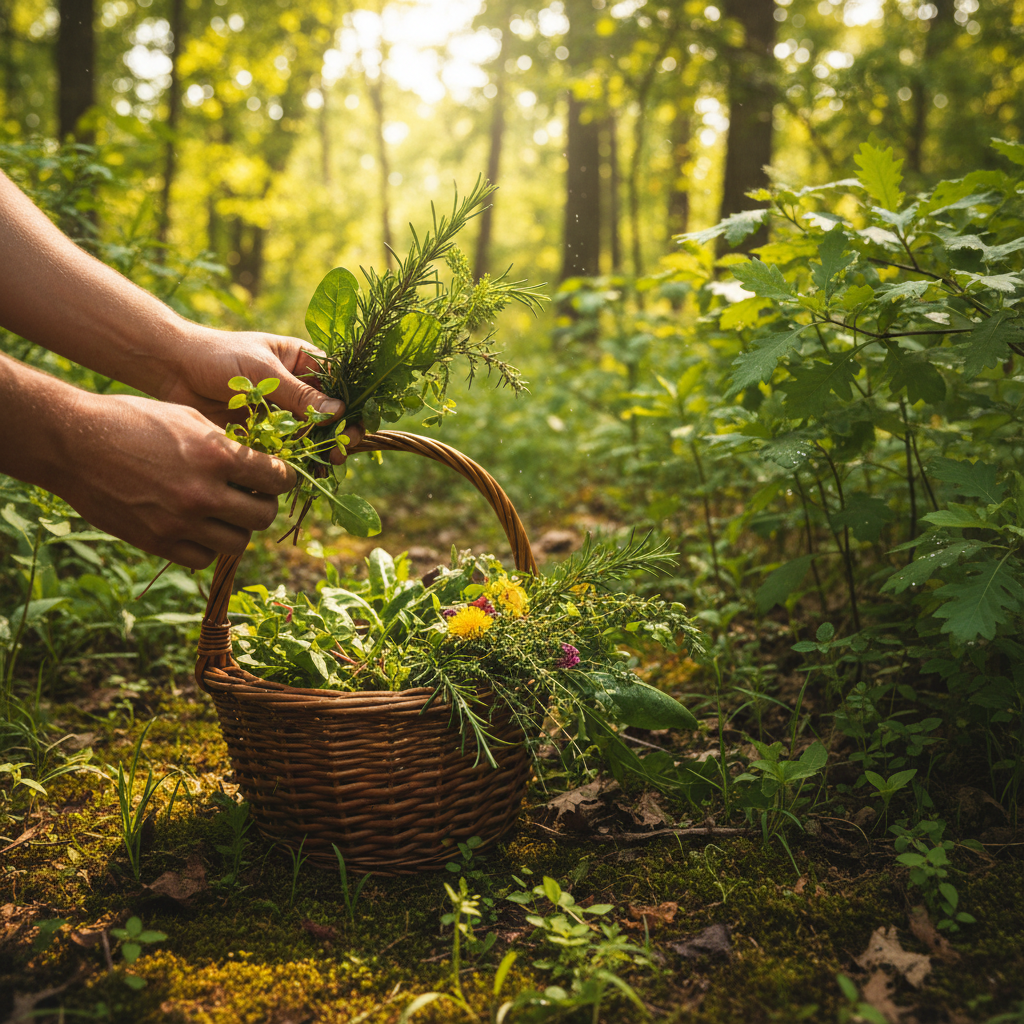
Foraging in Cherokee Country: Wild Plants and Herbs
Osiyo! Welcome to a deeper look at the land and the gifts it provides. When we talk about foraging in Cherokee Country, we aren’t just talking about a trendy weekend hobby or a survivalist checklist. For the Cherokee people, gathering wild plants is an act of sovereignty, a connection to ancestors, and a vital part of cultural preservation. Whether you are walking the mist-covered mountains of the Qualla Boundary in North Carolina or the rolling hills of the Cherokee Nation in Oklahoma, the plants beneath your feet tell a story of resilience.
Before we dive into the roots and shoots, let’s get the legalities out of the way. Osiyo.net is an independently operated information platform. We are NOT an official website of any Tribal Nation or government agency. We provide research and resources, but we do not speak for the tribes. Furthermore, each Tribal Nation is a sovereign government that sets its own rules regarding land use and resource gathering. Rules for the three federally recognized Cherokee tribes differ significantly, and you must respect those laws.
Key Takeaways
- Sovereignty Matters: Gathering rights are determined by each specific Tribal Nation (Cherokee Nation, EBCI, or UKB).
- Cultural Connection: Foraging is more than food; it is a spiritual and historical practice tied to Cherokee identity.
- Sustainability is Mandatory: Traditional ecological knowledge (TEK) emphasizes taking only what you need to ensure the plant returns next year.
- Regional Diversity: The plants gathered by the Eastern Band of Cherokee Indians (EBCI) in the Appalachians differ from those gathered by the Cherokee Nation and United Keetoowah Band (UKB) in Oklahoma.
- Permission is Required: Never forage on tribal lands without explicit permission or the proper permits from the tribal government.
The Three Tribes and Two Landscapes
To understand foraging in Cherokee Country, you have to understand the geography of the Cherokee people. Historically, the Cherokee homelands encompassed parts of what are now eight southeastern states. Today, the three federally recognized tribes reside in two very different ecological zones.
The Eastern Band of Cherokee Indians (EBCI)
Based in Western North Carolina on the Qualla Boundary, the EBCI remains in the heart of the ancestral homelands. This is a temperate rainforest environment, rich with biodiversity. Here, you find high-altitude plants like ramps and sochan. Foraging here is deeply tied to the mountains and the unique microclimates of the Smokies.
Cherokee Nation and United Keetoowah Band (UKB)
Following the forced removal known as the Trail of Tears, the majority of Cherokee people were relocated to Indian Territory, now Oklahoma. The Cherokee Nation and the UKB are headquartered in Tahlequah. The landscape here is vastly different—cross timbers, prairies, and river valleys. Foraging in Oklahoma requires knowledge of plants that can handle heat and drought, such as wild onions and sand plums.
The Trail of Tears wasn’t just a relocation of people; it was an ecological displacement. Cherokee ancestors had to relearn how to live with the land in a completely different climate, proving their resilience by identifying new