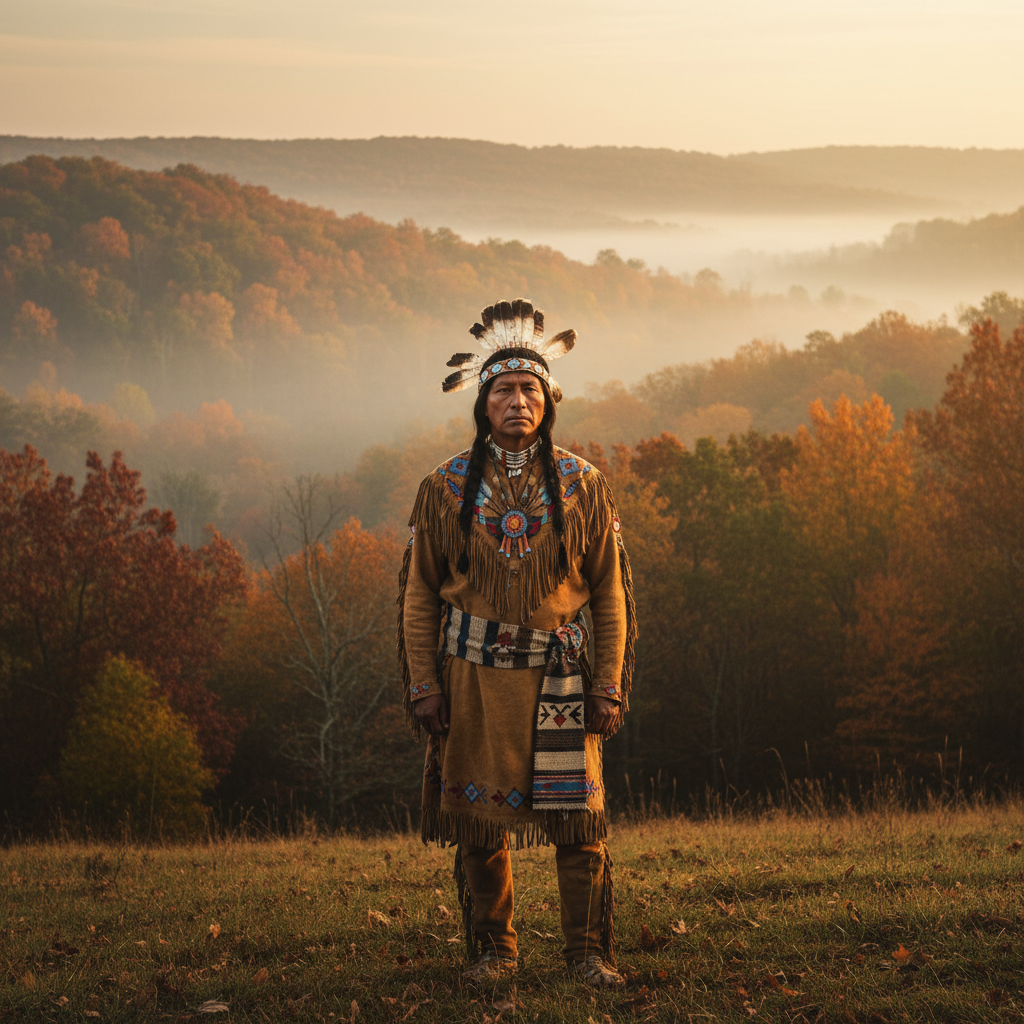
Chief John Ross: Cherokee Leader Through the Trail of Tears
If you’ve spent any time looking into your family history or digging into the resilience of the Cherokee people, one name stands above the rest: Chief John Ross. Known in Cherokee as Guwisguwi, Ross wasn’t just a politician; he was the primary architect of Cherokee resistance during the most harrowing era of American history. For nearly 40 years, he served as Principal Chief, steering the Cherokee Nation through the storm of the Indian Removal Act, the tragedy of the Trail of Tears, and the messy process of rebuilding a sovereign government in a strange, new land.
Before we dive into the life of this complicated, brilliant leader, a quick reminder: Osiyo.net is an independent information platform. We are not an official website of any Tribal Nation or government agency. We can’t tell you if you are eligible for citizenship or process your enrollment. For that, you must contact the sovereign nations directly, such as the Cherokee Nation, the Eastern Band of Cherokee Indians, or the United Keetoowah Band of Cherokee Indians. Every Tribal Nation is a sovereign government that sets its own unique enrollment rules.
Key Takeaways
- Chief John Ross served as Principal Chief of the Cherokee Nation from 1828 to 1866.
- He was a staunch opponent of forced removal and fought the State of Georgia and the U.S. Federal Government in the Supreme Court.
- Ross led the Cherokee through the Trail of Tears, managing the logistical detachments to ensure as much safety as possible under horrific conditions.
- He was instrumental in drafting the 1827 Cherokee Constitution, which modeled the Cherokee government on the U.S. federal system while asserting tribal sovereignty.
- He successfully helped rebuild the Cherokee Nation in what is now Oklahoma (Indian Territory) after removal.
The Man Known as Guwisguwi
Born in 1890 in Turkey Town (near present-day Alabama), John Ross was the son of a Scottish father and a mother of Cherokee and Scottish descent. In the eyes of the white world, he was only one-eighth Cherokee. In the eyes of the Cherokee people, he was one of them—period. This biracial identity allowed Ross to move between two worlds. He was educated by white tutors and understood the nuances of American law, but his heart and political loyalty were firmly rooted in the survival of the Cherokee Nation.
His rise to power wasn’t an accident. He was mentored by the elder statesman Major Ridge, though they would later become bitter rivals. Ross saw early on that the survival of the Cherokee people depended on their ability to prove to the United States that they were a “civilized” nation. This didn’t mean giving up their identity; it meant codifying their laws. In 1827, Ross helped draft the Cherokee Constitution, establishing a three-branch government and declaring that the Cherokee were a sovereign nation within their own borders. This was a direct challenge to the State of Georgia, which was currently salivating over Cherokee land for gold and cotton.
The Legal War and the Great Betrayal
When the State of Georgia tried to abolish the Cherokee government and distribute their lands via lottery, Chief John Ross didn’t pick up a rifle; he picked up a law book. He funded legal battles that eventually reached the U.S. Supreme Court. In the landmark case Worcester v. Georgia (1832), Chief Justice John Marshall ruled that the Cherokee Nation was a distinct community and that the laws of Georgia had no force over them.
“The Cherokee Nation… is a distinct community occupying its own territory in which the laws of Georgia can have no force.” — Chief Justice John Marshall
It should have been a victory. But President Andrew Jackson, a man who viewed treaties as mere suggestions when they got in the way of white expansion, famously ignored the ruling. This was one of the most egregious failures of the American checks-and-balances system. Without federal enforcement, the Cherokee were left at the mercy of a hostile state. You can read more about how these historical legal structures still impact tribal citizenship today.
The Ridge vs. Ross Divide
Inside the Cherokee Nation, the pressure was reaching a breaking point. A small group of leaders, including Major Ridge, John Ridge, and Elias Boudinot (known as the Treaty Party), began to believe that removal was inevitable. They thought that if they didn’t sign a treaty now, the Cherokee would eventually be wiped out or forced to leave with nothing.
Ross, backed by the vast majority of the Cherokee people, refused to budge. He argued that the land was theirs by right and that signing away their ancestral home was a betrayal of the ancestors. However, in 1835, the Treaty Party signed the Treaty of New Echota behind Ross’s back. This unauthorized treaty sold all Cherokee lands east of the Mississippi for $5 million. Ross gathered 15,000 signatures on a petition to protest the treaty, but the U.S. Senate ratified it anyway. If you are looking to find ancestors who may have been involved in these internal political divisions, looking at historical protest rolls is a great place to start.
Leading Through the Trail of Tears
When the deadline for voluntary removal passed in 1838, the U.S. Army began rounding up Cherokee families at bayonet point. The initial forced marches led by the military were disastrous, with thousands dying from disease and exposure. Seeing the carnage, Ross successfully petitioned the government to allow the Cherokee to manage their own removal.
Ross organized the people into thirteen detachments. He acted as the logistical commander-in-chief, ensuring that they had supplies, wagons, and physicians. Even with Ross’s leadership, the journey was a death march. An estimated 4,000 Cherokee died, including Ross’s own wife, Quatie. She reportedly gave her only blanket to a sick child during a snowstorm and died of pneumonia shortly after. To understand the scale of this loss, we often look back at the Dawes Rolls and other records to trace the families that survived this trek.
The Three Cherokee Nations Today
It is crucial to understand that the Cherokee people are not a monolith. Today, there are three federally recognized Cherokee tribes, each with its own history stemming from the removal era.
| Tribal Nation | Location | Historical Context |
|---|---|---|
| Cherokee Nation | Tahlequah, OK | The largest tribe; descendants of those who traveled the Trail of Tears and rebuilt in the west. |
| Eastern Band of Cherokee Indians (EBCI) | Cherokee, NC | Descendants of those who remained in the mountains or escaped the Trail of Tears; recognized via the Baker Roll. |
| United Keetoowah Band of Cherokee Indians (UKB) | Tahlequah, OK | Descendants of the “Old Settlers” who moved west before the forced removal and maintained traditional ways. |
Rebuilding a Nation in the West
Arriving in Indian Territory (modern-day Oklahoma) in 1839, Ross faced a nation in shambles and a simmering civil war. The Treaty Party members were executed under the Cherokee blood law for selling tribal lands without consent. Ross had to bridge the gap between the “Old Settlers” (those who moved west before the trail) and the new arrivals.
He served as Principal Chief in the west, helping to establish a new capital in Tahlequah and building schools and a national press. His leadership was tested again during the American Civil War, where he initially tried to remain neutral but was eventually forced into a treaty with the Confederacy, a decision that would lead to further land loss during the Reconstruction treaties. If you’re researching your family’s history during this era, you might find our guide on how to search the final rolls useful.
FAQ: Chief John Ross and Cherokee History
Was Chief John Ross actually Cherokee?
Yes. While he had Scottish ancestry, he was a citizen of the Cherokee Nation by birth and law. Cherokee identity is based on political citizenship and kinship, not just blood quantum. Ross was raised in Cherokee culture and dedicated his life to its preservation.
Why didn’t Chief John Ross sign the Treaty of New Echota?
Ross believed the treaty was a fraudulent document signed by a minority group that had no authority to represent the Cherokee Nation. He spent years lobbying the U.S. government to nullify the treaty, arguing that the Cherokee had a right to their ancestral lands.
Where is Chief John Ross buried?
Chief John Ross died in Washington, D.C., in 1866 while negotiating a post-Civil War treaty. His body was returned to the Cherokee Nation and he is buried in the Ross Cemetery in Park Hill, Oklahoma.
Next Steps: Digging Into Your History
If the story of Chief John Ross has inspired you to learn more about your own connection to the Cherokee people, here is where you should start:
- Research the Rolls: Start with the Final Rolls (Dawes Rolls) to see if your ancestors were living in the Cherokee Nation between 1898 and 1914.
- Visit Official Sites: Check the official websites of the three federally recognized Cherokee tribes to understand their specific enrollment requirements.
- Check Federal Records: Visit the National Archives for records of the Bureau of Indian Affairs (BIA).
- Document Your Lineage: Collect birth, marriage, and death certificates that trace your line back to an ancestor on the official rolls.
Chief John Ross remains a symbol of the “middle path”—using the tools of the colonizer to protect the sovereignty of the indigenous. His life reminds us that tribal identity isn’t just a matter of the past; it’s a living, breathing political reality that continues today.
Last reviewed: June 2026
Osiyo.net is an independently operated information platform. It is not an official website of any Tribal Nation, the Bureau of Indian Affairs, or any government agency. Always verify enrollment information directly with the specific Tribal Nation.