

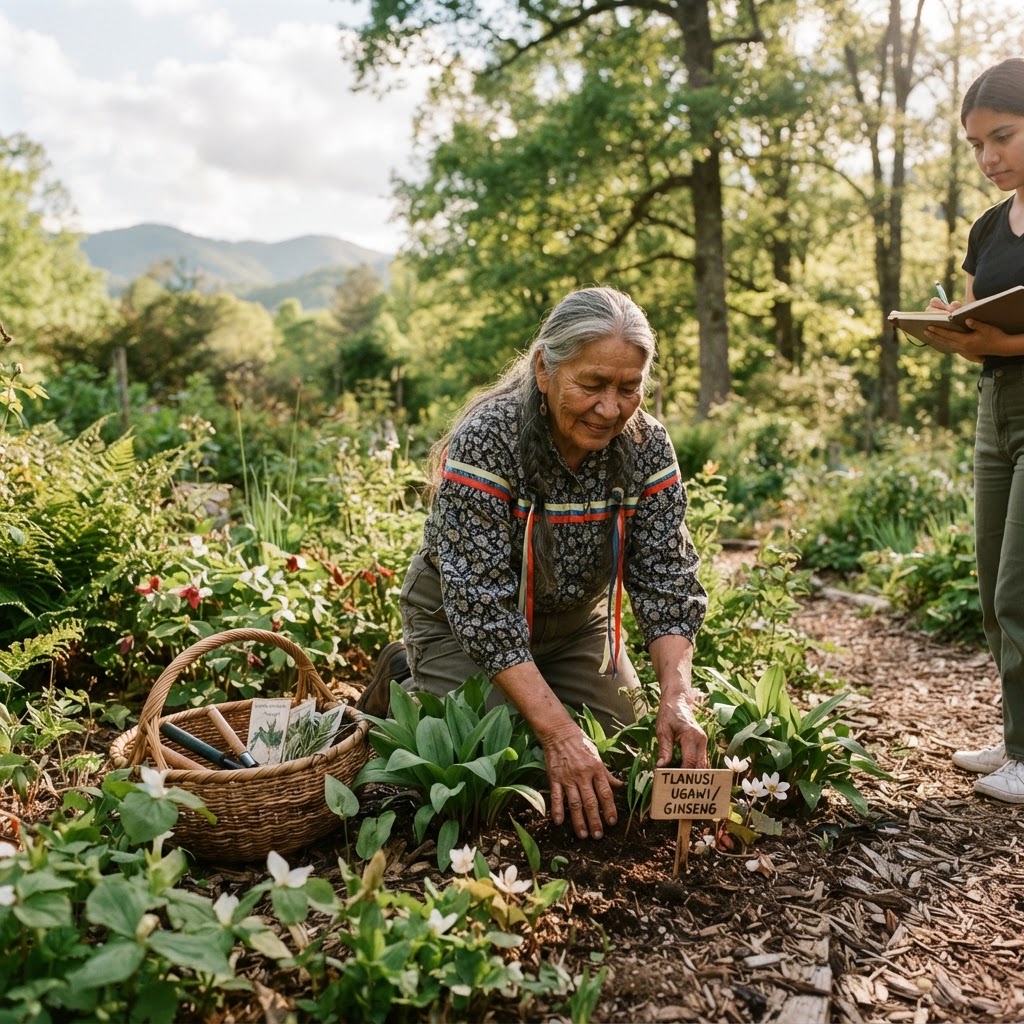
Healing the Land, Healing the People: A Guide to the EBCI Cherokee Botanical Sanctuary
Deep within the mist-covered peaks of the Great Smoky Mountains lies more than just a tourist destination. For the Eastern Band of Cherokee Indians (EBCI), this land—the Qualla Boundary—is a living pharmacy, a historical archive, and a testament to sovereignty. The EBCI Cherokee Botanical Sanctuary isn’t just a garden; it is a radical act of cultural preservation in a world that once tried to categorize Cherokee medicine as mere superstition.
Understanding the sanctuary requires looking past the surface. While many visitors see a beautiful forest, the Cherokee people see To-hi (balance). Here, the relationship between the people and the plants isn’t extractive; it is reciprocal. In this guide, we dive into the heart of Cherokee ethnobotany, the specific role of the EBCI in protecting these species, and how traditional medicine continues to thrive despite centuries of colonial interference.
Sovereignty in Every Seed: The EBCI Mission
Before we get into the roots and leaves, let’s clear up some history that textbooks often gloss over. The Cherokee people are not a monolith. Today, there are three federally recognized Cherokee tribes: the Cherokee Nation (CNO) and the United Keetoowah Band of Cherokee Indians (UKB), both headquartered in Oklahoma, and the Eastern Band of Cherokee Indians (EBCI) in North Carolina.
While the CNO and UKB were largely forced west during the horrific ethnic cleansing known as the Trail of Tears, the ancestors of the EBCI remained in their ancestral homelands. This geographic distinction is vital. Because the EBCI remained in the Southern Appalachians, they maintained an unbroken physical connection to the specific flora that has defined Cherokee medicine for millennia. You can learn more about the different tribal histories here.
Why a Sanctuary Matters
The EBCI Cherokee Botanical Sanctuary was established to combat two primary threats: over-harvesting by outsiders and the loss of traditional knowledge among younger generations. By designating specific areas for the cultivation and protection of traditional plants, the EBCI exerts its tribal sovereignty over its natural resources. It is a bold statement that Cherokee medicine belongs to the Cherokee people, managed under their laws and cultural protocols.
“Our plants are our elders. They were here before us, and they provide for us. To lose a plant is to lose a piece of our language and our soul.” — Common Cherokee Traditionalist sentiment.
Essential Flora: Plants of the Qualla Boundary
The biodiversity of the Qualla Boundary is staggering. Within the sanctuary and the surrounding forest, hundreds of species are used for food, craft, and medicine. Here are a few of the heavy hitters in Cherokee ethnobotany:
Sochan (Green-headed Coneflower)
If there is one plant that defines the EBCI’s recent legal battles for gathering rights, it’s Sochan. This leafy green is a dietary staple, often gathered in the spring. For years, federal regulations in the Great Smoky Mountains National Park restricted gathering, but through government-to-government negotiations, the EBCI successfully re-established the legal right for citizens to harvest Sochan traditionally. It’s a win for tribal leadership and food sovereignty.
Yellowroot (Xanthorhiza simplicissima)
Named for its vibrant yellow inner bark and roots, this plant is the “Swiss Army Knife” of the Cherokee medicine cabinet. It contains berberine, which has known antimicrobial properties. Historically and currently, it is used for mouth sores, digestive issues, and as a blood purifier. It grows in moist soils along stream banks, making the sanctuary’s protected waterways essential for its survival.
Ginseng (Gali-tsati)
Wild American Ginseng is perhaps the most controversial plant in Appalachia. Due to high demand in international markets, it has been poached nearly to extinction in some areas. Within the EBCI sanctuary, Ginseng is protected with fierce dedication. In Cherokee tradition, Ginseng is “The Little Men,” and harvesting it requires specific prayers and the replacement of seeds to ensure the plant “walks” to a new location.
The Philosophy of Cherokee Medicine
It is a mistake to view Cherokee medicine through a Western pharmaceutical lens. You don’t just “take a pill” in traditional practice. Cherokee medicine is an integrated system involving:
- Spirituality: Many plants require specific formulas (prayers) to be spoken during harvest and preparation.
- Respect: Only taking what is needed and never taking the first plant you find.
- Balance: Illness is often seen as a lack of balance between the patient, their community, and the natural world.
While Osiyo.net provides information on these traditions, we are an independent platform and not an official tribal source. For those looking to dive deeper into the spiritual aspects, check out our section on Cherokee Faith and Spirituality.
Comparing the Three Cherokee Nations
While all three tribes share a common ancestry and many cultural traits, their geographic locations have influenced their botanical traditions. The EBCI deals with temperate rainforests, while the Oklahoma-based tribes have adapted to the flint hills and prairies.
| Feature | Eastern Band (EBCI) | Cherokee Nation (CNO) | United Keetoowah Band (UKB) |
|---|---|---|---|
| Location | North Carolina (Appalachia) | Oklahoma (Ozark Foothills) | Oklahoma (Ozark Foothills) |
| Primary Environment | High Elevation, Rainforest | Post Oak Savannah, Prairie | Post Oak Savannah, Prairie |
| Key Medicinal Plant | Sochan, Yellowroot | Wild Indigo, Passionflower | Wild Indigo, Passionflower |
| Land Status | Qualla Boundary (Trust Land) | Jurisdictional Area | Trust Land / Tribal Land |
The Edge: Misconceptions and Appropriation
Let’s get real for a second. There is a massive market for “Native American-style” healing and “shamanic” herbs. Most of this is cultural appropriation at best and dangerous misinformation at worst.
- White Sage is not Cherokee: You see it in every “new age” shop. While sacred to many Indigenous nations in the Southwest and California, it is not a traditional Cherokee plant.
- Medicine is not for Sale: Traditional Cherokee healers typically do not charge a “fee” for service, though gifts or tobacco are exchanged. If someone is selling “Cherokee Secret Cures” on the internet, run the other way.
- Legal Access: Only enrolled members of federally recognized tribes have certain legal protections for gathering specific plants on federal or tribal lands. If you aren’t enrolled, harvesting these plants in certain areas can lead to heavy fines or jail time.
If you are interested in how to properly identify your own heritage without falling for “plastic shamanism,” start with our guide on starting your journey.
Key Takeaways
- The EBCI Cherokee Botanical Sanctuary is a vital resource for preserving Southern Appalachian biodiversity and Cherokee culture.
- Traditional medicine is inseparable from the Cherokee language and spiritual practice.
- Sovereignty includes the right to manage and harvest ancestral plants on traditional lands.
- The EBCI, CNO, and UKB are distinct political entities with different geographic plant resources.
Frequently Asked Questions
Can I visit the EBCI Botanical Sanctuary?
Access to specific sanctuary sites is often restricted to EBCI tribal members or authorized researchers to prevent poaching and maintain the sanctity of the plants. However, the EBCI often provides public educational gardens near the Oconaluftee Indian Village and the Museum of the Cherokee People. Always check ebci.gov for current public access rules.
Is Cherokee medicine still used today?
Absolutely. Many Cherokee families still use traditional plants for common ailments alongside modern Western medicine. This “dual-care” approach allows for physical healing while maintaining cultural connection. You can read more contemporary stories here.
How can I learn to identify these plants?
The best way is through official tribal programs or reputable ethnobotany courses. The Cherokee Nation Seed Bank and EBCI’s Natural Resources Department often provide resources. Never ingest a wild plant based solely on an internet description.
What is the difference between the Qualla Boundary and a Reservation?
Technically, the Qualla Boundary is “trust land,” not a reservation. The Cherokee people purchased this land in the 1800s, and it is held in trust by the federal government. This distinction is a point of pride for the EBCI, as it represents their persistence in staying in their homeland. See the BIA website for more on land trust status.
Next Steps
If you are inspired by the resilience of the EBCI and their commitment to the land, here is how you can engage further:
- Support Tribal Businesses: When visiting Western North Carolina, spend your dollars at businesses owned by EBCI members. Visit our Travel Section for recommendations.
- Educate Others: Share the distinction between the three Cherokee nations to help combat the “monolith” myth.
- Respect the Land: Whether you are on the Qualla Boundary or in the Oklahoma Ozarks, practice “Leave No Trace” and respect tribal property.
- Verify: If you are seeking information on citizenship or enrollment, go directly to the official sites like cherokee.org or ukb-nsn.gov.
Last reviewed: June 2026
Osiyo.net is an independently operated information platform. Always verify enrollment information directly with the specific Tribal Nation.