

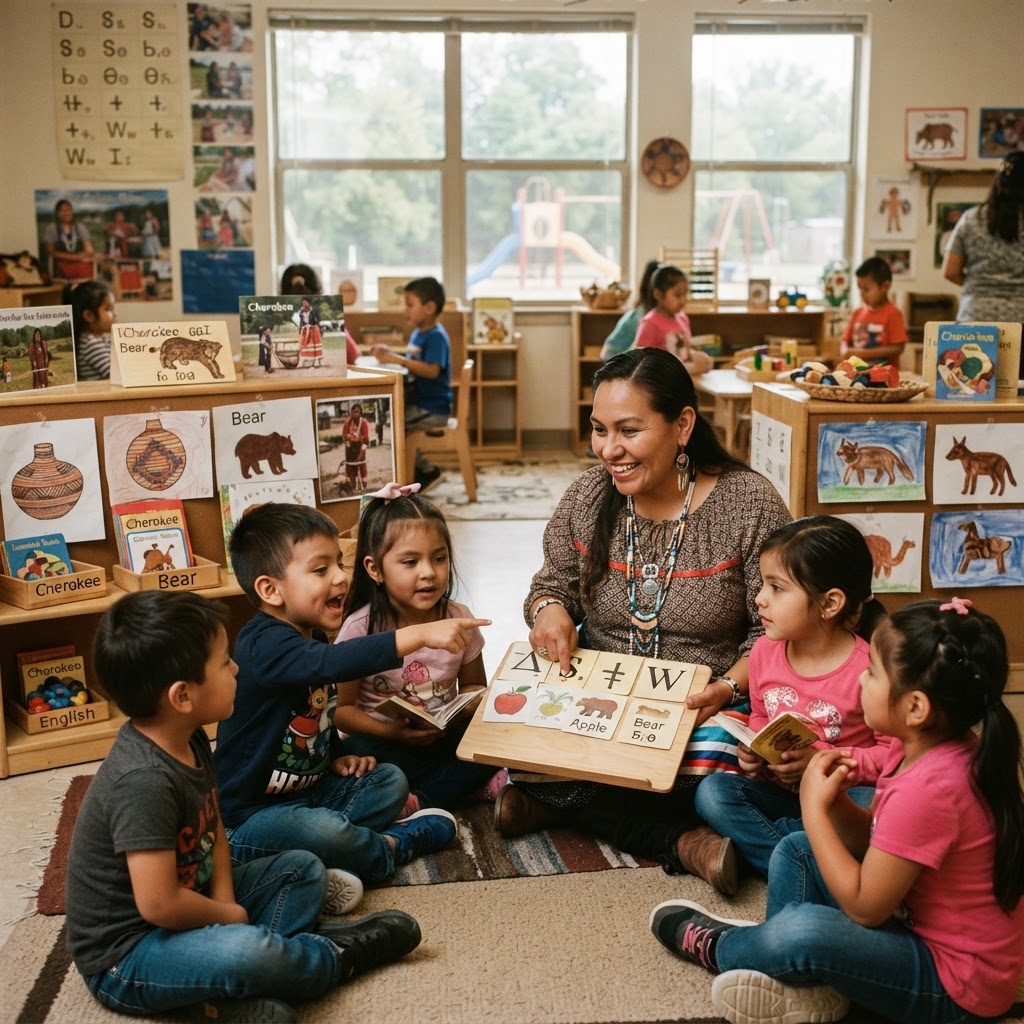
Empowering the Next Generation: A Deep Dive into Cherokee Nation Head Start and Early Education
Let’s set the record straight: education for the Cherokee people didn’t start with a federal grant or a state mandate. Long before the boarding school era attempted to strip our ancestors of their identity, the Cherokee people were leaders in literacy and formal schooling. Today, that legacy of intellectual sovereignty is alive and well through the Cherokee Nation Head Start program. This isn’t just ‘daycare’—it is a sovereign reclamation of early childhood development, designed to ensure our children are not only ready for kindergarten but are rooted in their culture.
Key Takeaways
- Cherokee Nation Head Start focuses on ‘the whole child,’ integrating health, nutrition, and family support with academics.
- Language immersion is a critical pillar of early education within the Cherokee Nation, aimed at preserving the Cherokee language.
- There are distinct differences in how the three federally recognized Cherokee tribes manage early childhood resources.
- Tribal Head Start programs are a direct exercise of self-determination and tribal sovereignty.
- Osiyo.net is an independent resource; always check with the specific Tribal Nation for official enrollment procedures.
More Than Just Daycare: The Sovereign Right to Educate
For decades, the narrative of Native American education was one of forced assimilation. The ‘edge’ here is acknowledging that federal education policy was once a weapon. Today, the Cherokee Nation has turned that history on its head. By utilizing federal Head Start funding and layering it with tribal resources, the Cherokee Nation provides a top-tier early childhood experience that outpaces many private sector alternatives. It’s about building a foundation where ‘success’ isn’t just defined by state standards, but by Cherokee values.
“Our children are the heartbeat of our future. When we invest in their earliest years, we aren’t just teaching them letters and numbers; we are teaching them who they are.”
If you are exploring education options within the 14-county jurisdiction of the Cherokee Nation, understanding the Head Start system is essential. It serves as the primary gateway for early intervention and cultural grounding.
The Three Tribes: Approaches to Early Education
It is a common misconception that all Cherokee people fall under one administrative umbrella. In reality, there are three distinct, federally recognized Cherokee tribes, each with its own approach to tribal governance and early childhood education:
1. Cherokee Nation (CN)
Based in Tahlequah, Oklahoma, the Cherokee Nation operates an extensive Head Start and Early Head Start network across its 14-county reservation. Their program is massive, serving thousands of children with a heavy emphasis on incorporating the Cherokee language and history into the daily curriculum. You can find more about their specific initiatives at cherokee.org.
2. Eastern Band of Cherokee Indians (EBCI)
Located on the Qualla Boundary in North Carolina, the EBCI manages its own early childhood programs, including the ‘Qualla Boundary Head Start.’ Their programs are deeply integrated with the unique geography and Appalachian Cherokee traditions of the East. For official details, visit ebci.gov.
3. United Keetoowah Band of Cherokee Indians (UKB)
The UKB, also headquartered in Tahlequah, focuses heavily on community-based support and cultural preservation. While they may partner with various providers, their emphasis remains on the Keetoowah identity. Learn more about their community services at ukb-nsn.gov.
Inside the Cherokee Nation Head Start Program
The Cherokee Nation Head Start program is a comprehensive federal program that promotes the school readiness of children from birth to age five. But the ‘Cherokee way’ adds layers of service that go beyond the basic federal requirements.
Curriculum and Language Immersion
One of the most radical acts of sovereignty is the Cherokee Language Immersion school and the integration of the Cherokee syllabary into Head Start classrooms. While the world tries to homogenize education, the Cherokee Nation is doubling down on what makes us unique. Children learn to count, identify colors, and greet their elders in the Cherokee language, ensuring that the tongue of our ancestors remains a living, breathing part of the next generation’s daily life.
Health, Nutrition, and Disability Services
You can’t teach a hungry child, and you can’t ignore developmental delays until the first grade. Cherokee Nation Head Start provides:
- Nutritional Support: Healthy meals that often incorporate traditional foods.
- Medical and Dental Screenings: Ensuring every child has access to basic healthcare.
- Mental Health Services: Trauma-informed care that acknowledges the historical context of our communities.
- Special Education: Early identification of learning disabilities to ensure no child falls behind.
Family Engagement
In our culture, the family is the center of the universe. Head Start isn’t just for the child; it’s for the parents and caregivers. The program offers workshops on financial literacy, parenting skills, and even leadership development for parents who want to take an active role in tribal policy.
Comparison of Regional Tribal Program Features
| Feature | Cherokee Nation (OK) | Eastern Band (NC) | UKB Perspective |
|---|---|---|---|
| Primary Location | 14-County Reservation | Qualla Boundary | Tahlequah/Community Based |
| Language Integration | High (Syllabary/Immersion) | High (Kituwah Emphasis) | Cultural Heritage Focus |
| Ages Served | 0 to 5 Years | 0 to 5 Years | Community Support Focus |
| Administration | Tribal/Federal Partnership | Tribal/Federal Partnership | Tribal Programs |
Navigating the Historical Context of Tribal Education
To understand why these programs are so vital, we have to talk about the ‘elephant in the room’: the history of Indian Education in the United States. For over a century, the goal of the U.S. government was to ‘Kill the Indian, Save the Man.’ Residential schools were designed to break the bond between parent and child. If you want to dive deeper into these histories, check out our section on Cherokee stories.
Today’s Head Start programs are the antithesis of the boarding school era. Instead of removing children from their homes, Head Start empowers the home. Instead of banning the language, they celebrate it. This is why when we talk about Cherokee citizenship and the benefits of tribal membership, education is always at the top of the list. It is a tool for survival and a vehicle for thriving.
Frequently Asked Questions (FAQ)
What is the difference between Head Start and Early Head Start?
Early Head Start serves pregnant women and children from birth to age three. Head Start is designed for children ages three to five. Both focus on low-income families or children with disabilities, providing a comprehensive support system for early development.
Do I have to be a Cherokee Nation citizen to apply?
While Head Start is a federally funded program with specific income guidelines, many tribal programs prioritize citizens of federally recognized tribes. However, requirements can vary based on the specific grant and location. You should verify your CDIB or tribal status requirements directly with the program office.
How does the program support Cherokee culture?
The program integrates Cherokee history, art, and language into the daily curriculum. This includes storytelling, traditional crafts, and basic Cherokee syllabary instruction, ensuring that children grow up with a strong sense of cultural identity.
Are these programs available outside of Oklahoma?
The Cherokee Nation Head Start specifically operates within the 14-county jurisdiction in Oklahoma. The Eastern Band of Cherokee Indians operates programs in North Carolina. If you live outside these areas, you may need to look for local ‘American Indian and Alaska Native (AIAN)’ Head Start programs through the Bureau of Indian Affairs or the federal Head Start locator.
Next Steps
- Determine Your Jurisdiction: Identify if you live within the service area of the Cherokee Nation, EBCI, or another tribal entity.
- Gather Documentation: Prepare necessary documents, such as proof of income and tribal citizenship. You can learn more about finding your ancestors for citizenship purposes at our Final Rolls search page.
- Contact the Program Directly: Reach out to the Cherokee Nation Education Services department or the EBCI Qualla Boundary Head Start office to begin the application process.
- Visit a Center: If possible, schedule a tour to see how the Cherokee language and culture are being integrated into the classroom.
Last reviewed: June 2026
Osiyo.net is an independently operated information platform. Always verify enrollment information directly with the specific Tribal Nation.