

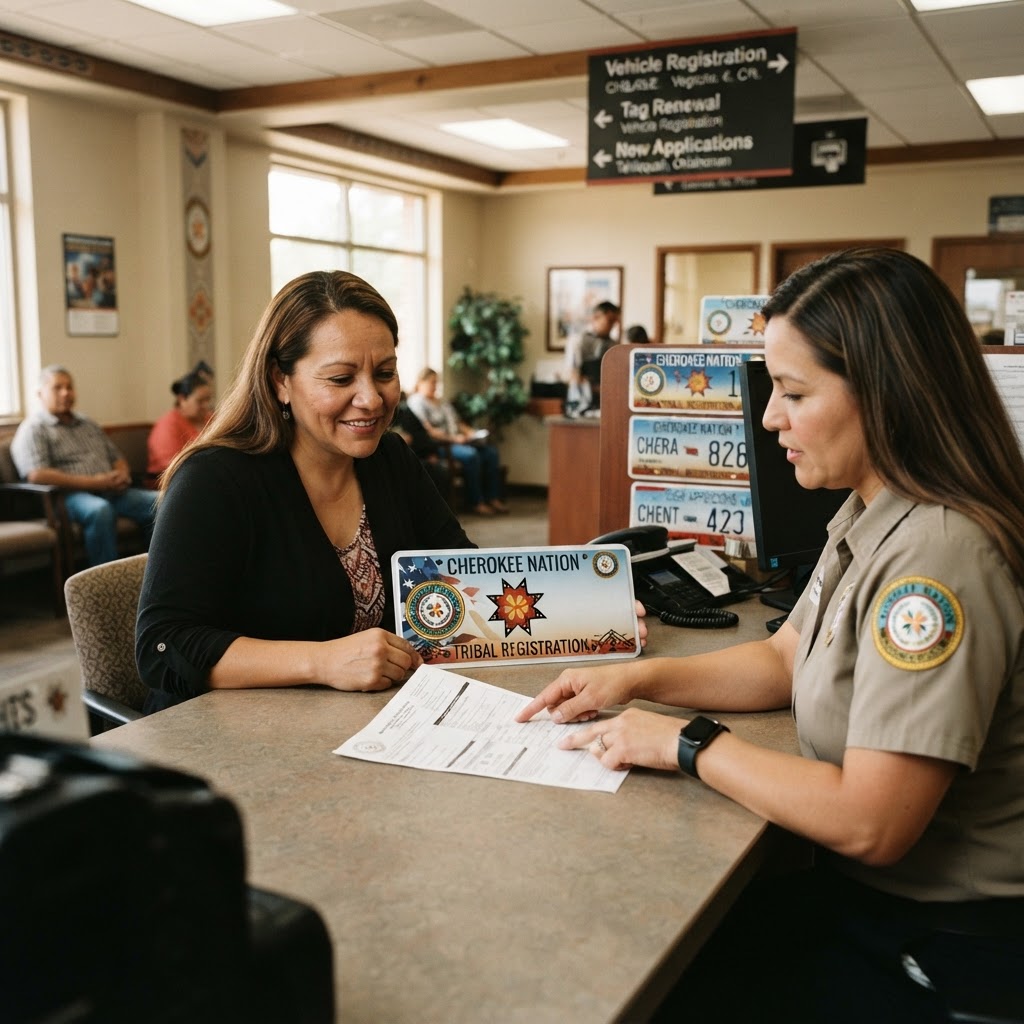
Cherokee Nation Tag Office: Sovereignty on Your Bumper
Key Takeaways
- A tribal license plate is a physical manifestation of tribal sovereignty, not just a way to avoid state taxes.
- The Cherokee Nation, United Keetoowah Band, and Eastern Band of Cherokee Indians each have distinct processes and jurisdictions.
- Eligibility for a Cherokee Nation tag generally requires residency within the tribe’s 14-county jurisdictional area in Oklahoma.
- Revenue from tribal tags directly funds essential services like education, roads, and law enforcement within the Nation.
When you see a Cherokee Nation license plate on the highway, you are looking at more than just a registration number. You are looking at a legal document of a sovereign nation. For decades, the right to issue vehicle registrations was a battlefield where tribal sovereignty clashed with state overreach. Today, the Cherokee Nation Tag Office stands as a testament to that hard-won autonomy. But before you rush to the nearest office, it is crucial to understand that getting a tag isn’t just about showing your pride—it’s a bureaucratic process governed by specific tribal laws and intergovernmental compacts.
The Power of the Plate: Why Sovereignty Matters
Let’s cut through the noise. There’s a persistent myth among some non-Indigenous circles that tribal tags are a “loophole” to get out of paying taxes. That is a fundamental misunderstanding of history and law. Tribal nations are sovereign entities. Just as France or Japan issues their own identification and licensing, so too does the Cherokee Nation. The ability to tax and regulate vehicles within their jurisdiction is a core function of government. When you pay for a tag at a Cherokee Nation office, that money doesn’t disappear into a state-level general fund; it stays in the community.
“Our license plates are mobile billboards for Cherokee sovereignty. Every time a citizen drives one of our vehicles across state lines, they are reminding the world that the Cherokee Nation is still here, still governing, and still thriving.”
Historically, the State of Oklahoma fought tooth and nail against tribal plates. It wasn’t until the 1990s and early 2000s that formal compacts were solidified, allowing for the seamless integration of tribal tags into the state’s law enforcement databases while ensuring the tribe retained its right to collect registration fees. This is a delicate balance of power, and it’s one the Cherokee Nation manages with professional precision.
Comparing the Three Cherokee Tribes
While the Cherokee Nation is the largest and most well-known for its robust tag program, it is one of three federally recognized Cherokee tribes. Each handles vehicle registration differently based on their specific legal standing and geographic location.
| Tribe | Location | Tag Program Status | Primary Benefit |
|---|---|---|---|
| Cherokee Nation (CN) | Oklahoma | Full registration & licensing | Funds education, roads, and health in the 14 counties. |
| United Keetoowah Band (UKB) | Oklahoma | Independent licensing | Direct support for UKB tribal services and programs. |
| Eastern Band of Cherokee Indians (EBCI) | North Carolina | State-integrated tags | Unique tax exemptions and cultural representation. |
It is important to note that the requirements for citizenship vary by tribe, and having a “blue card” or CDIB (Certificate of Degree of Indian Blood) from one doesn’t automatically grant you the rights of another. For a deep dive into the documents you need before even thinking about a tag, check out our guide on the Indian Card and CDIB.
The Cherokee Nation Tag Office Process
The Cherokee Nation Tax Commission oversees the tag offices. If you are a citizen of the Cherokee Nation living within the 14-county jurisdictional area, you are eligible to register your vehicle through the tribe. This isn’t just a suggestion; it’s a way to ensure your tax dollars support your own people. The revenue from these tags is split, with a massive 38% going directly to Oklahoma public schools where Cherokee students are enrolled.
What You’ll Need to Bring
Don’t be that person who waits in line for an hour only to realize they left their title at home. To register your vehicle at a Cherokee Nation Tag Office, you generally need the following:
- Tribal Membership Card: Your valid Cherokee Nation citizenship card (blue card).
- Title: The original vehicle title in your name.
- Insurance: Proof of valid Oklahoma liability insurance.
- Driver’s License: A valid Oklahoma driver’s license.
- Residency: Documentation proving you live within the 14-county area (like a utility bill).
The 14-county area includes Adair, Cherokee, Craig, Delaware, Mayes, Nowata, Muskogee, Ottawa, Rogers, Sequoyah, Tulsa, Wagoner, and Washington counties. If you live outside this area, state law usually requires you to use Oklahoma state tags, though the politics of this are constantly shifting due to recent court rulings like McGirt. Always check the official Cherokee Nation website for the latest jurisdictional updates.
Office Locations
The Cherokee Nation operates several tag offices to serve its large population. The main hub is in Tahlequah, but you can find satellite offices in Sallisaw, Pryor, Adair, and Collinsville. Each office handles new registrations, renewals, and specialty plates like those for veterans or elders. If you are starting your journey into tribal services, visiting the Getting Started page can help you navigate the broader bureaucracy.
The United Keetoowah Band (UKB) Perspective
The United Keetoowah Band of Cherokee Indians in Oklahoma also issues their own tribal tags. This has historically been a point of contention with the State of Oklahoma, which has occasionally refused to recognize UKB tags in the same way they recognize Cherokee Nation tags. However, the UKB maintains its sovereign right to issue these plates to its members. If you are a member of the UKB, you should consult the UKB official site for the most current legal standing of their tag program to avoid any unnecessary roadside headaches.
Eastern Band of Cherokee Indians (EBCI) and North Carolina
The EBCI has a different setup. Located in the mountains of Western North Carolina, the EBCI works within a state framework but with significant tribal input. EBCI members can obtain specialized plates that signify their membership, but the process is more closely tied to the North Carolina DMV than the independent commission model found in Oklahoma. For EBCI members, the focus is often on property tax exemptions on the Qualla Boundary. For more information, visit the EBCI official portal.
Dispelling the Myths: The “Edge” of History
Let’s talk about the friction. You might hear people complain that tribal tags “defund the police” or take money away from state roads. This is a flat-out lie. The Cherokee Nation spends millions of dollars annually on road projects and bridge repairs that benefit everyone, not just tribal citizens. In fact, many rural roads in Northeastern Oklahoma would be impassable if not for Cherokee Nation infrastructure spending. When you see a Cherokee tag, you are seeing a vehicle that is contributing to the safety of the entire region.
Furthermore, the McGirt v. Oklahoma decision has thrown a spotlight on tribal jurisdiction. While the state government occasionally grumbles about lost revenue, the reality is that the Cherokee Nation is a more efficient provider of many services than the state could ever be. The tag office is a prime example of a streamlined, customer-service-oriented government agency that puts its people first.
Frequently Asked Questions
Can I get a Cherokee Nation tag if I live in Texas or California?
No. Currently, the Cherokee Nation registration program is limited to citizens residing within the tribal jurisdictional boundaries in Oklahoma. This is due to the compacts signed with the State of Oklahoma. If you live out of state, you are generally required to register your vehicle in your state of residence.
Are tribal tags cheaper than state tags?
Often, yes. The Cherokee Nation sets its own fee structure. While the costs are comparable to state tags, the renewal process is often more affordable, and there are significant discounts available for senior citizens (elders) and veterans. More importantly, your fees stay within the tribal economy.
Do police recognize tribal tags outside of Oklahoma?
Yes. Under the Full Faith and Credit Clause of the U.S. Constitution and various intergovernmental agreements, other states recognize the validity of Cherokee Nation license plates just as they would an Oklahoma state plate. However, it is always wise to keep your registration papers handy if you are traveling deep into states that may be less familiar with tribal sovereignty.
What happens if I sell my car with a tribal tag?
The tag belongs to the individual, not the vehicle. When you sell your car, you remove your tribal plate. The new owner will need to register the vehicle in their own name, either with the tribe (if they are eligible) or the state.
Next Steps
Ready to put that sovereignty on your bumper? Here is how to move forward:
- Verify your citizenship status and ensure your blue card is up to date.
- Gather your title, Oklahoma insurance, and residency documents.
- Locate the nearest Cherokee Nation Tag Office using their official directory.
- If you are still in the process of applying for citizenship, check our Final Rolls Search page to help document your ancestry.
- Read more about the history of the Cherokee people to understand why these symbols of sovereignty are so hard-won.
For official forms and the most up-to-date fee schedules, always refer to the Cherokee Nation Tax Commission website.
Last reviewed: June 2026
Osiyo.net is an independently operated information platform. Always verify enrollment information directly with the specific Tribal Nation.