

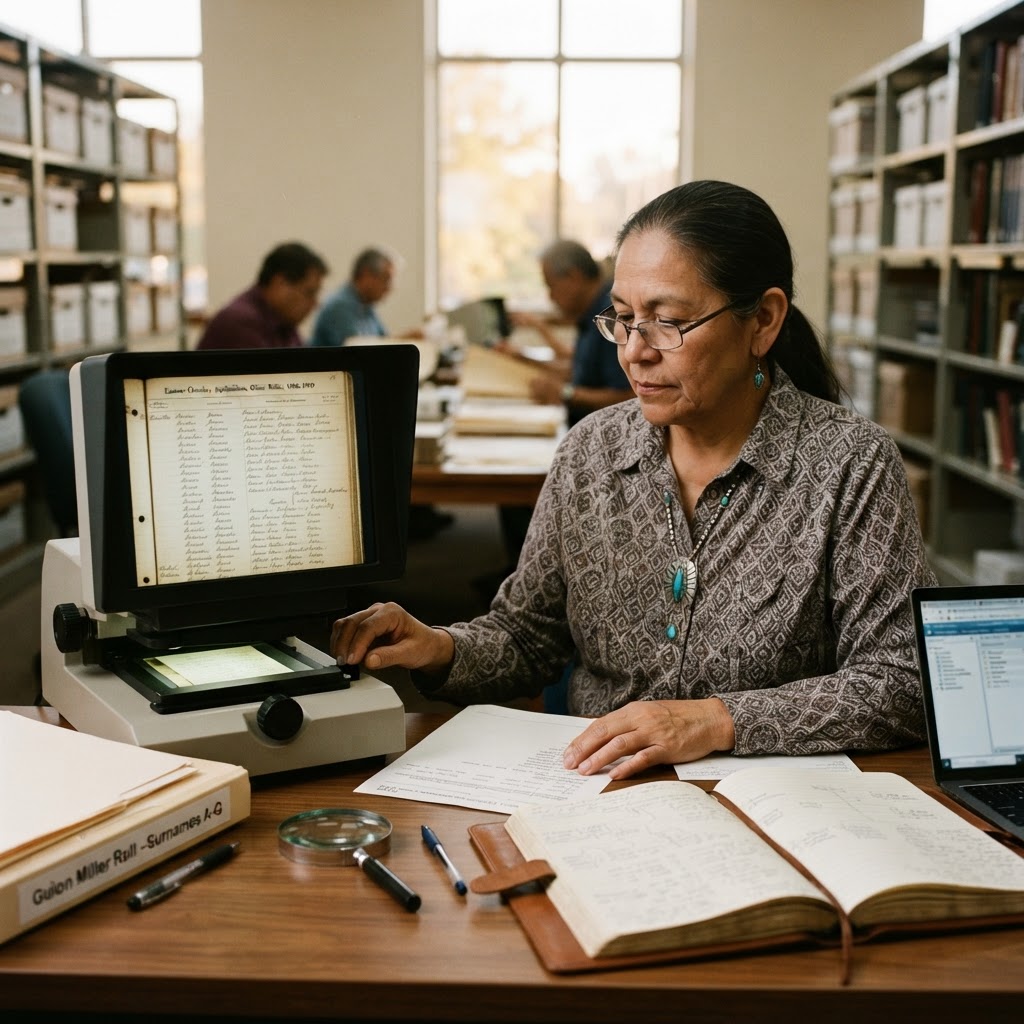
The Guion Miller Roll: Eastern Cherokee Applications and Genealogical Research
If you have spent more than five minutes digging into Cherokee history, you have probably bumped into the term "Guion Miller Roll." For some, it is the holy grail of family lore validation; for others, it is a dense thicket of bureaucratic 1900s red tape that seems designed to confuse. Let’s set the record straight: the Guion Miller Roll is not a membership list for a modern tribe, nor is it a "magic ticket" to enrollment. It is a historical snapshot—a record of a debt long overdue and a testament to the thousands of Cherokee people who stood up to claim what was rightfully theirs.
At Osiyo.net, we believe in looking at history through a lens of sovereignty and accuracy. We are an independent platform, not a tribal government site. While the Miller Roll is a vital tool for genealogical research, navigating it requires an understanding of why it exists and how it differs from other records like the Dawes Roll.
What is the Guion Miller Roll?
The Guion Miller Roll (officially the Report Submitted by Guion Miller, Special Commissioner to the U.S. Court of Claims, 1906-1910) was created to distribute a $1 million fund. This money was the result of a 1905 U.S. Supreme Court case, Cherokee Nation v. United States. The court ruled that the U.S. government had failed to fulfill certain financial obligations under the treaties of 1835, 1836, and 1846.
Guion Miller was the special agent tasked with figuring out who was actually entitled to a share of that money. To qualify, an applicant had to prove they were a descendant of a Cherokee person who was a party to those specific treaties. This meant the roll wasn’t just for those living in Indian Territory (modern-day Oklahoma); it was for "Eastern Cherokees," regardless of whether they stayed in the East or moved West.
Key Takeaways
- Purpose: A payout for treaty violations, not a census for tribal government.
- Timeframe: Applications were taken between 1906 and 1910.
- Scope: Over 45,000 applications were filed, representing about 90,000 individuals.
- Significance: It is one of the most detailed genealogical resources for Cherokee ancestry because it includes family testimonies.
For more on how this fits into the broader tribal landscape, see our guide on the three federally recognized Cherokee tribes.
The "Eastern Cherokee" Distinction
One of the biggest points of confusion is the term "Eastern Cherokee." In the context of the Miller Roll, this does not exclusively mean the Eastern Band of Cherokee Indians (EBCI) in North Carolina. It refers to the entire Cherokee Nation as it existed before the forced removals of the 1830s.
When Miller was vetting applications, he was looking for people who were descendants of the original Eastern Cherokee people. This included:
- Western Cherokees (Old Settlers): Those who moved West before the Trail of Tears.
- Emigrant Cherokees: Those who were forced West during the Trail of Tears.
- Eastern Cherokees: Those who remained in the East (primarily the ancestors of the EBCI).
Dawes vs. Miller: Don’t Get Them Swapped
If you are looking for an Indian Card (CDIB), you are likely looking for the Dawes Roll. If you are looking for family stories and connections to the 1835 census, you are looking for Miller. Here is the breakdown:
| Feature | Dawes Roll (Final Rolls) | Guion Miller Roll |
|---|---|---|
| Year | 1898–1907 | 1906–1910 |
| Primary Goal | Land Allotment in Oklahoma | Monetary Payout for Treaties |
| Location | Indian Territory (Oklahoma) | Nationwide (East and West) |
| Tribal Eligibility | Primary basis for CN and UKB | Primarily used for EBCI; secondary for others |
| Richness of Data | Basic family units, ages, blood quantum | Detailed testimonies, maiden names, grandparents |
To learn more about searching the land-based records, visit our Final Rolls search guide.
Why the Miller Roll is a Genealogical Goldmine
The beauty—and the frustration—of the Guion Miller Roll lies in the application process. Because the government was handing out money, they were incredibly strict. Every applicant had to fill out a lengthy form detailing their parents, siblings, grandparents, and even great-grandparents. They had to state where their ancestors lived in 1835, 1846, and 1851.
"The Guion Miller Roll applications often contain the only written records of oral family histories from the mid-19th century, capturing names that never appeared on a standard U.S. Census."
When Miller rejected an application (and he rejected a lot of them), he wrote down why. These "reason for rejection" notes are often just as valuable as the approvals because they clarify which branches of a family were recognized and which were not. For researchers, these files are essential for bridging the gap between the mid-1800s and the early 1900s.
The Three Tribes and the Miller Roll
While the Guion Miller Roll is a shared piece of history, it holds different weight for the three federally recognized Cherokee nations today. Osiyo.net is not an official tribal government site, so you must always verify specific requirements with the nations themselves.
1. Cherokee Nation (CN)
The Cherokee Nation primarily bases its citizenship on the Dawes Roll. However, the Miller Roll is frequently used by researchers to provide context or to find ancestors who might have been missed on Dawes but appeared on Miller.
2. United Keetoowah Band of Cherokee Indians (UKB)
The United Keetoowah Band has its own specific enrollment criteria often tied to the 1949 base roll or the Dawes Roll. Like the CN, the Miller Roll serves as a supporting historical document for UKB members researching their Keetoowah roots. Explore more about citizenship nuances here.
3. Eastern Band of Cherokee Indians (EBCI)
For the Eastern Band, the Miller Roll (along with the Baker Roll of 1924) is central. Since the EBCI ancestors were not in Oklahoma during the Dawes commission, the Miller Roll is one of the definitive records of the Eastern Cherokee community that remained in the mountains of North Carolina, Tennessee, and Georgia.
How to Search the Guion Miller Roll
Ready to get your hands dirty? You can access these records through several avenues. Searching for an ancestor usually involves two steps: finding the name in the index and then retrieving the application number.
- The National Archives (NARA): The original records are held in Record Group 75. NARA has an online index that is free to search.
- Fold3 and Ancestry: These paid services have digitized the actual application images (M1104). Seeing the handwritten testimony of an ancestor is worth the subscription price.
- The General Index: This is a simple alphabetical list. If your ancestor is here, it will give you their application number.
- The "Report" Volumes: These volumes contain the final lists of those who were actually admitted (approved).
Common Misconceptions and Pitfalls
Don’t fall into the "Princess Myth" or the "Cherokee Grandmother" trap. Here is the reality check:
- Rejection Doesn’t Always Mean No Ancestry: Many people were rejected because their ancestors weren’t on the 1835 or 1851 rolls, or they couldn’t prove a "proper" connection to the treaty. This doesn’t mean they weren’t Cherokee; it means they didn’t meet the U.S. government’s narrow legal criteria for that specific payout.
- Wait, There’s No Blood Quantum? The Miller Roll generally does not list blood quantum (fractions like 1/4 or 1/8). That was more of a Dawes Roll obsession. Miller cared about descent and treaty rights.
- Not All "Miller" Names are Cherokee: Over 45,000 people applied. Thousands were "White" applicants who thought they might have a claim or were simply mistaken. Just because a name is in the index doesn’t mean the person was Cherokee.
FAQ
Does being on the Guion Miller Roll make me a tribal member?
No. Tribal membership is determined solely by the sovereign laws of the Cherokee Nation, EBCI, or UKB. The Miller Roll is a historical document used for research and, in some cases, supporting evidence for enrollment, but it is not a membership card.
Where can I find the Miller Roll for free?
You can search the index on the National Archives website. Many local libraries also provide free access to HeritageQuest or Ancestry Library Edition, which contain these records.
What if my ancestor was rejected from the Miller Roll?
Read the rejection letter. It often contains clues about other family members or why they weren’t found on previous rolls. It is a vital piece of the puzzle even if it wasn’t an "approval."
Next Steps
- Start your tree: Before searching the roll, trace your family back to at least 1900. Visit our Getting Started page for tips.
- Search the Index: Look for your ancestors’ names in the Guion Miller Index at NARA.
- Consult Official Sources: If you believe you meet enrollment criteria, contact the registration departments of the Cherokee Nation, EBCI, or UKB directly.
- Explore the Stories: Check out our Cherokee Stories section to hear how these records impact contemporary lives.
Last reviewed: June 2026
Osiyo.net is an independently operated information platform. Always verify enrollment information directly with the specific Tribal Nation.