

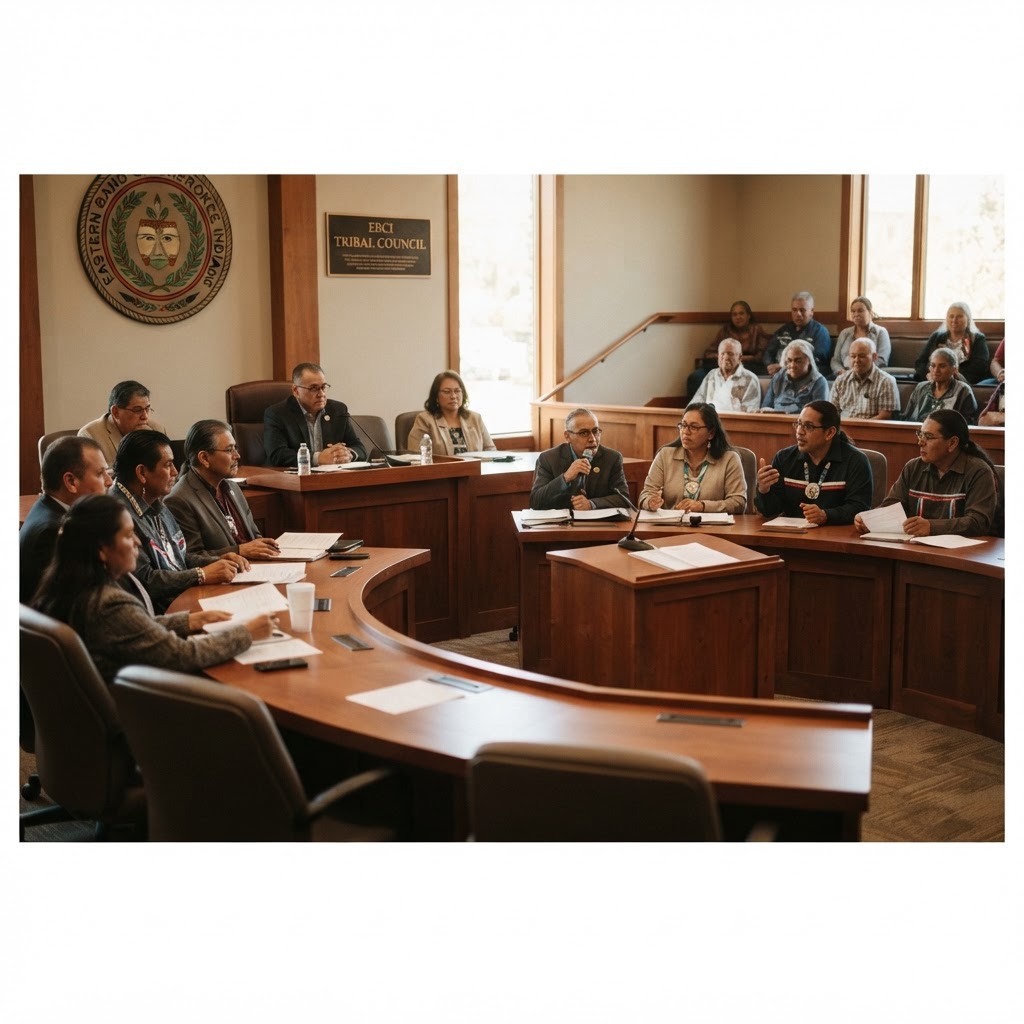
EBCI Tribal Council: Government Structure of the Eastern Band of Cherokee Indians
Sovereignty isn’t a gift from the federal government. It isn’t a permission slip handed out by the State of North Carolina. It is an inherent right, exercised every single day by the Eastern Band of Cherokee Indians (EBCI) through a complex, nuanced, and frankly, superior system of self-governance. While the mainstream media often clumps all Indigenous people into one monolithic bucket, the reality is far more interesting. The EBCI, one of the three federally recognized Cherokee tribes—alongside the Cherokee Nation (CNO) and the United Keetoowah Band (UKB) of Cherokee Indians in Oklahoma—operates a government that is both deeply traditional and modernly efficient.
Understanding the EBCI Tribal Council is not just about reading an organizational chart; it is about understanding how a people who refused to be moved from their ancestral homelands in the Smoky Mountains built a fortress of legal and political autonomy. This guide breaks down the architecture of the EBCI government, from the weighted vote of the council members to the executive checks and balances that keep the system running.
Important Notice: Osiyo.net is an independent information platform. We are not an official tribal government site. For official government business or legal matters, always contact the EBCI directly.
The Three Sisters of Cherokee Sovereignty
Before diving into the EBCI specifically, we have to clear the air. There are three federally recognized Cherokee tribes. Each has its own constitution, its own government, and its own sovereign authority. While they share a common history and language, they are distinct political entities.
| Tribe | Location | Governing Document | Key Feature |
|---|---|---|---|
| Eastern Band of Cherokee Indians | North Carolina (Qualla Boundary) | Charter and Governing Document | Weighted voting system; Land held in trust. |
| Cherokee Nation | Oklahoma (Tahlequah) | Constitution | Largest tribe by population; Tripartite government. |
| United Keetoowah Band | Oklahoma (Tahlequah) | Constitution and Corporate Charter | Deep focus on traditionalism and linguistic preservation. |
You can learn more about the distinct histories of these nations in our section on federally recognized tribes.
Key Takeaways
- The EBCI Tribal Council is the legislative branch, consisting of 12 members.
- Representation is based on six townships: Birdtown, Wolfetown, Big Cove, Yellowhill, Painttown, and Cherokee County & Snowbird.
- The EBCI uses a unique weighted voting system to ensure proportional representation.
- The executive branch is led by a Principal Chief and a Vice Chief.
- Tribal sovereignty is maintained through a dedicated judicial system and independent law enforcement.
The Legislative Branch: The Tribal Council
If you want to see where the real power lies on the Qualla Boundary, look no further than the Council House. The EBCI Tribal Council is the legislative heart of the nation. Unlike the U.S. Congress, which can feel like a distant machine, the Tribal Council is hyper-local. These are people who live in your community, see you at the grocery store, and answer for every resolution they pass.
Composition and Terms
The Council consists of 12 members. Two representatives are elected from each of the six communities (townships). These representatives serve two-year terms. This frequent election cycle keeps the council highly responsive to the immediate needs of the people. While some argue two years is too short for long-term planning, it ensures that no one gets too comfortable in power without answering to their neighbors.
The Six Communities
Governance starts at the township level. The EBCI is divided into the following electoral districts:
- Big Cove: Known for its traditional roots and mountain terrain.
- Birdtown: One of the largest and most populous communities.
- Wolfetown: A central hub for tribal activity.
- Yellowhill: The seat of the tribal government.
- Painttown: Strategically located near major economic zones.
- Cherokee County & Snowbird: A unique district representing members living further west of the main Qualla Boundary.
For more on the history of these communities and their leaders, check out our section on Cherokee leadership.
The Weighted Vote: Why Your Math Teacher Was Right
Here is where things get interesting—and where most outsiders get confused. The EBCI does not use a “one person, one vote” system within the Council itself. Instead, they use a weighted voting system. This is a sophisticated solution to the problem of varying population densities across the townships.
The total number of “votes” in the Council is 100. These votes are distributed among the 12 representatives based on the population of the township they represent. For example, a representative from a highly populated township like Birdtown will carry more “weight” (more votes) than a representative from a smaller township like Big Cove. This ensures that the majority of the population is fairly represented in every decision, even if the number of seats is the same for every community.
“The weighted vote is a guardian of democracy on the Boundary. It prevents smaller enclaves from being ignored while ensuring that the will of the people is mathematically accurate in the Council House.”
The Executive Branch: Principal Chief and Vice Chief
While the Council makes the laws, the Principal Chief and Vice Chief execute them. These leaders are elected at-large (by the entire tribal membership) to four-year terms. This creates a balance of power: the Council is focused on the granular needs of the townships, while the Chief focuses on the strategic vision for the entire Eastern Band.
The Principal Chief holds the power to veto resolutions passed by the Council. However, the Council can override that veto with a sufficient majority of the weighted vote. This tension is intentional. It prevents any one branch from becoming a monarchy—a concept the Cherokee have resisted for centuries. You can read more about the roles of modern Chiefs in our community stories section.
The Judicial Branch: The Sovereign Court
Sovereignty is meaningless if you have to rely on someone else’s court to interpret your laws. The EBCI maintains its own independent judicial system, including a Trial Court and a Supreme Court. This system handles everything from civil disputes to criminal cases under the tribe’s jurisdiction. By exercising judicial sovereignty, the EBCI ensures that Cherokee law and custom are given the weight they deserve, rather than being filtered through a non-Indigenous lens.
To understand how this relates to federal law, you can explore the Bureau of Indian Affairs (BIA) resources on tribal justice.
History and Misconceptions: The Edge of Governance
Let’s debunk a major myth: The Qualla Boundary is not a “reservation” in the way many think. It wasn’t land “given” to the Cherokee by the government. Following the 1838 Trail of Tears, the ancestors of the EBCI remained in North Carolina. Through the efforts of leaders like Yonaguska and their legal advocate William Holland Thomas, they purchased land—their own land—piece by piece. This land is held in federal trust, but the EBCI are the rightful owners. This history of legal maneuvering and sheer stubbornness informs how the Tribal Council operates today: with a sharp eye on protecting what they fought to keep.
Many people mistake tribal citizenship for a simple matter of heritage. It is not. It is a political status. Just as you are a citizen of a nation, EBCI members are citizens of a sovereign government. For those looking to understand the complexities of this status, we offer a guide on Cherokee citizenship and its legal foundations.
Educational Resources and Tribal Opportunities
The EBCI government isn’t just about lawmaking; it’s about providing for the future. The Tribal Council oversees massive investments in education, healthcare, and economic development. From the New Kituwah Academy, where children are immersed in the Cherokee language, to sophisticated tourism initiatives, the government structure is designed to support the growth of its people.
If you are interested in how tribal governance impacts local economies, visit our opportunities page to learn more about business and growth on the Boundary.
FAQ: Understanding the EBCI Government
1. How often does the EBCI Tribal Council meet?
The Tribal Council typically meets on the first Thursday of every month. These sessions are often open to tribal members, and the deliberations are a vital part of the community’s transparency.
2. Can the State of North Carolina overrule the Tribal Council?
In matters of internal tribal governance and on tribal lands, the EBCI is a sovereign nation. While there are complex inter-governmental agreements (like gaming compacts), the State of North Carolina does not have general legislative authority over the EBCI government.
3. What is the difference between the EBCI Charter and a Constitution?
The EBCI currently operates under a Charter and Governing Document rather than a formal Constitution. While it serves the same functional purpose—outlining the structure and limits of government—there have been ongoing movements within the tribe to develop and ratify a formal Constitution to further solidify sovereignty.
4. Who can vote in EBCI elections?
Voting is restricted to enrolled members of the Eastern Band of Cherokee Indians who are at least 18 years old. It is a right of citizenship within the nation.
Next Steps
- Visit the Qualla Boundary: Experience the seat of government firsthand. Check our travel guide for information on visiting Cherokee, NC.
- Research Official Documents: For the most up-to-date resolutions and ordinances, visit the Official EBCI Government Website.
- Stay Informed: Follow the Osiyo.net mission to stay updated on tribal resources and accurate history.
Last reviewed: June 2026
Osiyo.net is an independently operated information platform. Always verify enrollment information directly with the specific Tribal Nation.