

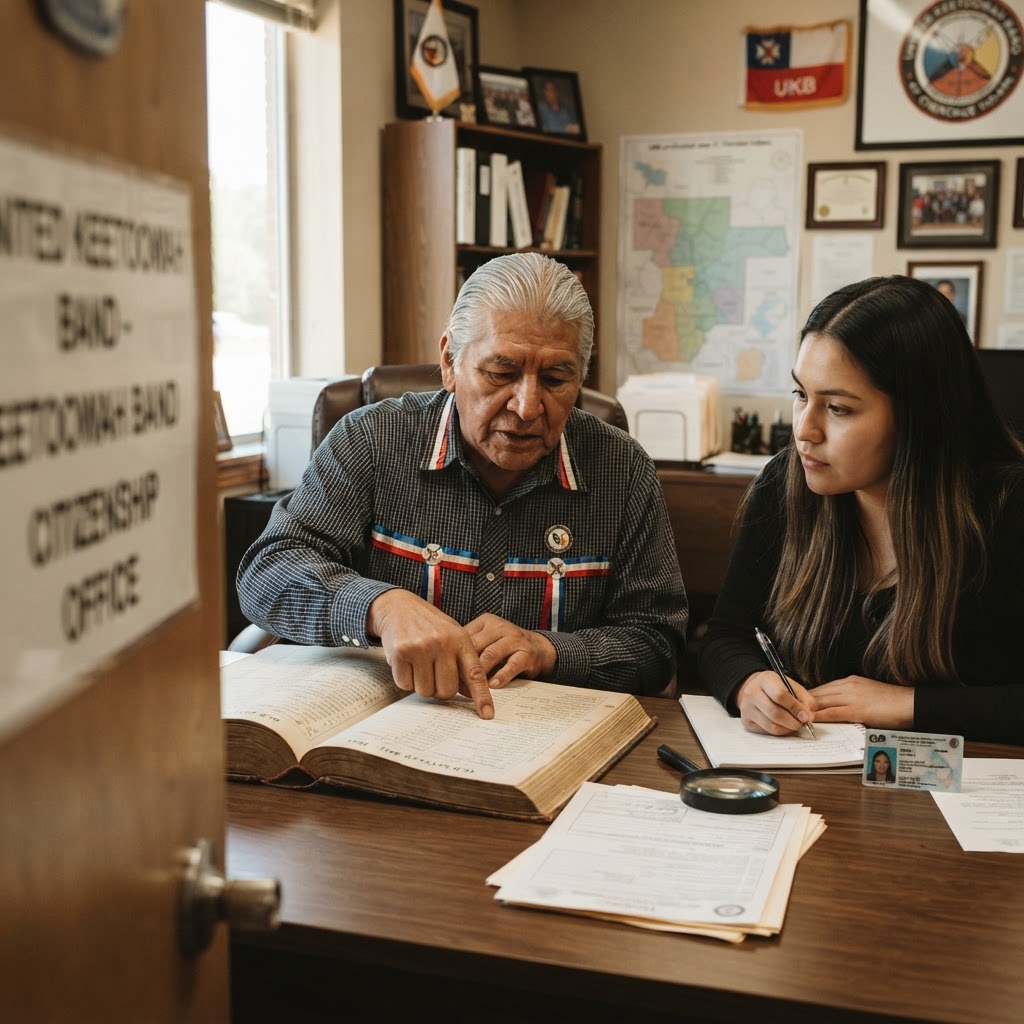
United Keetoowah Band of Cherokee Indians: History, Citizenship, and Services
Welcome to Osiyo.net. If you are here, you are likely looking for clarity in the often-confusing landscape of Cherokee identity and governance. Let’s get one thing straight from the jump: the Cherokee people are not a monolith. While the media often talks about ‘the’ Cherokee, there are actually three distinct, federally recognized Tribal Nations. Today, we are diving deep into the United Keetoowah Band of Cherokee Indians (UKB). This tribe isn’t just a ‘subset’ or a social club; they are a sovereign nation with a history that predates the forced removals of the 1830s. At Osiyo.net, we provide the context the history books often skip. We aren’t a government office, but we are your guide through the red tape of tribal resources.
The Keetoowah Origins: Pioneers of the West
To understand the UKB, you have to understand the ‘Old Settlers.’ Long before the horrific events of the Trail of Tears (1838-1839), groups of Cherokee people had already migrated west to escape the encroaching European settlers and the pressure of the U.S. government. These pioneers settled in what is now Arkansas and later the Indian Territory (Oklahoma). By the time the bulk of the Cherokee Nation was forced west at gunpoint, the Keetoowah people—the ‘Old Settlers’—already had a functioning government and established communities.
The Keetoowah people have always maintained that they are the ‘true’ keepers of the Cherokee traditions, holding fast to the spiritual and cultural fires that have burned since time immemorial.
Following the Civil War and the subsequent restructuring of tribal lands, the Keetoowah identity faced significant pressure. The U.S. government, ever fond of administrative simplicity over cultural nuance, tried to fold all Cherokees into a single political entity. However, the Keetoowah spirit remained distinct. In 1946, under the Oklahoma Indian Welfare Act, the UKB formally organized and received federal recognition. This wasn’t just a formality; it was an assertion of their unique history as a separate political entity from the Cherokee Nation (CN).
Distinguishing the Three Cherokee Tribes
It is a common misconception that all Cherokees belong to the same administration. If you are navigating tribal resources, you must know which door to knock on. Here is a breakdown of the three federally recognized entities:
| Feature | United Keetoowah Band (UKB) | Cherokee Nation (CN) | Eastern Band of Cherokee Indians (EBCI) |
|---|---|---|---|
| Location | Tahlequah, OK | Tahlequah, OK | Cherokee, NC |
| Enrollment Basis | 1/4 Blood Quantum + Dawes Roll | Lineal Descent from Dawes Roll | 1/16 Blood Quantum + 1924 Baker Roll |
| Historical Core | Old Settlers / Traditionalists | Post-Trail of Tears Government | Those who stayed in North Carolina |
| Federal Recognition | 1946 (Modern Charter) | Historical/Continuous | Historical/Continuous |
As you can see, the UKB is headquartered in the same city as the Cherokee Nation, which has led to decades of complex legal and jurisdictional overlapping. Despite this, the UKB operates its own departments, law enforcement, and social programs.
The Road to UKB Citizenship
Citizenship in a Tribal Nation is a matter of sovereignty. Each tribe sets its own rules. For the UKB, the requirements are historically more stringent regarding ‘blood quantum’ than their neighbors in the Cherokee Nation. While we at Osiyo.net do not process applications, we can help you understand the landscape of citizenship.
The Blood Quantum Requirement
Unlike the Cherokee Nation, which allows for citizenship based on lineal descent (meaning if your ancestor is on the Dawes Roll, you can likely enroll regardless of your percentage of Indian blood), the UKB requires a minimum one-fourth (1/4) degree of Keetoowah Cherokee blood. This is a significant distinction. It reflects a tribal policy focused on maintaining a specific demographic and cultural link to the Keetoowah ancestors listed on the Final Rolls.
The Dawes Rolls and Documentation
To begin any search for citizenship, you must start with the Final Rolls of the Five Civilized Tribes, commonly known as the Dawes Rolls. You must be able to prove through birth and death certificates that you are a direct biological descendant of someone listed as ‘Cherokee by Blood’ on these rolls. If your ancestor was listed as an ‘Old Settler’ or on the ‘Drennen Roll,’ you are looking in the right direction for UKB affiliation. You can learn more about starting this process at our Final Rolls Search guide.
Remember, the first step for many is obtaining a Certificate of Degree of Indian Blood (CDIB) from the Bureau of Indian Affairs (BIA). This card verifies your biological percentage of Native American blood, which the UKB then uses to determine eligibility for tribal citizenship. Check out our breakdown on the Indian Card vs. Tribal Membership for more clarity.
Tribal Services and Sovereignty
Being a citizen of the United Keetoowah Band isn’t just about a card; it’s about access to a community and a support system. The UKB provides a wide array of services designed to uplift their members and protect their sovereignty. The tribe operates under a federal charter and a constitution that empowers them to manage their own affairs.
Health and Human Services
The UKB offers various health-related assistance programs, ranging from community health representatives to elder care. While they often partner with Indian Health Service (IHS) facilities, they also manage independent programs to fill gaps in care for their citizens. This is particularly vital for elders who require culturally sensitive assistance.
Education and Youth
The UKB invests heavily in the next generation. From early childhood education programs to higher education scholarships, the tribe prioritizes academic success. They understand that the future of their sovereignty depends on an educated citizenry. You can find more info on educational opportunities here.
Cultural Preservation
The UKB is often seen as the ‘traditionalist’ heart of the Cherokee people. They place a high value on the preservation of the Cherokee language and traditional crafts. The tribe hosts various cultural events and maintains programs dedicated to teaching the Keetoowah way of life to younger generations, ensuring that the ‘Keetoowah’ identity remains distinct and vibrant.
The Legal Battle for Land and Gaming
Sovereignty isn’t just a word; it’s a legal fight. The UKB has faced significant challenges regarding ‘land-into-trust’ applications. For a tribe to operate a casino or exercise full jurisdictional authority over a piece of land, that land generally needs to be held in trust by the federal government. For years, the UKB has navigated a complex legal battle with the Cherokee Nation and the Department of the Interior regarding their right to have land held in trust in Northeastern Oklahoma. This conflict highlights the edge of tribal politics: even between ‘brother’ nations, the fight for resources and recognition is fierce.
Key Takeaways
- Distinct Identity: The UKB is one of three federally recognized Cherokee tribes, primarily descended from the ‘Old Settlers.’
- Blood Quantum: Enrollment requires a 1/4 degree of Keetoowah Cherokee blood, a higher threshold than the Cherokee Nation.
- Federal Status: The UKB was formally organized under the Oklahoma Indian Welfare Act of 1936 and received its federal charter in 1950.
- Services: They provide independent health, education, and social services to their members.
- Headquarters: They are based in Tahlequah, Oklahoma, sharing a jurisdictional area with the Cherokee Nation.
Frequently Asked Questions
Can I be a member of both the UKB and the Cherokee Nation?
No. Federal law and tribal constitutions generally prohibit ‘dual enrollment.’ You must choose one sovereign nation to affiliate with. If you are eligible for both, you should research the specific services and cultural focus of each before deciding.
What is the difference between the UKB and the Eastern Band?
The Eastern Band of Cherokee Indians (EBCI) is located in North Carolina and consists of descendants of those who remained in the East during the Trail of Tears. The UKB are ‘Western’ Cherokees, specifically those who were already in Oklahoma or moved there as traditionalists.
Does the UKB have its own police force?
Yes, the UKB maintains its own tribal law enforcement and court system, exercising its sovereignty to protect its citizens and property.
Next Steps
If you believe you have Keetoowah ancestry, your journey starts with documentation. We recommend visiting our Getting Started guide for a roadmap on genealogy. Once you have your documents in order, you should reach out directly to the UKB Enrollment Office in Tahlequah. For more general information on tribal leadership and how these nations are governed, visit our Tribal Leadership page.
For official government inquiries, please visit the following sources:
- United Keetoowah Band Official Website
- Bureau of Indian Affairs (BIA)
- Cherokee Nation Official Website
Last reviewed: June 2026
Osiyo.net is an independently operated information platform. Always verify enrollment information directly with the specific Tribal Nation.