

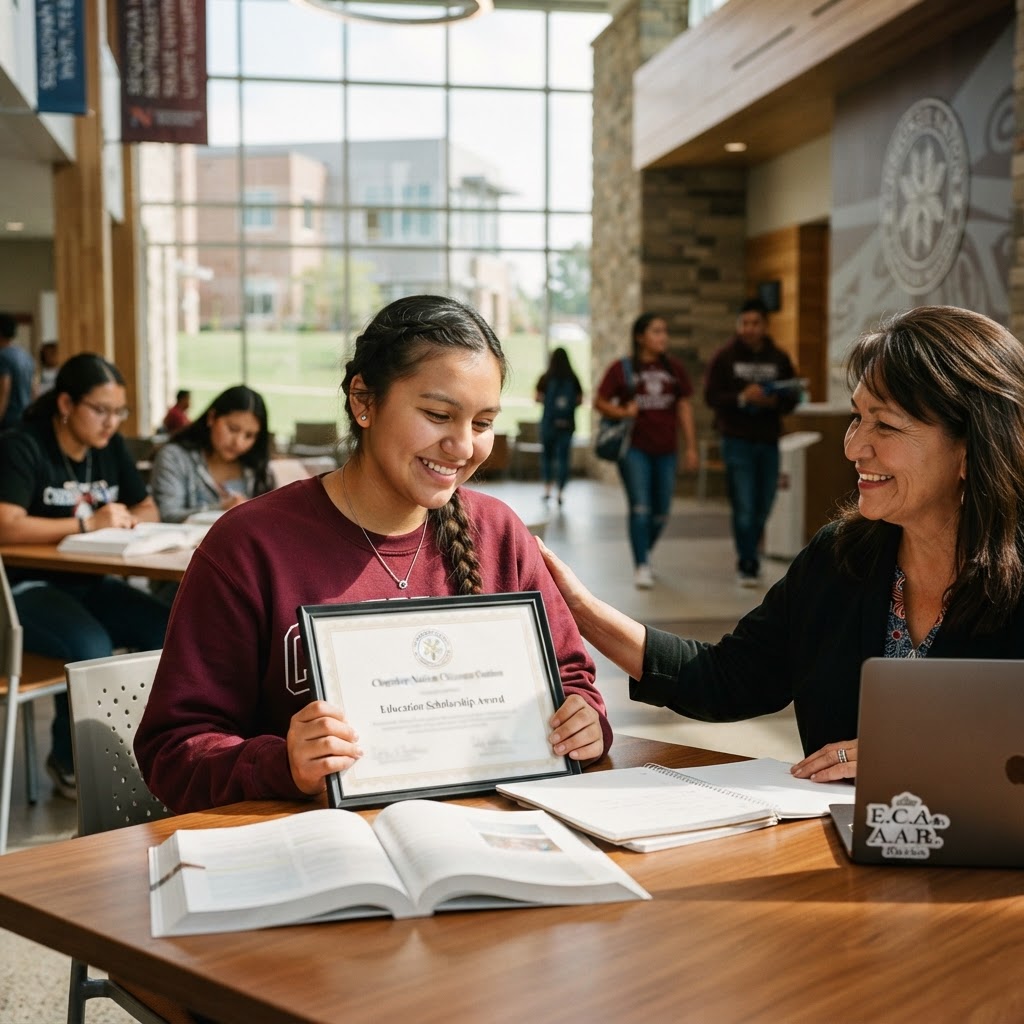
Funding the Future: The Insider’s Guide to Cherokee Nation Foundation Scholarships
For centuries, the education of Indigenous people was a weapon used against us. From the dark era of boarding schools designed to “kill the Indian, save the man,” to the systemic underfunding of tribal communities, the classroom has often been a battlefield. But today, the narrative is shifting. For the Cherokee people, education is no longer a tool of assimilation; it is an engine of sovereignty. Accessing Cherokee Nation Foundation scholarships isn’t just about paying for a degree—it’s about reclaiming the intellectual power of our ancestors to build a stronger future for the Three Nations.
Key Takeaways
- Distinct Entities: The Cherokee Nation Foundation (CNF) is a non-profit partner of the Cherokee Nation, distinct from the tribal government’s Higher Education department.
- The Three Tribes: Funding opportunities vary significantly between the Cherokee Nation (CN), the United Keetoowah Band of Cherokee Indians (UKB), and the Eastern Band of Cherokee Indians (EBCI).
- Eligibility: Most CNF scholarships require citizenship in the Cherokee Nation and a residency or specific academic focus.
- Sovereignty Matters: Education funding is a direct investment in tribal self-determination and economic independence.
The Sovereignty of the Mind: Why We Fund Education
Let’s be real: the world loves to talk about Cherokee history in the past tense. They talk about the Trail of Tears as a tragedy that ended us. They’re wrong. We are still here, and we are thriving. However, thriving requires more than just survival; it requires a workforce of doctors, lawyers, engineers, linguists, and artists who understand our unique legal and cultural status. When a tribal citizen uses tribal education resources, they aren’t just getting a handout. They are fulfilling a social contract to bring their skills back to the community.
Whether you are a citizen of the Cherokee Nation in Oklahoma, a member of the Eastern Band in the mountains of North Carolina, or part of the United Keetoowah Band, your pursuit of higher education is an act of resistance. It is proof that our intellectual traditions can adapt and dominate in the modern world.
Understanding the Cherokee Nation Foundation (CNF)
It is a common misconception that all Cherokee scholarships come from the same pot of money. The Cherokee Nation Foundation is a 501(c)(3) non-profit organization. While it works closely with the Cherokee Nation, it operates independently to manage endowments, private donations, and corporate partnerships.
CNF vs. CN Higher Education
This is where students often get tripped up. The Cherokee Nation Government has a “Higher Education” department that handles the general tribal scholarships (the ones funded by tribal revenue and gaming). The Foundation (CNF), however, manages competitive scholarships. These are often funded by families in memory of a loved one or by corporations looking to invest in Indian Country.
| Feature | CN Higher Education | Cherokee Nation Foundation |
|---|---|---|
| Funding Source | Tribal Government / Gaming | Private Endowments / Donations |
| Selection | Criteria-based (Need/GPA) | Highly Competitive / Essay-based |
| Application Period | Semi-annual | Typically Jan 1 – Jan 31 |
| Availability | Wide availability for citizens | Specific niches (Nursing, Art, etc.) |
The Three Federally Recognized Tribes
If you are looking for Cherokee citizenship benefits, you must know which nation you belong to. The United States government recognizes three distinct Cherokee entities. Their scholarship programs are not interchangeable.
1. The Cherokee Nation (CN)
Based in Tahlequah, Oklahoma, the CN is the largest of the three. The CNF scholarships discussed here are primarily for CN citizens. They offer extensive support for both “In-Jurisdiction” (living within the 14-county reservation) and “At-Large” (living anywhere else) citizens. Check their official site at cherokee.org for government-direct aid.
2. The United Keetoowah Band (UKB)
The UKB, also headquartered in Tahlequah, has its own distinct history and leadership. UKB students should look toward the UKB Education Department rather than the CNF. Their criteria and funding cycles are different, focusing heavily on the preservation of Keetoowah culture. Visit ukb-nsn.gov for their specific applications.
3. The Eastern Band of Cherokee Indians (EBCI)
The EBCI consists of descendants of those who remained in their ancestral homelands in the East. They are located in the Qualla Boundary in North Carolina. The EBCI has one of the most robust education funding systems in the country, thanks to their successful enterprise initiatives. EBCI citizens should visit ebci.gov to access their Higher Education and Vocational programs.
“Education is the path to true sovereignty. When we own our stories and our data, we own our future.” – Osiyo.net Philosophy
Navigating the CNF Scholarship Portfolio
The Cherokee Nation Foundation offers dozens of specific awards. Some are based on your major, while others are based on your hometown. You can explore these opportunities through the CNF online portal. Common categories include:
- STEM Scholarships: For those pursuing science, technology, engineering, or math.
- Health Sciences: Dedicated to creating more Cherokee doctors, nurses, and pharmacists.
- Cherokee Language and Culture: For students committed to preserving our native tongue.
- Vocational/Technical: Because the Nation needs skilled tradespeople as much as it needs academics.
If you are unsure of your eligibility because you haven’t confirmed your ancestry, you may need to start with a final rolls search to establish your lineage before seeking citizenship.
How to Apply: The “Edgy” Truth About the Process
Let’s cut the fluff: the application process is rigorous because the competition is fierce. Thousands of brilliant Cherokee students apply every year. To stand out, you need more than just a high GPA; you need a connection to your identity.
1. The Timeline
The window is narrow. Typically, the CNF application portal opens in January and closes by the end of the month. If you wait until January 29th to ask for your letters of recommendation, you’ve already lost. Professionalism is a form of respect for the process.
2. The Essay
Don’t just write what you think they want to hear. The Foundation wants to know how your education will benefit the Cherokee people. Are you a future social worker looking to help families in Adair County? Are you an artist reclaiming traditional basketry techniques? Be specific. Your story matters.
3. The Paperwork
You will need a valid tribal citizenship card (often called a Blue Card for CN citizens). You will also need official transcripts and, in some cases, proof of financial need (FAFSA). Note: The BIA (Bureau of Indian Affairs) also provides guidance on higher education grants for all federally recognized tribes; see BIA.gov for more.
Education as a Path to Leadership
The ultimate goal of the Cherokee Nation Foundation is to cultivate the next generation of tribal leadership. This doesn’t just mean people who run for Chief. It means leaders in the home, in the school system, and in the local economy. By removing the financial barrier to entry, the CNF ensures that the best minds of the Nation aren’t sidelined by poverty.
Beyond the Check: Mentorship and Support
One of the often-overlooked benefits of CNF scholarships is the networking. Recipients often find themselves part of a cohort of fellow Cherokee scholars. This creates a support system that can be vital for students—especially those attending large universities far from the reservation where they might be the only Indigenous person in the room.
FAQ: Common Questions About Cherokee Scholarships
Can I apply for CNF scholarships if I am UKB or EBCI?
Generally, no. The Cherokee Nation Foundation is specifically geared toward citizens of the Cherokee Nation (Oklahoma). However, UKB and EBCI have their own dedicated programs that are often just as, if not more, robust. Always check with your specific tribal education office.
Do I have to live in Oklahoma to get a scholarship?
Many CNF scholarships are available to “At-Large” citizens (those living outside the 14-county jurisdiction). However, some specific donor-funded scholarships may be restricted to students from certain counties or schools within the reservation.
Is a CDIB card the same as a citizenship card for scholarship purposes?
While you often need both, the citizenship card is the primary requirement. The CDIB (Certificate of Degree of Indian Blood) proves your biological ancestry, but citizenship proves your political connection to the Nation. For more on this distinction, visit our Getting Started guide.
What happens if I lose my scholarship?
Most scholarships have a minimum GPA requirement (usually 2.5 or 3.0). If your grades slip, you may lose your funding. The Foundation is investing in your success, but they expect a return on that investment in the form of academic effort.
Next Steps for Prospective Scholars
- Confirm Your Citizenship: Ensure your tribal membership is active and your records are up to date.
- Gather Your Documents: Start requesting transcripts and letters of recommendation in November or December.
- Visit the Portal: Familiarize yourself with the CNF website before the application window opens.
- Research Other Options: Look into other opportunities like the American Indian College Fund or Cobell Scholarships.
- Plan Your Impact: Think deeply about how your degree will serve the Cherokee community.
The path to an education is one of the most powerful journeys you can take. It is a path that our ancestors fought to keep open, often at great cost. Respect that legacy by being prepared, being bold, and being unapologetically Cherokee in your academic pursuits.
Last reviewed: June 2026
Osiyo.net is an independently operated information platform. Always verify enrollment information directly with the specific Tribal Nation.