

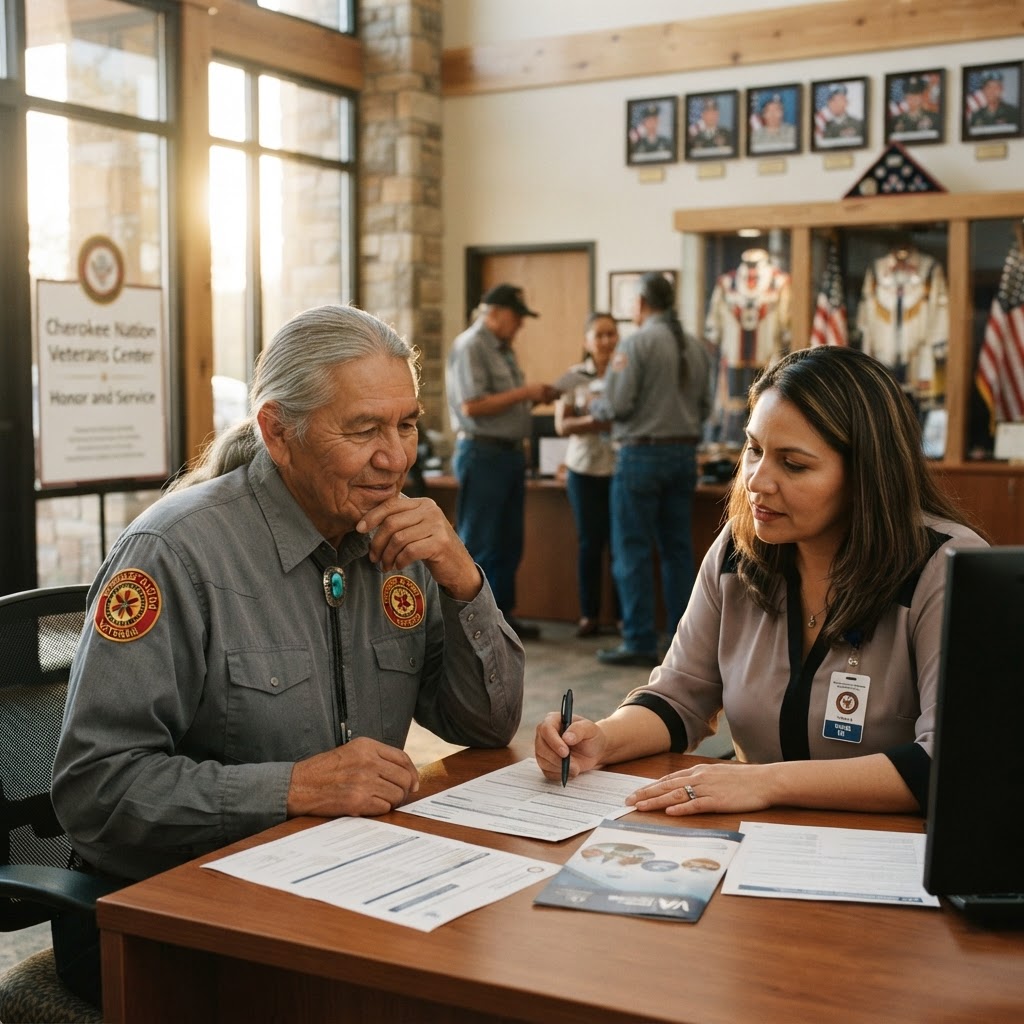
Cherokee Nation Veterans Center: Honoring the Warrior Tradition
Let’s get one thing straight from the jump: Native Americans serve in the United States Armed Forces at a higher rate per capita than any other ethnic group. It’s a statistic that often catches non-Indigenous folks off guard, especially considering the complicated, often bloody history between Tribal Nations and the federal government. But for the Cherokee people, military service isn’t about irony; it’s about the Warrior Tradition. It’s about protecting the land, the people, and the inherent sovereignty that has existed long before any colonial flag was planted.
The Cherokee Nation Veterans Center in Tahlequah, Oklahoma, isn’t just a government building with some flags out front. It is a hub of advocacy, a sanctuary for stories, and a practical resource for those who have stood in the gap. At Osiyo.net, we don’t just parrot press releases; we look at the historical context and the sovereign reality of these institutions. While we are an independent platform and not an official tribal government site, we believe every veteran deserves to know exactly what they’ve earned.
Key Takeaways
- The Cherokee Nation Veterans Center provides centralized services for veterans, including VA benefit assistance and housing support.
- Native Americans have served in every American conflict since the Revolutionary War.
- Service is deeply tied to the concept of the ‘Warrior Society’ and tribal sovereignty.
- While the Cherokee Nation (CN) has a dedicated center, the Eastern Band of Cherokee Indians (EBCI) and the United Keetoowah Band (UKB) also maintain distinct programs to honor their veterans.
- Accessing benefits often requires navigating both tribal and federal (VA) bureaucracy.
The Paradox of the Indigenous Soldier
History books like to gloss over the fact that for centuries, the U.S. government tried to dismantle tribal structures. Yet, when the chips are down, the Cherokee have always answered the call. Why? Because the commitment is to the land and the community. This ‘Warrior Spirit’ is a cultural pillar that transcends the policies of the day.
“Our veterans are the living embodiment of our sovereignty. They fought for a country that didn’t always fight for them, yet they did so with the honor of their ancestors guiding every step.”
Whether it was the Code Talkers of World War I and II or the soldiers currently serving in global hotspots, the Cherokee presence in the military is a testament to resilience. The Cherokee Nation Veterans Center exists to ensure that when these warriors return home, they aren’t left to fight the bureaucracy alone.
A Deep Dive into the Cherokee Nation Veterans Center
Located in the heart of the capital in Tahlequah, the center serves as a ‘one-stop shop.’ Navigating the Department of Veterans Affairs (VA) is notoriously difficult. The Cherokee Nation (CN) bridges that gap by providing Tribal Veterans Representatives (TVRs) who understand both the federal system and the specific needs of tribal citizens.
Primary Services and Advocacy
The center focuses on three main pillars: health, home, and honor. They aren’t just handing out brochures; they are actively managing cases. Services include:
- VA Claims Assistance: Help with filing for disability, pensions, and healthcare.
- The Warrior Society: An organization within the tribe that fosters community, participates in color guards, and maintains the tradition of the Cherokee warrior.
- Food and Emergency Assistance: Programs specifically designed to prevent veteran homelessness and food insecurity.
- Medical Outreach: Coordinating with the Cherokee Nation Health Services to ensure veterans receive specialized care.
The Center Architecture: More Than Just Walls
The facility itself is designed to be a place of reflection. It houses a wall of honor and various displays that chronicle Cherokee military history. It’s a space where a Vietnam veteran can sit down with a recently discharged soldier from the Middle East and find common ground in the Cherokee language and shared values.
Comparing Tribal Veteran Support
It is crucial to remember that the Cherokee people are represented by three distinct, federally recognized tribes. While the Cherokee Nation in Oklahoma has the largest infrastructure, the other two tribes are equally dedicated to their veterans.
| Tribe | Primary Veteran Organization/Resource | Key Focus Area |
|---|---|---|
| Cherokee Nation (CN) | Cherokee Nation Veterans Center | Comprehensive VA advocacy, housing, and social services. |
| Eastern Band of Cherokee Indians (EBCI) | Steve Youngdeer Post 143 / Tribal Veterans Service Office | Local community support and honoring North Carolina-based veterans. |
| United Keetoowah Band (UKB) | UKB Veterans Committee | Maintaining cultural traditions and providing member-specific assistance. |
The EBCI, located in North Carolina, has a very active American Legion Post (Steve Youngdeer Post 143) that is central to their community life. The UKB, while smaller in infrastructure compared to the CN, maintains a fierce dedication to ensuring their veterans are recognized during traditional gatherings and through specific tribal resolutions.
The Fight for Benefits: Sovereignty in Action
One of the ‘edgy’ truths about tribal veteran services is that they are often forced to fill the gaps left by the federal government. For years, the VA struggled to reach rural tribal areas. Sovereignty allows the Cherokee Nation to say, “If the federal government won’t come to our people, we will build the bridge ourselves.”
Housing and the ‘VASH’ Program
The HUD-VASH program is a collaborative effort between the Department of Housing and Urban Development and the VA. The Cherokee Nation has been a leader in implementing these vouchers specifically for Native veterans, ensuring that those who fought for the ‘land of the free’ actually have a home on their own land.
The Medal of Patriotism
The Cherokee Nation doesn’t just wait for the Pentagon to issue medals. They have their own leadership initiatives to recognize service. The Cherokee Nation Medal of Patriotism is awarded to veterans to acknowledge their sacrifices on behalf of the tribe and the United States.
Common Misconceptions About Native Veterans
Let’s clear the air on a few things. First, military service does not ‘erase’ tribal identity; for many, it strengthens it. Second, the benefits provided by the Cherokee Nation are not ‘handouts.’ They are part of the government-to-government relationship and the trust responsibility the U.S. owes to Tribal Nations.
- Misconception: Native veterans only serve because of a lack of economic opportunity. Reality: While economic factors exist, many cite the ‘Warrior Tradition’ and a sense of duty to protect their ancestral lands as the primary motivator.
- Misconception: All Cherokee veterans receive the same benefits regardless of their tribe. Reality: Benefits are often tied to specific tribal citizenship. You must verify your status with CN, UKB, or EBCI.
Frequently Asked Questions (FAQ)
1. Can veterans from any tribe use the Cherokee Nation Veterans Center?
While the center primarily serves citizens of the Cherokee Nation, they often provide information and referral services to any veteran. However, specific tribal financial benefits are usually reserved for CN citizens.
2. How does the center help with VA disability claims?
The center employs accredited Tribal Veterans Representatives (TVRs) who act as power of attorney for the veteran, navigating the complex VA paperwork and advocating for the highest possible rating based on service-connected injuries.
3. Does the Cherokee Nation have its own veterans’ cemetery?
While there isn’t a single ‘tribal’ national cemetery in the same vein as Arlington, the Cherokee Nation works closely with local and national cemeteries to ensure veterans receive full military honors, often including Cherokee cultural elements.
4. What is the Cherokee Warrior Society?
It is a group of Cherokee veterans who serve as a color guard, participate in community events, and preserve the history of Cherokee military service. It’s about brotherhood and cultural preservation.
Next Steps for Veterans and Families
If you or a loved one are a Cherokee veteran, don’t leave your benefits to chance. The bureaucracy isn’t going to navigate itself.
- Contact the Center: Reach out to the Cherokee Nation Veterans Center in Tahlequah to verify your records.
- Update Your Records: Ensure your tribal registration and military discharge papers (DD-214) are in order.
- Join the Community: Look into the Warrior Society or local veteran posts within the EBCI or UKB.
- Explore Opportunities: Check out educational and vocational programs specifically for veterans.
The path of the warrior is one of honor, but the path home should be one of support. The Cherokee Nation Veterans Center stands as a reminder that the tribe does not forget those who stood for the People.
For more information on the official programs, visit the Cherokee Nation official site or the VA Office of Tribal Government Relations.
Last reviewed: June 2026
Osiyo.net is an independently operated information platform. Always verify enrollment information directly with the specific Tribal Nation.