

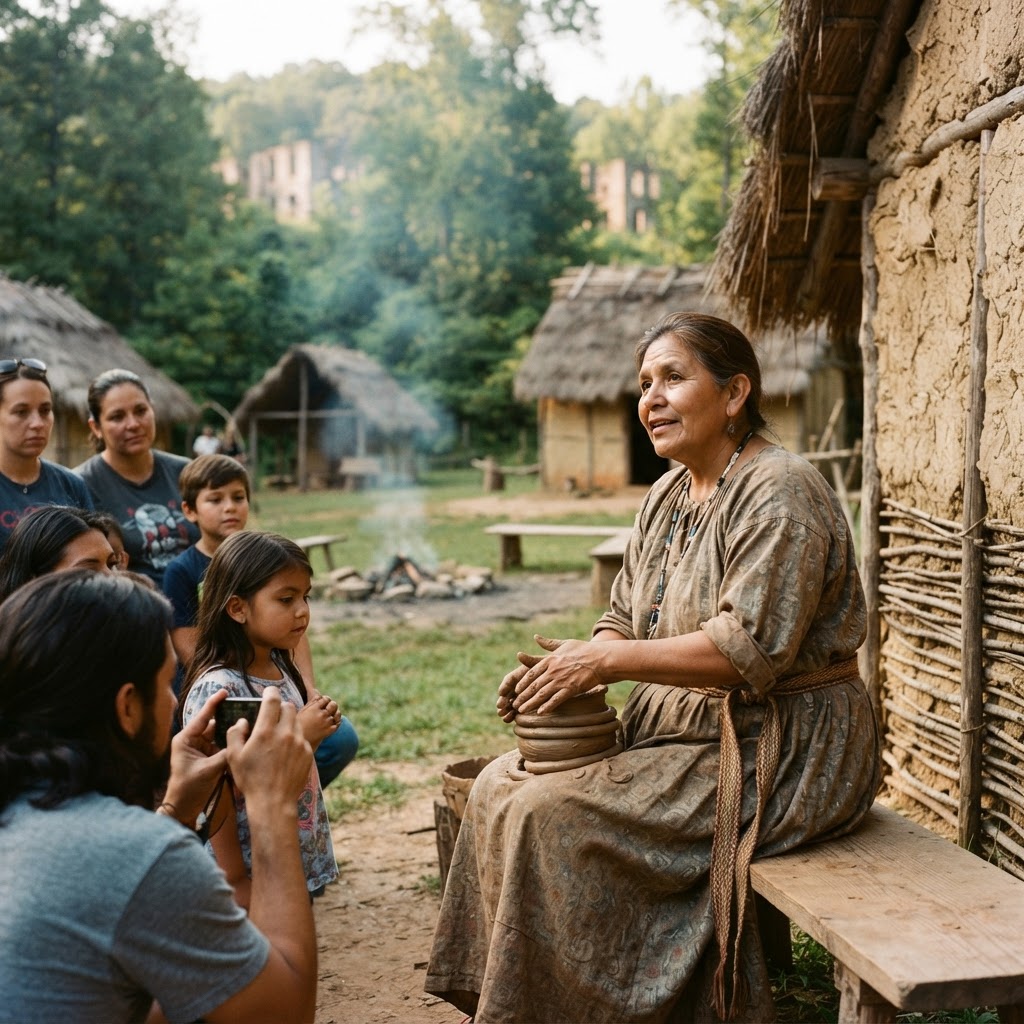
Cherokee Heritage Center: Preserving Culture in Tahlequah Oklahoma
Key Takeaways
- Located on the historic grounds of the Cherokee Female Seminary in Tahlequah, Oklahoma.
- Features Diligwa, an authentic 1710s Cherokee Village recreation.
- Serves as a vital link for the three federally recognized tribes: Cherokee Nation, United Keetoowah Band (UKB), and Eastern Band (EBCI).
- Home to the Cherokee National Research Center and extensive Trail of Tears archives.
- Osiyo.net is an independent platform and not an official tribal government site.
Let’s be honest: most American history textbooks treat Indigenous cultures like a closed chapter from the 1800s. They talk about the Trail of Tears as a tragic ending, rather than a brutal middle chapter of a story that is still being written today. If you want to see what actual resilience looks like—without the Hollywood filters or the patronizing museum tropes—you head to Tahlequah, Oklahoma. Specifically, you head to the Cherokee Heritage Center (CHC).
The Cherokee Heritage Center isn’t just a building with glass cases; it’s a 44-acre testament to sovereignty, intellectualism, and survival. Nestled in the capital of the Cherokee Nation, this site serves as the cultural heart for the three federally recognized Cherokee tribes: the Cherokee Nation (headquartered in Tahlequah), the United Keetoowah Band of Cherokee Indians (also in Tahlequah), and the Eastern Band of Cherokee Indians (based in North Carolina). While each tribe maintains its own government and unique contemporary identity, the CHC preserves the collective DNA of their shared history.
The Ruins of Intellectual Sovereignty: The Female Seminary
Before you even walk into the main museum, you’re greeted by three towering brick columns. These aren’t just decorative ruins; they are the remains of the Cherokee Female Seminary, built in 1851. Think about that date. While much of the United States was still debating whether women should be educated at all, the Cherokee Nation was busy establishing the first institution of higher learning for women west of the Mississippi River.
This is where the “Knowledgeable Guide with an Edge” comes in: these columns are a middle finger to the 19th-century idea of the “uncivilized” Indian. The Cherokee had a written constitution, a bilingual newspaper, and a higher education system that rivaled East Coast academies. The seminary was destroyed by fire in 1887, but these pillars remain as a reminder that Cherokee sovereignty has always been rooted in education and the preservation of the intellect. If you’re interested in how this legacy continues today, our section on Cherokee education dives deeper into the modern scholastic landscape.
Diligwa: Stepping into the 1710s
Most people’s concept of “traditional” Cherokee life is a mishmash of Plains Indian stereotypes—headdresses and teepees. The CHC shuts that down immediately with Diligwa. This is a meticulously researched recreation of a 1710s Cherokee village. In the early 18th century, the Cherokee were the dominant power in the Southeast, living in permanent towns with sophisticated political structures.
The Architecture of Persistence
At Diligwa, you won’t find a single teepee. Instead, you see wattle-and-daub houses designed for the humid climate of the homelands. Visitors can witness daily life demonstrations, from basket weaving and flint knapping to the construction of blowguns. It’s not a “reenactment” in the cheesy sense; it’s a technical showcase of Cherokee engineering. These skills weren’t lost during the forced removals; they were carried across half a continent and adapted to the Oklahoma landscape.
The Seven Clans
Diligwa also explains the social fabric of the Cherokee: the matrilineal clan system. Your identity was tied to your mother’s clan—Wolf, Deer, Bird, Long Hair, Paint, Blue, or Wild Potato. This system governed everything from marriage to legal disputes. Understanding the clans is essential if you are exploring your own family stories or heritage, as it provides the cultural context that vital records often miss.
The Trail of Tears: Beyond the Victim Narrative
The permanent exhibit on the Trail of Tears at the CHC is arguably the most comprehensive in the world. But it doesn’t just focus on the suffering. It focuses on the political betrayal by the U.S. government and the internal fractures within the Cherokee Nation that led to the Treaty of New Echota. It’s an edgy, honest look at what happens when a sovereign nation is squeezed by an expansionist empire.
“The Trail of Tears was not an accidental tragedy; it was a calculated policy of ethnic cleansing. The Heritage Center doesn’t shy away from the hard truths of the 1830s, but it also highlights the miraculous recovery of the government in Indian Territory immediately after arrival.”
The exhibit uses life-sized figures, audio narratives, and artifacts to transport you to the 1838 removal. You see the transition from the lush mountains of the East to the unfamiliar prairies of the West. This historical grounding is vital for anyone looking into Final Rolls research, as it explains the geographical shifts that define modern Cherokee demographics.
Adams Corner: Survival in the 1890s
Move forward 180 years from Diligwa, and you reach Adams Corner. This part of the center depicts a Cherokee rural crossroads in the late 19th century. By this time, the Cherokee had rebuilt their nation in Oklahoma, establishing a complex society of farms, shops, and churches. This era represents the “Golden Age” of the Cherokee Nation in the West before the devastating impact of the Dawes Act and Oklahoma statehood.
Adams Corner features a log cabin, a general store, and a church, reflecting the syncretic nature of Cherokee life where faith and traditional values often coexisted. It shows a people who were once again thriving, proving that the removal didn’t break the Cherokee spirit; it just changed the scenery.
A Comparative Look: Cherokee Life Through the Ages
| Feature | 1710s (Diligwa) | 1890s (Adams Corner) | Today (Tahlequah) |
|---|---|---|---|
| Government | Matrilineal Clan Councils | Constitutional Republic | Modern Tribal Sovereignty |
| Housing | Wattle & Daub Townhouses | Log Cabins / Frame Houses | Modern Residential / Urban |
| Language | Spoken Cherokee (Primary) | Bilingual (Cherokee/English) | Language Revitalization Programs |
| Economy | Trade, Agriculture, Hunting | Commercial Farming, Trade | Diverse Industries, Gaming, Tech |
Distinguishing the Three Nations
While the CHC is a hub for all things Cherokee, visitors must understand the political distinctions. The Cherokee Nation is the largest of the three, with over 450,000 citizens. The United Keetoowah Band (UKB) maintains a unique cultural traditionalism and a separate federal recognition. The Eastern Band of Cherokee Indians (EBCI) are the descendants of those who remained in the North Carolina mountains. The CHC honors all three, but it is physically located within the jurisdictional boundaries of the Cherokee Nation. For those interested in the legalities of belonging, our guide on Cherokee citizenship outlines the different requirements for each tribe.
Why the Heritage Center Matters Now
In an era of “pretendians” and cultural appropriation, the Cherokee Heritage Center acts as a gatekeeper of authenticity. It’s where the Bureau of Indian Affairs (BIA) records meet living oral tradition. The center hosts the Cherokee Homecoming Art Show and the Trail of Tears Art Show, providing a platform for contemporary Cherokee artists to push boundaries and redefine what “Native art” looks like. It’s not just about looking back; it’s about ensuring the culture has the resources to look forward.
FAQ
Where is the Cherokee Heritage Center located?
It is located at 21192 S. Keeler Dr, Park Hill, OK (just south of Tahlequah). It’s an essential stop on any Oklahoma travel itinerary.
Is the Cherokee Heritage Center part of the tribal government?
The CHC is managed by the Cherokee National Historical Society, a non-profit organization. While it works closely with the Cherokee Nation, it is an independent cultural institution.
Can I do genealogy research there?
Yes. The Cherokee National Research Center, housed on the grounds, is one of the premier locations for Cherokee genealogical research. However, they do not handle enrollment. For that, you need to contact the specific tribal registration offices.
Is the center open year-round?
Generally, yes, but certain outdoor exhibits like Diligwa may have seasonal hours or be subject to weather. Always check their official website before visiting.
Next Steps
- Visit: Plan a trip to Tahlequah and give yourself at least four hours to explore the full grounds.
- Research: If you’re looking for ancestors, check out our guide to starting your Cherokee research.
- Support: Consider a membership to the Cherokee National Historical Society to support ongoing preservation efforts.
- Learn: Read more about the stories of the people who shaped the Cherokee Nation.
Last reviewed: June 2026
Osiyo.net is an independently operated information platform. Always verify enrollment information directly with the specific Tribal Nation.