

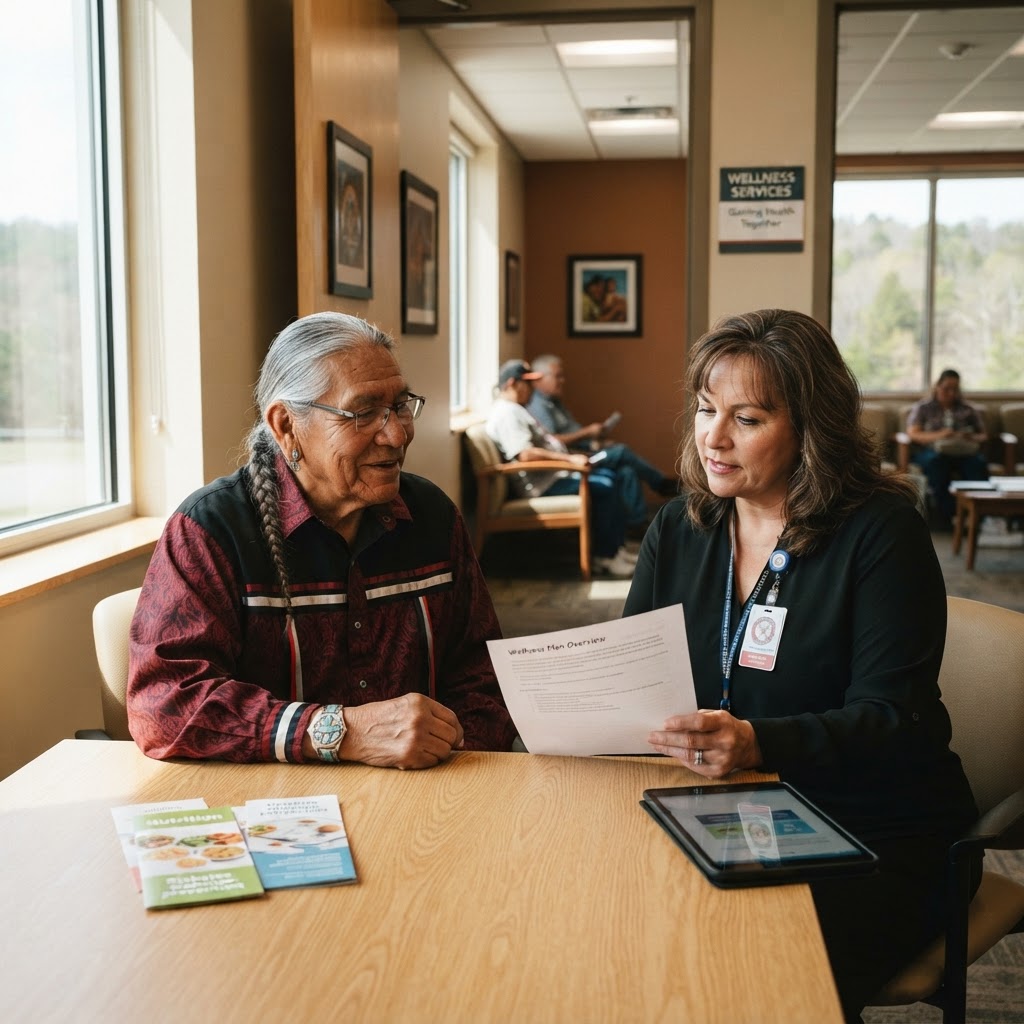
Cherokee Nation Yellowleaf Health Center: Reclaiming Wellness for Tribal Citizens
Let’s cut through the red tape and the tired stereotypes. For too long, Native healthcare was a story of federal neglect—a patchwork of underfunded Indian Health Service (IHS) clinics that often felt more like waiting rooms for broken promises than centers of healing. But the narrative is shifting. The Cherokee Nation Yellowleaf Health Center in Tahlequah is not just a building; it is a massive, concrete-and-glass middle finger to the status quo. It is an exercise in health sovereignty.
As an independent platform, Osiyo.net aims to guide you through these resources without the bureaucratic fluff. We aren’t the government, and we aren’t here to check your CDIB card at the door. We are here to help you understand how the largest tribally-operated health system in the United States is redefining what it means to be well.
The Evolution of Sovereignty in Healthcare
To understand why the Yellowleaf Health Center matters, you have to understand the history of the Self-Governance Act. In the past, the federal government held the purse strings and the decision-making power for tribal health. It was a paternalistic system that didn’t work. The Cherokee Nation took a different path, choosing to self-govern their health services. This means the tribe—not the federal government—manages the budget and designs the programs.
Healthcare is a treaty right, but quality healthcare is a sovereign achievement.
The Yellowleaf Health Center, which opened its doors as a state-of-the-art replacement for the older outpatient facilities at W.W. Hastings, represents the pinnacle of this movement. It’s about more than just flu shots; it’s about providing care that respects Cherokee culture while utilizing 21st-century technology.
Inside the Yellowleaf Health Center: Services and Facilities
The facility is a 275,000-square-foot beast designed to handle the growing needs of Cherokee citizens and members of other federally recognized tribes residing in the reservation. It isn’t just an expansion; it’s a complete reimagining of the patient experience.
Primary Care and Specialized Services
At its core, Yellowleaf is designed to reduce wait times and increase access. The center houses multiple primary care teams, but the specialized wings are where the innovation truly shines:
- Behavioral Health: Moving past the stigma of mental health by integrating it directly into the primary care model.
- Physical Therapy and Rehabilitation: A massive wing dedicated to getting citizens back on their feet after injury or surgery.
- Dental and Vision: Comprehensive clinics that often have shorter waitlists than older facilities.
- Pharmacy: A high-tech, high-volume pharmacy designed to get prescriptions into the hands of citizens faster.
Technological Integration
Yellowleaf isn’t just using old-school charts. They have implemented advanced electronic health records (EHR) that allow for seamless communication between the main Tahlequah hub and outlying clinics. This is crucial for citizens who may travel from across the Fourteen Counties for specialized care.
Why “Yellowleaf”? Honoring History and Language
The name itself, Yellowleaf, is a nod to the late Sequoyah County elder and Cherokee speaker, Reverend Willis Yellowleaf. Names in the Cherokee Nation aren’t chosen by marketing firms; they are chosen to anchor the facility in the community’s history. By naming the center after an elder who championed the spiritual and physical well-being of his people, the Nation ensures that as it moves forward into modern medicine, it doesn’t leave its roots behind.
Navigating the System: Tribal Health vs. The Bureaucracy
There is a common misconception that all “Indian clinics” are the same. They aren’t. There are three distinct ways these facilities operate:
| Facility Type | Managed By | Funding Source | Patient Focus |
|---|---|---|---|
| Direct IHS | Federal Government | Federal Appropriations | Varies by region |
| Tribally Managed (638) | The Tribe | Federal Contract + Tribal Revenue | Tribal Citizens & Descendants |
| Urban Indian Health | Non-Profits | Grants & Federal Contracts | Broad Urban Native Population |
Yellowleaf is a tribally managed facility. This allows for a level of flexibility that federal clinics simply cannot match. For instance, the Cherokee Nation can reinvest its own business revenues into the health system, which is exactly how massive projects like the New Health Hospital and Yellowleaf are funded.
Distinguishing the Three Cherokee Sovereign Nations
It’s vital to remember that “Cherokee” is not a monolith. There are three federally recognized Cherokee tribes, each with its own government, jurisdiction, and health infrastructure. While the Yellowleaf Health Center is a flagship of the Cherokee Nation (CN) based in Tahlequah, citizens of the other two tribes often have different primary health hubs:
- United Keetoowah Band of Cherokee Indians (UKB): Also headquartered in Tahlequah, the UKB has its own distinct governmental structure and programs, though citizens may often utilize CN health facilities through inter-tribal agreements.
- Eastern Band of Cherokee Indians (EBCI): Located in their ancestral homelands of North Carolina, the EBCI manages the Cherokee Indian Hospital Authority. While they share a linguistic and cultural lineage, their health system is entirely separate from the Yellowleaf center.
If you are exploring your heritage or searching the Final Rolls, make sure you know which nation your ancestors were affiliated with, as this determines your primary health jurisdiction.
Key Takeaways
- Sovereign Control: The Yellowleaf Health Center is a result of the Cherokee Nation exercising its right to manage its own healthcare.
- Massive Scale: At 275,000 square feet, it is one of the largest tribal outpatient facilities in the country.
- Integrated Care: The facility combines primary care, pharmacy, and specialty services like behavioral health under one roof.
- Community Driven: Named after a respected elder, the facility emphasizes cultural continuity.
Frequently Asked Questions
Is the Yellowleaf Health Center open to everyone?
Generally, services are available to citizens of federally recognized tribes. However, specific eligibility for certain programs can vary. You should always contact Cherokee Nation Health Services directly for the most current patient registration requirements.
How does Yellowleaf differ from W.W. Hastings?
W.W. Hastings remains the primary hospital for inpatient care and emergency services. Yellowleaf acts as the massive outpatient “hub” that handles the majority of clinic visits, specialty appointments, and pharmacy needs, significantly decompressing the main hospital.
Do I need an appointment, or can I walk in?
While some services like the pharmacy or urgent care (housed nearby) have walk-in components, most primary and specialty care at Yellowleaf requires an appointment. The goal of the new facility is to reduce the “waiting room culture” of the past.
Does the center offer traditional Cherokee medicine?
The Cherokee Nation has been a leader in integrating traditional knowledge with Western medicine. While Yellowleaf is a modern clinical facility, the CNHS system as a whole respects and often provides pathways for spiritual and cultural healing practices.
Next Steps for Wellness
- Verify Your Status: Ensure your tribal registration is up to date through the Tribal Registration office.
- Transfer Records: If you are moving from an IHS facility or private care, begin the process of transferring your medical records to CNHS early.
- Explore the Area: If you are traveling from out of state to utilize these services, check our travel guide for Tahlequah and the surrounding reservation.
- Stay Informed: Follow official Cherokee Nation government updates for changes in hours or new service rollouts.
The Yellowleaf Health Center is a testament to what happens when a Tribal Nation stops waiting for permission and starts building its own future. Whether you’re a lifelong resident of the reservation or a citizen returning home to seek care, this facility represents a new era of Cherokee health.
Last reviewed: July 2026
Osiyo.net is an independently operated information platform. Always verify enrollment information directly with the specific Tribal Nation.